2011 Solar Decathlon: Team Hawaii
-
font size
decrease font size
 increase font size
Video
Hale Pilihonua Connects Home, Land, and Sea
When most people picture Hawaii, pristine beaches and sparkling blue waters come to mind. teamhawai'i aims to preserve this image for future generations. For the first time, the University of Hawaii was selected to participate as one of the 20 teams in the 2011 Solar Decathlon, sponsored by the U.S. Department of Energy and the National Renewable Energy Laboratory (NREL). Previously, Universidad de Puerto Rico was the only tropics-based team to participate, although this climate type comprises 40% of the Earth's surface. Not only has teamhawai'i strived to create a design that addresses the unique challenges presented by the tropics, but they also hope to cultivate and retain local talent.
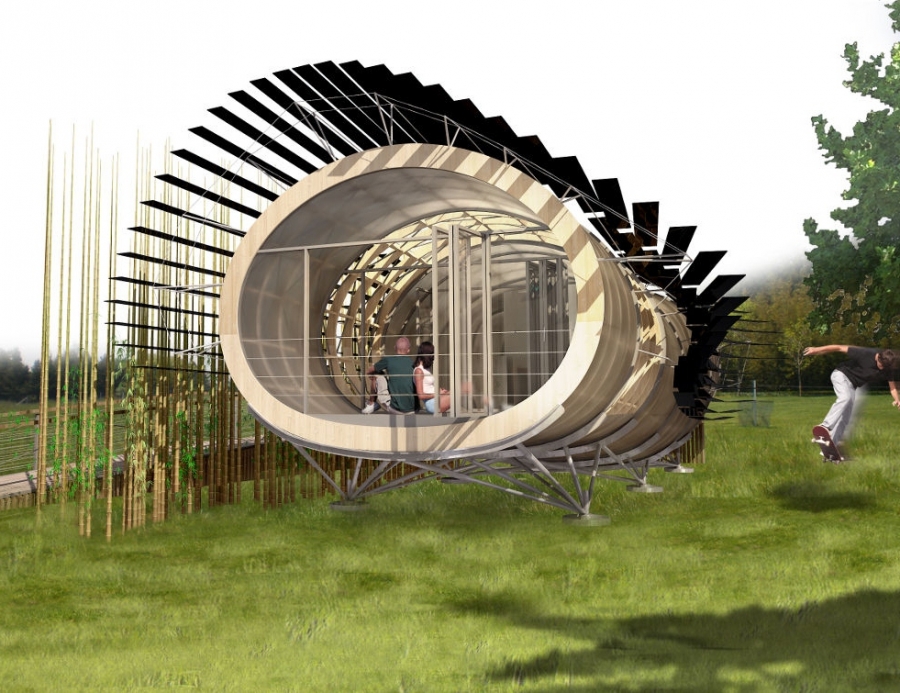 Credit: Teamhawai'i
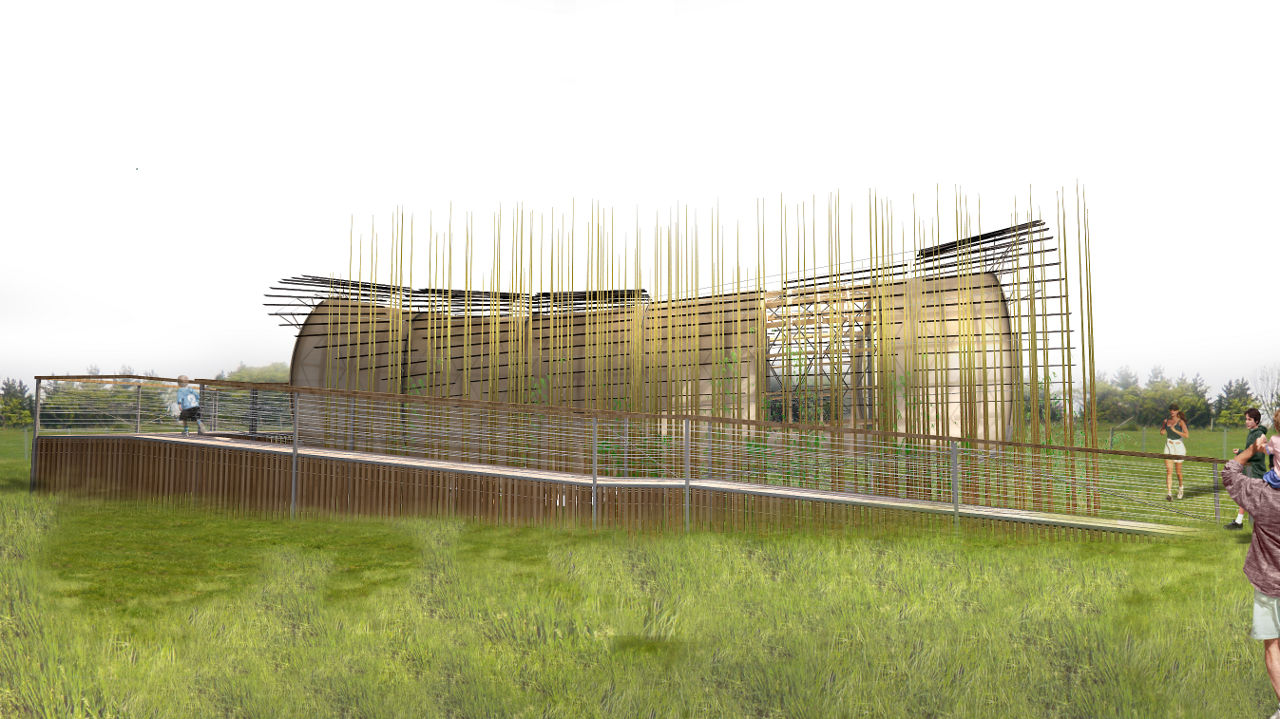
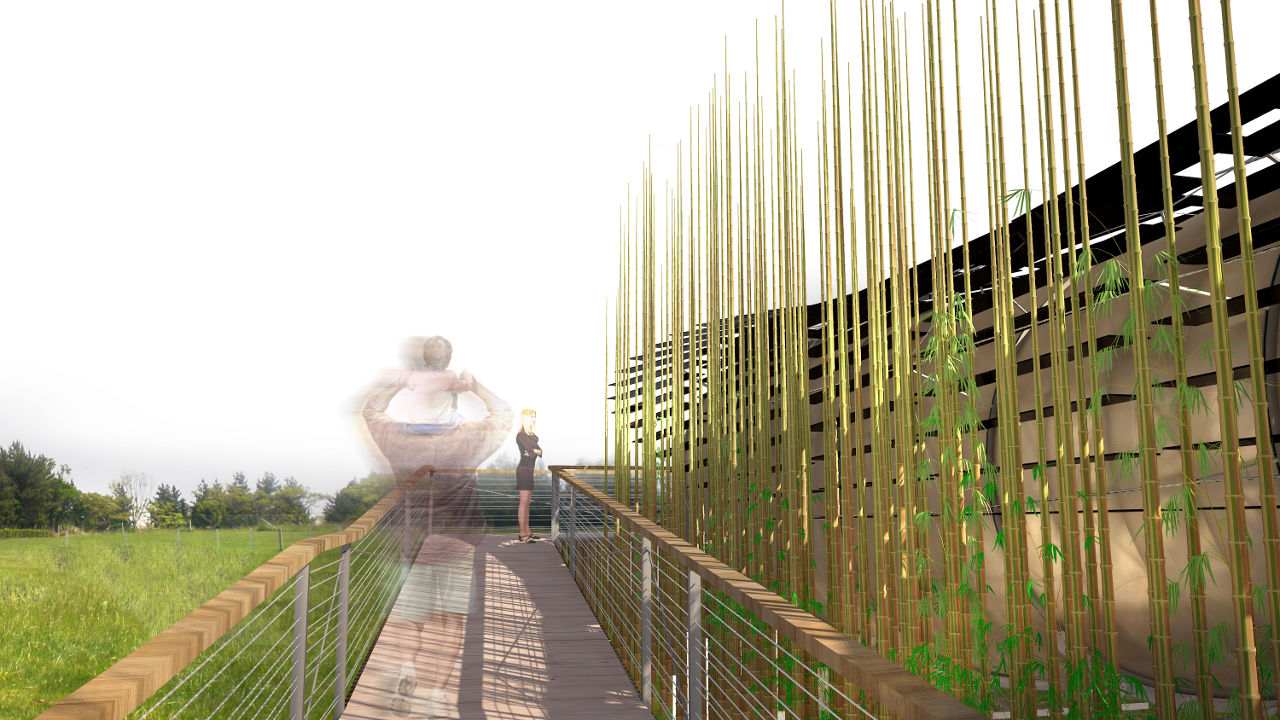
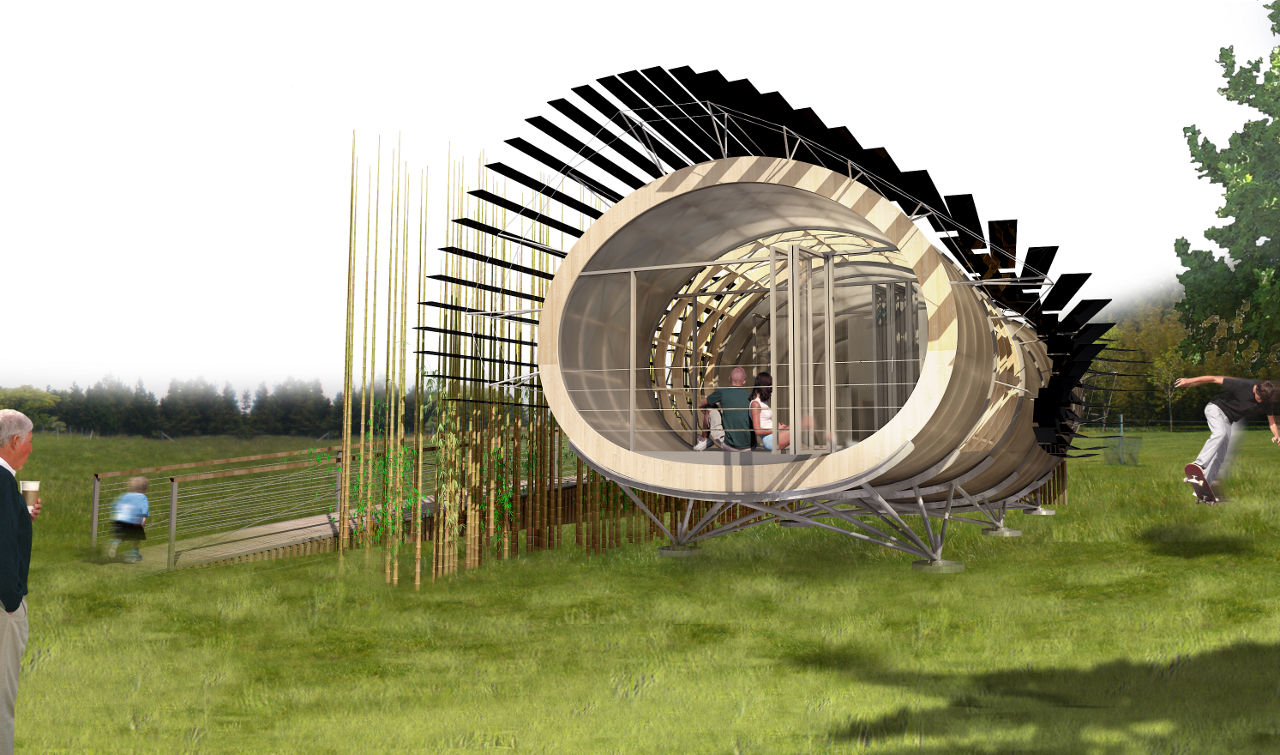
The ocean constantly reshapes the land, while activities on the land ultimately affect the health of the ocean. This belief is the inspiration behind the teamhawai'i home, Hale Pilihonua. The name reflects Hawaiian poetics: "hale" is a built structure, "pili" means to connect, and "honua" roughly translates to earth and land. Visitors to Hale Pilihonua will ascend a ramp lined with bamboo poles – simulating the experience of walking through a forest – before entering the home. Its gourd-like shape was chosen for its "life-sustaining" connotations, as well as its ability to promote natural ventilation. The interior of the home contains 650 sq. ft. (60.4 m2) space, including an outdoor terrace. The kitchen and bath share a common wall to consolidate plumbing and carve out privacy within the structure.
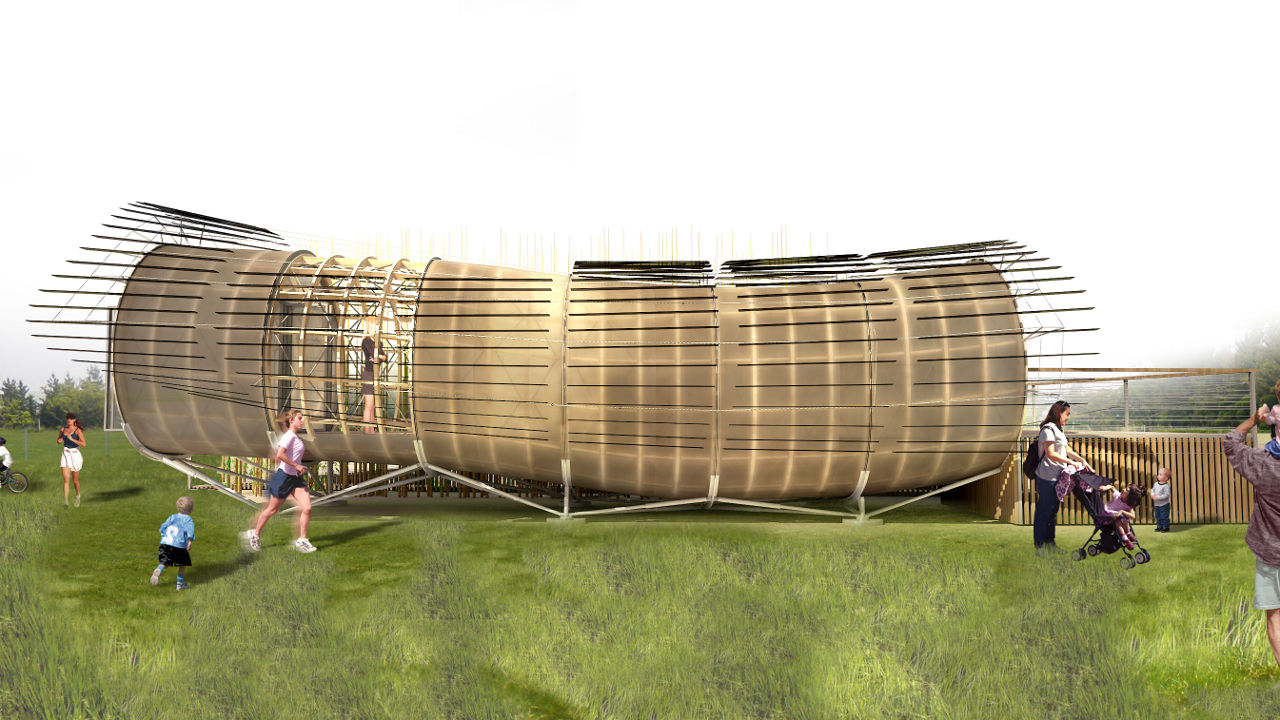
Hale Pilihonua's diaphanous cladding is strong, lightweight, and highly insulating. Translucent aerogel exterior walls are encapsulated by fiber-reinforced polymer (FRP) and are supported by plywood ribs to form a semi-monocoque shell, a structural strategy pioneered in aircraft design. Louvered photovoltaic panels, some of which will be adjustable, call to mind the spiky texture of a sea urchin. They provide the added benefit of mitigating light as well as reflecting it into the house.
"We could easily sell the design to a developer, but our intention is to market the technology. There is a 'brain drain' from Hawaii; many people leave for the mainland. We need a trained workforce to become leaders, and the house is the vehicle to get our message across." Elyse Petersen, teamhawai'i
Though the design of Hale Pilihonua is geared toward the unique challenges of a tropical climate – including high humidity and heat gain and the potential for storms, flooding, and termites, as well as the effects of salty and corrosive air – the team thinks that it would function equally well in other locales, even Washington, D.C. The home achieves net zero status and maintains interior comfort through the incorporation of a hybrid heating and cooling system with a water-to-air heat pump, housed in a gap between the home's interior and exterior skins. Triple-pane glass reduces heat loss at night.
The interior will be illuminated with energy-efficient, LED strip lighting controlled by Kinect cameras, created by Xbox, which will sense occupants' location and adjust lighting accordingly. The house also includes an aquaponic system – self-sustaining planters that contain water and vegetation – to mitigate the tightness of the building envelope by reducing indoor allergens and increasing oxygen levels. An automated computer system will maintain the plants, so occupants need not possess green thumbs.
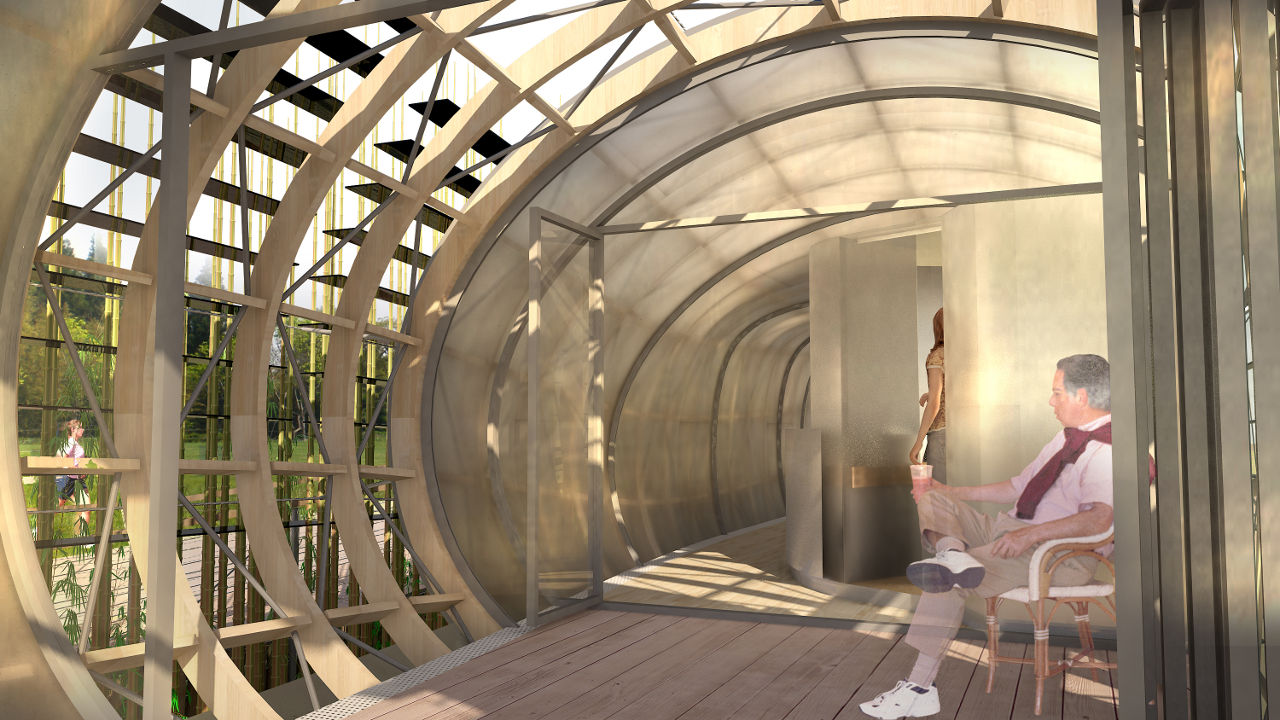
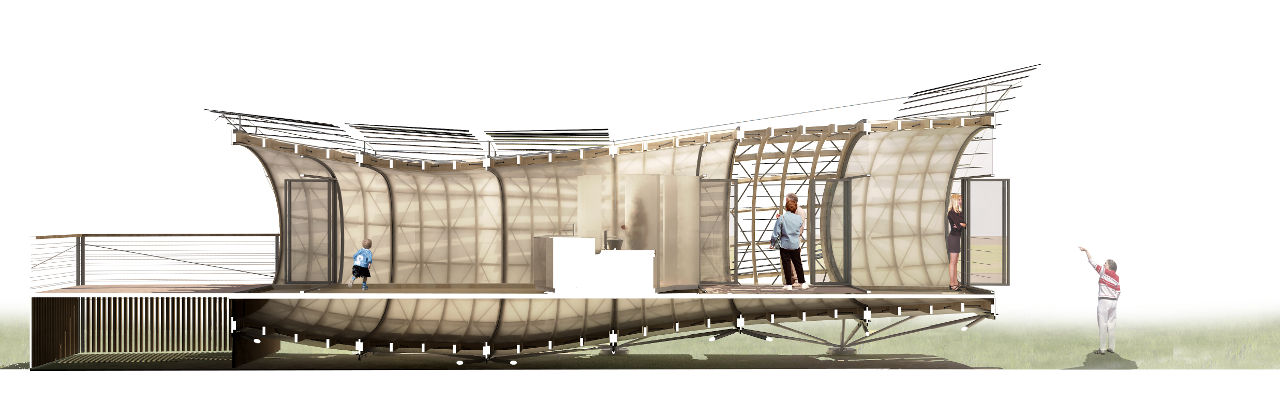
Elyse Petersen, who serves as the Communications Officer for teamhawai'i and is an MBA candidate at the University of Hawaii at Manoa, explains that the goal of Hale Pilihonua is not only to highlight modern technologies but also to foster collaboration and learning within a real-word setting. teamhawai‘i is comprised of over 100 students in multiple disciplines, ranging from those enrolled in the University of Hawai‘i at Mānoa School of Architecture, College of Engineering, Shidler College of Business, and Honolulu Community College. "We could easily sell the design to a developer, but our intention is to market the technology," explains Petersen. "There is a 'brain drain' from Hawaii; many people leave for the mainland. We need a trained workforce to become leaders, and the house is the vehicle to get our message across."
2011 Solar Decathlon: Hale Pilihonua, Teamhawai'i


Murrye Bernard
Murrye is a freelance writer based in New York City. She holds a Bachelor's degree in Architecture from the University of Arkansas and is a LEED-accredited professional. Her work has been published in Architectural Record, Eco-Structure, and Architectural Lighting, among others. She also serves as a contributing editor for the American Institute of Architects' New York Chapter publication, eOculus.
Website: www.murrye.com