Post Mortem: Lessons Learned

Welcome to the On Site channel’s Construction Administration Column. What should you do when there is a discrepancy between the amount on a payment application and the amount that was contracted? Here David A. Todd, P.E., CPESC, gives his opinion.

Columnist David A. Todd, P.E., CPESC, has 37 years of experience in the architecture, engineering, and construction (AEC) industry and has performed much construction administration during that time. He will answer questions from our readers or from his own practice and will provide answers based on his understanding of the construction process and administration of the construction contract. The focus will be on the customary duties of the owner, contractor, and design professional as typically described in the contract documents.
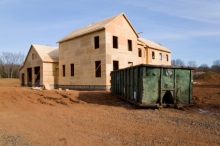

Welcome to the On Site channel’s Construction Administration Column. Who should pay when work is done out of contract? Here David A. Todd, P.E., CPESC, gives his opinion.

Columnist David A. Todd, P.E., CPESC, has 37 years of experience in the architecture, engineering, and construction (AEC) industry and has performed much construction administration during that time. He will answer questions from our readers or from his own practice and will provide answers based on his understanding of the construction process and administration of the construction contract. The focus will be on the customary duties of the owner, contractor, and design professional as typically described in the contract documents.

Design schedules always seem to be pressed for time, which is the result of two primary factors. The first factor is that owners always want to move their projects forward as quickly as possible, so they pressure design teams into abbreviated design schedules. The second factor contributing to compressed design schedules is much less obvious than the first. It is human nature. People of all professions have a tendency to procrastinate in their duties. This is why design teams routinely accelerate their pace in the final weeks of the design phase, as opposed to progressing at a constant pace from start to finish. In the end, issuance of incomplete design documents is the recurrent and regrettable result of these two unfortunate factors. (In fairness to design professionals, it should also be noted that human nature is a contributor to why the final weeks of construction always seem to be quite hectic as well.)

Not Just Numbers on a Piece of Paper

Project managers, whether they are construction managers, general contractors, or architects, regularly supervise multiple projects concurrently. Each of these projects must be managed independently, particularly with regard to cost accounting. For this example let us consider the following scenario; a general contractor’s project manager is responsible for two projects that were each awarded on a negotiated basis with guaranteed maximum price (GMP) contracts. All savings under these GMP agreements will be returned to the owner. Project #1 is progressing well and expected to finish well under budget. Project #2 is not going well, has incurred many problems and is expected to finish substantially over budget. The general contractor’s president and vice president are placing tremendous pressure on the project manager to minimize their losses from project #2.

The project was a seismic retrofit of a 15-story, 750,000 sq. ft. office building constructed in 1991. The steel portion of the project consisted of systematically strengthening the moment connections throughout the building and installing over 200 dampers without interrupting the operation of the tenants. The contract dictated that the work would start in the basement, progress through the ground floor and the parking garage (floors 2-5), and then continue through the occupied office floors (6-15). The contractor could only occupy three half-floors at any one time. Although my team was extremely experienced, with over 20 years of seismic experience and over 50 years of steel work experience, this project provided us with some significant lessons to take with us to our next project.

Ask your safety manager or operations risk manager and they will tell you about the numerous additional hazards a crew will face at night. Consult work studies and you will see that working at night lowers the efficiency of any of your work crews. Unfortunately, few studies or safety managers will tell you about the managerial and contractual challenges contractors face when they take on night work.

Understanding the Building Codes

Written by David A. Todd Fri Oct 29 2010 12:00am

Due diligence. In different segments of the AEC industry, these words mean different things, but they boil down to this: Do your homework before you plan, design, or build. In the matter of building codes, due diligence can mean the difference between a successful inspection or a rejection, between obtaining occupancy on schedule and experiencing a delay.

Contract Administration and Closeout

Written by David A. Todd Tue Sep 28 2010 12:00am

Ninety-nine percent of construction work is completed within the allotted time. Getting a project closed out -- the other one percent -- seems to take just as much time. Why does this process take so long? A seemingly endless series of punch list and paperwork items must be completed before the project can be considered complete.

Late payment to the contractor is one of the main causes of relationships souring during construction projects. The contractor is unhappy. Subcontractors are unhappy. Suppliers are unhappy. The engineer has to field all of these complaints -- and often the blame. Incomplete payments, due to disputed work or progress, lead to damaged relationships as well. Late payments do more than effect relationships, however: They can severely cripple a contractor’s ability to continue and complete the work.

Construction is about building, and not only in the sense of infrastructure: building professional and cordial relationships between the three principals on a project results in a better facility constructed on time and within budget. The relationships between the owner (or developer), the contractor, and the engineer (or other design professional) are defined by the General Conditions of the Construction Contract, published by the Engineers Joint Contract Documents Committee (EJCDC).

The time between receiving bids (or a proposal for sole source work) and the start of construction is a busy time for the contractor, the owner, and the design professional. The design professional must quickly check the bids and verify that the low bidder truly has the qualifications to do the work, then prepare the contract documents for signatures. The owner needs to proceed through the necessary steps to award the project, which include having financing ready. The low bidder must begin to expand upon the data assembled during the bid phase and prepare for mobilization.

Tell someone that you work in construction -- heavy construction, that is -- and they most likely will have a mental image of earth-moving equipment, trenches, concrete, and asphalt. Paperwork may not come to mind, nor contracts or documents. Yet the success of a construction project depends not only on the work at the site but also on the paper documentation that defines what must be done.

Page 1 of 2

Copyright © 2012 Buildipedia.com™ | All Rights Reserved
Site Designed by Kinopicz American