Andrew Kimos

Andrew Kimos

Andrew Kimos completed the civil engineering programs at the U.S. Coast Guard Academy (B.S. 1987) and the University of Illinois (M.S. 1992) and is a registered Professional Engineer in the state of Wisconsin. He served as a design engineer, construction project manager, facilities engineer, and executive leader in the Coast Guard for over 20 years. He worked as a regional airline pilot in the western U.S. before joining the Buildipedia.com team as Operations Channel Producer.

Website URL: http://buildipedia.com/channels/operations

Carbon dioxide (CO2) is a by-product of human respiration. Each time we exhale, CO2 is released into the atmosphere around us.  Currently, CO2 sensors can be used to automatically control ventilation systems in buildings equipped with Building Automation Systems (BAS). This is referred to as Demand Control Ventilation (DCV).
One Step Closer to the Jetsons

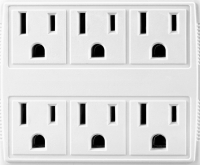
In the news this week there has been talk of inanimate objects that can Tweet their status to humans via their Twitter accounts.  Included in this array were a house plant that can complain about being under- or over-watered and a pair of shoes that can advertise when they take steps.  Entertaining, for sure, but the one category that caught my attention was electric meters that can Tweet data.

Wed Feb 17 2010 9:09pm

We're Going Nuclear! (Again)

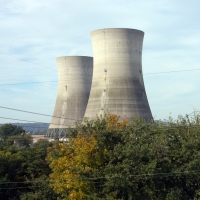
On Tuesday of this week, President Obama announced construction plans for the first new U.S. nuclear power plant (actually two new reactors at an existing plant) in almost three decades.  Touting the benefits that nuclear power offers to the environment (in particular, fewer carbon emissions as compared to similar-sized coal burning plants), the U.S. government will back $8.33 billion in loans for the reactor additions to the Alvin Vogtle Electric Generating Plant in Burke, Georgia.  The loans program is run by the U.S. Department of Energy (DOE) and has previously sponsored infrastructure projects concerning wind turbines and cleaner coal burning power plants.

The tragic explosion at the Kleen Energy plant in Middletown, CT on February 7th reminds us that construction is dangerous work.  Our sympathies go out to the families of those impacted by this recent accident.  The explosion apparently occurred while the crew was purging natural gas lines.  A nuance of this story is that this power plant was still under construction and not yet operational.  Also, there’s been debate in various blogs and news articles about potential fatigue among the construction crew.  Were they under too much pressure to get too much done too quickly?

The various blogs I follow send me newsletters, and one article regarding new smart bridge technology caught my attention last Friday. A “smart bridge” is probably better labeled as a talking bridge – one that communicates its status to those who are listening for follow-on interpretation. Baseline measurements of critical strain, deflection, and corrosive conditions can be established with the structure following project completion, then monitored throughout the bridge’s service life.

In President Obama’s State of the Union address on January 27th, he mentioned Tampa’s upcoming high-speed rail (HSR) project and his subsequent trip there on January 28th. As was mentioned in his speech, Tampa’s new HSR line is not the only rail project addressed in the recent American Reinvestment and Recovery Act (ARRA). Several other states are slated to receive federal funding for rail line improvements, totaling $8 billion. The Florida project will receive $1.25 billion to connect Tampa to the Orlando International Airport. California will receive $2.25 billion to begin a HSR line between Los Angeles and San Francisco.

As the world’s most populated nation, China does things on a massive scale. Apparently not lacking in construction dollars, China has undertaken what’s been labeled the modern world’s most expensive construction project ever: The South–North Water Transfer Project. China is mounting an effort to divert the Yangtze River, the world’s third longest river, from three locations in China’s southern provinces to industrial northern regions where water is becoming very scarce and where pollution and conflicts over water access are rampant. Various articles on the South–North Water Transfer Project estimate a potential cost of approximately $60 billion USD across its three component routes and project completion times that vary by several decades, up to 50 years.

This is the fifth article in Buildipedia's series on U.S. Infrastructure, following the January 8, 2010 feature on dams, "It’s About Dam Time!"

The American Society of Civil Engineers (ASCE) assigned the United States’ DRINKING WATER infrastructure a grade of “D-” on their 2009 Report Card for America’s Infrastructure. Easy access to fresh water is a modern convenience that we might take for granted in our daily lives.

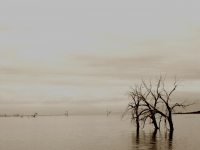
I’d like to kick off my self-labeled “Water Week” with a historical tale about the potential hazards of allowing civil engineers to move rivers around.  In grade school, I remember hearing about a big sea in Southern California, the Salton Sea.  Its name sounded distinguished and venerable.  I always thought it held the non-evaporated water and denizens of some ancient body of ocean water.   However, up until 1905, it was a dry depression, an ancient sea bed in the stark desert of southern California between Palm Springs and Yuma, AZ.

Fri Jan 22 2010 8:00am

Building Automation Systems

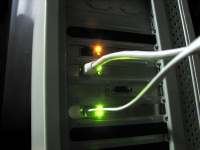
It's likely that most Americans got their first glimpse of Building Automation Systems in 1939, when the Wizard of Oz appeared from behind his black curtain, frantically pulling levers to remotely spread smoke, his green visage exposed to Dorothy and her pals.  Modern Building Automation Systems (BAS) are different than Oz’s in their focus, technology and desired outcomes, but similar in their concept of centralized remote monitoring and control of mechanical systems.

Copyright © 2012 Buildipedia.com™ | All Rights Reserved
Site Designed by Kinopicz American