
David A. Todd
A senior engineer and corporate trainer of engineering for CEI Engineering Associates, Inc. David has 36 years of experience as a consulting civil engineer. His experience includes water, wastewater, stormwater, roads, and solid waste infrastructure. For much of the last 20 years he has been involved with stormwater issues. Specifications and construction administration have been a specialty of his within civil consulting engineering . He has BS and MS degrees in Civil Engineering, is a registered engineer in four states, and a Certified Professional in Erosion and Sediment Control.
From the Job Site: Crystal Bridges Museum of American Art
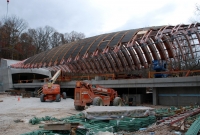
Construction of the Crystal Bridges Museum of American Art, located in Bentonville, Arkansas, has come far, far enough that the completion schedule has been finalized. Opening of the Crystal Bridges Museum has been set for November 11, 2011: the end of a long process is finally in sight. Construction began in 2006 and has progressed steadily. The project is complex, the site is challenging, and the buildings themselves have unusual features.
U.S. Roads Infrastructure: Safety, Congestion, and Road Condition
The list of street categories is long -- interstates, rural highways, minor arterial roads, collector streets, and neighborhood streets -- and the need to keep them in good repair and of adequate capacity for a seemingly insatiable need is huge. The American Society of Civil Engineers (ASCE) assigned the United States’ Roads Infrastructure a grade of “D-” on their 2009 Report Card for America’s Infrastructure. Why? The report stresses safety (as measured by highway fatalities and injuries), congestion, and road condition. It also seems to be skewed toward the i–nterstate highway system and major urban areas. What about the endless miles of roads that provide a lower level of service?
Asphalt Pavement for Solar Power: The Future, or a Dream?
Reduce, reuse, recycle. This is the simplest mantra of the environmental movement and the guiding principle for families and small programs across the nation. How does this principle apply to infrastructure, specifically asphalt pavement? We already use as little asphalt pavement as we can, but this is more an economic decision. We recycle asphalt pavement to build new pavement. We reuse it as clean fill. What else can we do with it? Can we use it to collect solar energy?
Understanding the Building Codes
Due diligence. In different segments of the AEC industry, these words mean different things, but they boil down to this: Do your homework before you plan, design, or build. In the matter of building codes, due diligence can mean the difference between a successful inspection or a rejection, between obtaining occupancy on schedule and experiencing a delay.
Moshe Safdie's Crystal Bridges Museum of American Art
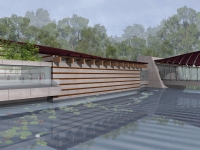
A once quiet valley, about a half mile northeast of downtown Bentonville, Arkansas, is the scene of intense construction. The Crystal Bridges Museum of American Art, designed by Moshe Safdie, has arisen from the ground, and its buildings are taking shape. Once complete, the museum will become a major tourist attraction in northwest Arkansas.
U.S. Wastewater Infrastructure: Funding Issues and Aging Systems
Wastewater systems is the sixth topic in our U.S. infrastructure series. The American Society of Civil Engineers (ASCE) assigned the United States’ WASTEWATER infrastructure a grade of “D-” on their 2009 Report Card for America’s Infrastructure. Here we explore the funding issues that effect the aging treatment plants and waterways that make up our nation's wastewater infrastructure.
Contract Administration and Closeout
Ninety-nine percent of construction work is completed within the allotted time. Getting a project closed out -- the other one percent -- seems to take just as much time. Why does this process take so long? A seemingly endless series of punch list and paperwork items must be completed before the project can be considered complete.
Getting Paid: Contract Administration and the Payment Process
Late payment to the contractor is one of the main causes of relationships souring during construction projects. The contractor is unhappy. Subcontractors are unhappy. Suppliers are unhappy. The engineer has to field all of these complaints -- and often the blame. Incomplete payments, due to disputed work or progress, lead to damaged relationships as well. Late payments do more than effect relationships, however: They can severely cripple a contractor’s ability to continue and complete the work.
Relationships and Contract Administration
Construction is about building, and not only in the sense of infrastructure: building professional and cordial relationships between the three principals on a project results in a better facility constructed on time and within budget. The relationships between the owner (or developer), the contractor, and the engineer (or other design professional) are defined by the General Conditions of the Construction Contract, published by the Engineers Joint Contract Documents Committee (EJCDC).
After Bids: Contract Administration at the Start of Construction
The time between receiving bids (or a proposal for sole source work) and the start of construction is a busy time for the contractor, the owner, and the design professional. The design professional must quickly check the bids and verify that the low bidder truly has the qualifications to do the work, then prepare the contract documents for signatures. The owner needs to proceed through the necessary steps to award the project, which include having financing ready. The low bidder must begin to expand upon the data assembled during the bid phase and prepare for mobilization.