Fernando Pages Ruiz
Homebuilder, developer and author Fernando Pagés Ruiz builds in the Midwest and Mountain States and consults internationally on how to build high-quality, affordable and energy-efficient homes. As a builder, his projects have numerous awards including the 2008 “Green Building Single Family House of the Year” and the 2007 “Workforce Housing Award” from the National Association of Home Builders. In 2006, the Department of Housing and Urban Development's PATH project chose him to build America's first PATH Concept Home, a home that is affordable to purchase and to maintain while meeting the criteria of LEED for Homes, ENERGY STAR, MASCO Environments for Living, and the NAHB's Green Building standards. A frequent contributor to Fine Homebuilding and EcoHome magazines, Pagés is also the author of two books published by the Taunton Press: Building an Affordable House: A high-value, low-cost approach to building (2005) and Affordable Remodel: How to get custom results on any budget (2007).
Website URL: http://www.buildingaffordable.com/
Insulated Siding, Part I
Installing insulated siding on an older home may be the best way to up your R-value.
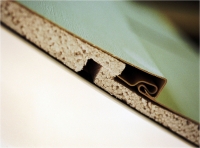
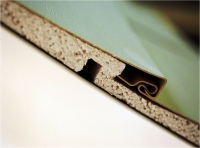
My first encounter with insulated siding, or “IS,” as it’s known in the trades, came while visiting the Raritan Inn, an eco-bed-and-breakfast in New Jersey which was built by a pioneer in energy-efficiency construction, Bill Asdal. The inn serves as an ongoing research center, and a showpiece of deep energy remodeling. In 2003, Asdal, in partnership with the Department of Energy (DOE) and the National Association of Homebuilders Research Center (NAHB-RC), pioneered the first net-zero energy remodeling project in the U.S. The structure was clad with insulated siding in an effort to achieve the highest R-values possible within the limits of remodeling an 18th century structure. But what I noticed was not the R-value. The siding was clapboard profile and it lay flat, lacking the usual telling concave cup typical of most vinyl siding.
Slabs for Colder Climates, Part 3: Installing Frost-Protected Shallow Foundations for Unheated Buildings
Fernando Pages Ruiz continues his educational series on constructing frost-protected shallow foundations, focusing here on unheated structures.
Although neither the International Residential Code (IRC) nor the International Code Council (ICC) provides a prescriptive path, design criteria do exist to design frost-protected shallow foundations (FPSFs) for unheated buildings, including garages and porches attached to heated structures. The standard for unheated buildings developed by the American Society of Civil Engineers (ASCE), ASCE 32-01, Standard for the Design and Construction of Frost-Protected Shallow Foundations, is available for purchase at asce.org.
Slabs for Colder Climates, Part 2: Installing Frost-Protected Shallow Foundations for Heated Buildings
Contractor-turned-homebuilder Fernando Pages Ruiz gives hands-on instruction for constructing frost-protected shallow foundations.
Because moisture in soil can create an "ice lens" – an area where ice crystals form and bulge, exerting vertical pressure – building footings have traditionally penetrated deeper than the maximum seasonal frost penetration in any given climate to prevent these vertical forces in frozen ground directly under the footings from lifting the foundation and damaging the structure. In many areas, frost depth exceeds 42", resulting in footings far deeper than those needed structurally.
Slabs for Colder Climates, Part 1: The How and Why of Frost-Protected Shallow Foundations
As energy savings and the conservation of resources increasingly drive decision-making for homebuilders, frost-protected shallow footings offer a good method for constructing slab-on-grade foundations.
As a builder constructing townhouses, commercial buildings, and the occasional slab-on-grade (SOG) house in frigid Nebraska, I always thought it silly to dig footings half as deep as a full basement when the point of SOG construction was to spend less on foundations. A basement seemed the better value, to me, given that only token cost savings came with a slab ... until one year, while attending the National Association of Home Builders (NAHB) International Builders' Show, I heard a lecture on a new (at least for me) approach to constructing slabs in northern climates that did not require footings to extend below the frost line. I immediately perked up and listened closely; it sounded like a good cost-saving measure.
Pervious Pavement: Pavement That Leaks Like a Sieve, Part 2
Contractor to Contractor: In this second of a two-part series, contractor-turned-homebuilder Fernando Pages Ruiz shares his knowledge on how to choose a mix, prep the site, and install porous pavement.
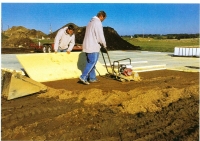
Although a blended, high-course aggregate/low-fines concrete (a concrete blend of Portland cement, 3/8" or pea gravel aggregate, and little to no sand) is a simple concept, the logistics of it are far from simple. For this highly porous concrete to provide a durable surface, conditions have to be almost perfect. The concrete requires an exact proportion of aggregates and water, special chemical admixtures, proper mixing during delivery, and expert placement. I recommend that if you decide to use pervious pavement in one of your projects, don’t do it yourself. Hire the very best paving contractor in your area and work with the largest and most sophisticated ready-mix supplier. Pervious pavement is not so much a concrete product as it is a paving system, including soil, sub-grade, and, of course, the mix.
Pervious Pavement: Pavement that Leaks Like a Sieve
Contractor to Contractor: In this first of a two-part series, contractor-turned-homebuilder Fernando Pages Ruiz introduces permeable pavement, which allows rain and snow to seep into the ground.
What is Pervious Pavement?
Pervious concrete came to the attention of the building community in the United States after Congress passed the Clean Water Act in 1987. With restrictions in the amount of storm water runoff permitted from roads, parking lots and other impermeable surfaces, some developers began to look for environmentally-friendly alternatives. They found it in an exotic, water-sucking concrete first tested in Florida about 30 years ago as a flood-control device. Engineers placed highly porous concrete paving in spots along Florida roadways frequently submerged by heavy downpours. The permeable surface provided a quick-drying roadway that didn’t stay flooded after the storm.
Pervious Pavement: Pavement That Leaks Like a Sieve
Contractor to Contractor: In this first of a two-part series, contractor-turned-homebuilder Fernando Pages Ruiz discusses permeable pavement, which allows rain and snow to seep into the ground.
What Is Pervious Pavement?
Pervious concrete came to the attention of the building community in the United States after Congress passed the Clean Water Act in 1987. With restrictions in the amount of stormwater runoff permitted from roads, parking lots, and other impermeable surfaces, some developers began to look for environmentally friendly alternatives. They found it in an exotic, water-sucking concrete first tested in Florida about 30 years ago as a flood-control device. Engineers placed highly porous concrete paving in spots along Florida roadways frequently submerged by heavy downpours. The permeable surface provided a quick-drying roadway that didn’t stay flooded after the storm.
Housewrap Boot Camp
Effective air sealing comes with workmanship. No matter what brand of housewrap you choose, you will be wasting your money unless you install it carefully. Getting the installation right is not hard, but it requires a basic understanding of how housewrap works. Detailed installation instructions can be found on manufacturers’ Web sites and often at the lumberyard or home center where housewrap is purchased.
Remodeling Magazine’s 2011-2012 Cost vs. Value Report: The Rise and Fall of Home Improvement
What home improvement projects will offer the best return on investment (ROI)? As the economy continues to falter, enhancing curb appeal is still your best bet … however, the ROI of a few projects that made Remodeling Magazine’s Cost vs. Value list this year may surprise you.
Every year for the last quarter century, Remodeling Magazine has published the results of its survey comparing the cost of home improvements with the value of those improvements at resale. Remodeling 2011-2012 Cost vs. Value Report examines 35 popular projects ranging in scope from under $1,500 to over $225,000, and, in drill-down fashion, provides national, regional, and city averages on how the projects fare as investments.
Energy and Sustainability on Campus: Making the Grade
American universities have committed to greening their campuses. Three institutions — the University of Michigan, the University of California, and University of Pennsylvania — share their experiences.
Whenever you flip a light switch or adjust a thermostat at the University of Michigan in Ann Arbor, you’re unwittingly interacting with Henry "Hank" Baier, or at least with his department. Baier, Associate Vice President for Campus Facilities and Operations, oversees a city-size infrastructure supporting 80,000 students, faculty, and staff on a 3,200 acre campus with 500 major buildings, including 150 health clinics, three hospitals, two golf courses, and “The Big House,” also known as Michigan Stadium, the largest sports arena in the United States. As Baier sees it, “Energy is the lifeblood of our competitive society.” And by extension, the lifeblood of the university. “Our energy consumption and environmental footprint has become more important at the University of Michigan, because it’s become more and more important to our students and faculty,” says Baier. It’s become more costly, too; Baier’s campus devours $155 million energy dollars every year, meaning the concept of sustainability has become a fiscal necessity as well as an environmental imperative.