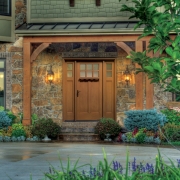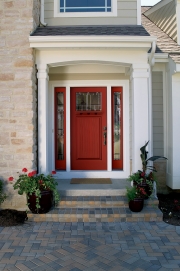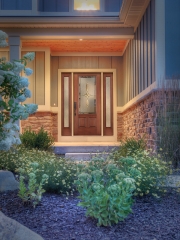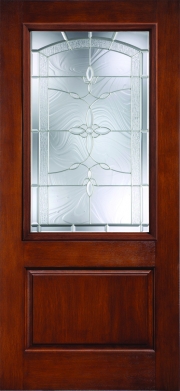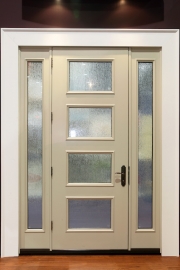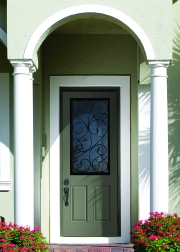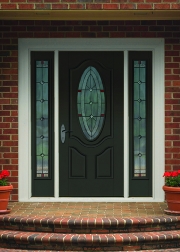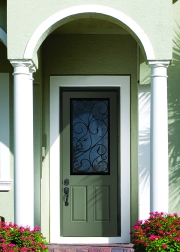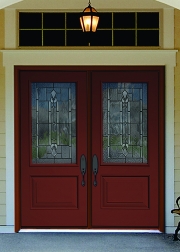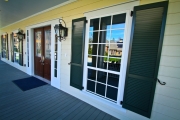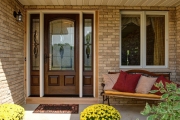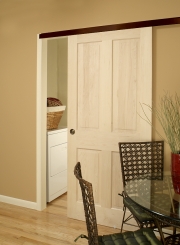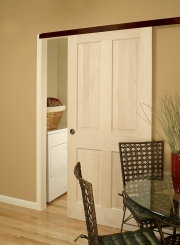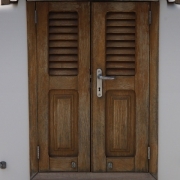
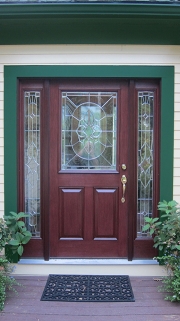
This topic includes information related to composite doors installed during construction. Composite doors appear similar to wood doors, but are manufactured from a variety of materials. Outer skins, inner framing and insulating materials are used to construct durable interior and exterior hinged, sliding or pivoting doors.
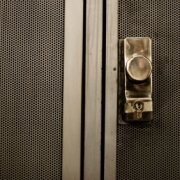
This topic includes information related to metal screen doors and frames installed during construction. Metal screen doors and frames are lightweight exterior doors commonly used in conjunction with other entry doors. Doors and frames are manufactured from steel and aluminum materials. Doors typically have storm windows and screening or just screening. Mesh screening allows for ventilation and keeps out insects.
Hollow metal doors and frames are rugged and long-lasting. They resist heat and humidity, which may adversely affect other door and frame products by causing problems such as warping and delaminating.
Wood doors may be classified as either flush or stile and rail construction. Wood doors may be installed as swinging, sliding or folding doors, and are available for interior locations or as exterior entrance and storm doors. There is a wood door for every budget, from the most economical flush hollow-core door, available from your local home improvement center, to custom-made stile and rail doors, produced with furniture-grade hardwoods and costing thousands of dollars.
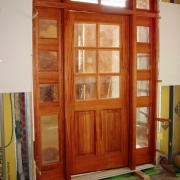
Stile and rail wood doors are produced with vertical (stile) and horizontal (rail) framing members and have inset panels made of wood, glass lites, or louvers. They come in a variety of designs and may be used for interior and exterior applications.
Flush wood doors may be provided with wood veneer, plastic laminate, or paint-grade faces, and constructed as hollow or solid-core doors.
Replacing an old wooden door is an easy afternoon DIY project and you probably have the basic tools required. Watch our easy solution in Sixty Simple Seconds
Exterior wooden doors are subject to weather extremes and often deteriorate long before the door frame. Rather than tear out the entire door and frame, you can replace the old door by matching up the existing hinges on a new door slab and installing it on the existing frame. Watch this episode of 60 Simple Seconds for a quick look at how to replace a wooden door.
If your interior doors are severely stuck, rubbing, scratched, have holes, damaged beyond repair, or just don’t fit with your style, installing new prehung doors will sharpen the appearance of any room in your home and provide easy, daily operation. Installing a prehung door after removing an existing door isn't as difficult as you might think. With some patience and a little know-how, installing a prehung interior door is a project any DIY'er can do.
Contractor-to-Contractor: In this installment of Rob Thimmes’ series on framing walls with light gauge metal studs, he reviews the basics of hollow metal doorframe installation.
During your framing process, the question of when you should set welded hollow metal doorframes must be addressed. Many contractors prefer to install doorframes before the walls are built. This facilitates the ease of fastening the "feet" down to the floor. After the frames are fastened down, braces are required to keep wind or inadvertent contact from toppling the freestanding frames. Then, as the framers come to a pre-installed doorframe, they simply remove the braces and frame to, over, and around the assembly. Another method is to install the frames at the time the walls are built. Roughly, this method follows the same progression as the first method without the need to temporarily brace off the frame. The framers build walls until they come to a door opening; then they get down off their scaffold and set the doorframe, after which they resume framing walls. The doorframe need not be braced off when employing this method, since the doorframe is permanently attached to the studs. The drawback to this method is "switching gears": I have found that keeping crews productive and on task is easier when they don’t have to carry equipment for two separate operations and mentally bounce back and forth between them. However, the ease or advantage of either of these two methods is usually negated by late-arriving door frame deliveries (a very common problem). The last method involves setting doorframes after the walls are built. In my experience, I have found this to be the most common occurrence. It is with this last method that we will concern ourselves today.
Installation Instructions for Pocket Door Frame From Johnson Hardware
Written by Johnson Hardware Tue Feb 14 2012 2:45pmHere are some typical questions about space–saving pocket doors and building tips for installing pocket door frames:
First Step to a Successful Converging Pocket Door Installation
Written by Johnson Hardware Tue Feb 14 2012 2:54pmNew “How-To” Video Features Modular, User-Friendly Format and Vivid Animation
Converging pocket doors offer an ideal solution in situations where conventional swinging doors would rob too much space or where a room’s design or furniture would encumber swinging doors. This videoshows how to make a dramatic double pocket door installation simple and easy. The secret is the Johnson Hardware converging pocket door kit, which connects two pocket door frames. Converging pocket doors take up no wall space and save up to 28 sq. ft. of floor space. The video demonstrates how to complete this project properly in the shortest time possible. The 11-minute video describes the process in a dozen steps via crisp animation that moves at a manageable pace and lets the viewer stop and review scenes as needed.