GO GREEN - Sustainable Design

Non-Structural Metal Framing

Written by Buildipedia Staff Mon Aug 17 2009 12:14pm

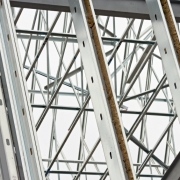
Non-structural metal framing, or light gauge metal framing, has become one of the best options for supporting plaster walls. Typically, light gauge metal framing is considered to range from 25 ga. to 18 ga. Non-structural metal studs can be produced from 1 5/8” to 14” widths to meet a great many framing requirements.

Light Gauge Metal Stud Framing

Written by Mark Reisdorf Thu Feb 02 2012 2:21pm
Planning and Best Practices

The light gauge metal stud framing phase of a project significantly impacts several other trades. It is no secret that good planning and practices will achieve higher production rates and a level of quality that meets the project's specifications. Planning and layout should be the responsibility of the project foreman; however, everyone should be involved with preparing the work flow. While actual layout is underway, other production items should also be thought through.
Framing Out Openings

Written by Robert Thimmes Thu Feb 02 2012 2:08pm

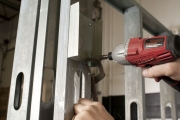
Contractor to Contractor: Follow professional interior contractor Robert Thimmes as he demonstrates how to frame-out openings. This third installment in a series of articles, Framing Walls With Light Gauge Metal Studs, visits the common practices for the framing of window and door openings.

When plumbing your openings and transferring your layout to the top track, turn your stud 90 degrees and attach your level high on the stud flange. Align the bottom edge of your stud with the edge of your opening, get the bubble "dead-on" and mark the top. Attaching your level to the flange rather than the webbing gives you a straighter surface that is less prone to bow, thus reducing variables and improving quality. Since one side of your opening has been plumbed, now just measure over the actual width of the opening and mark to establish the top of the other side.

Standing Up and Bracing Off Walls

Written by Robert Thimmes Thu Feb 02 2012 2:10pm

Contractor to Contractor: Follow professional Interior Contractor Robert Thimmes as he demonstrates how to stand up and brace off walls. This second in a series of articles, Framing Walls With Light Gauge Metal Studs, starts with your walls located, lines chalked and bottom track already shot down (for details on this process, see Metal Stud Track Layout and Shoot-Down).

In the previous installment of “Contractor to Contractor,” we reviewed the details of how to perform the track layout and shoot-down for metal stud walls. Now we move on to the second part of our discussion: standing up and bracing.

Metal Stud Wall System Anatomy

Written by David Ingold Wed Feb 02 2011 2:23pm

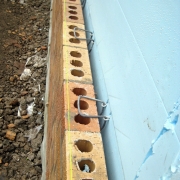
Concrete masonry units (CMU) have long been considered the ideal backup material for brick facing; however, because of increasing installation costs, CMU backup systems have given way to metal stud backup systems. Brick veneer with metal stud backup walls, because they are a very cost effective and versatile wall assembly, are very commonly seen in today’s commercial buildings.  The original exterior metal stud wall systems of the 1970’s were simple. They consisted of metal studs at 16 or 24 inches on center, with fiberglass batt insulation having an integral vapor barrier placed in between. Gypsum board sheathing was placed on each side, and 15 pound felt paper was installed over the exterior sheathing.  This system eventually would fail and allow air and moisture to enter the building, degrading the insulation and thus the R-Value of the wall, not to mention causing other significant problems.

Contractor to Contractor: Follow professional Interior Contractor Robert Thimmes as he produces a layout and final shoot-down of a metal stud track system.

Plumb, level, square, and straight: all carpentry is the same, right? Well, no. Basic building principles apply, but how you build with metal studs differs greatly from building with wood. The following discussion offers a systematic explanation of installing metal studs, with various best practices for each step.

Copyright © 2012 Buildipedia.com™ | All Rights Reserved
Site Designed by Kinopicz American