The Metropol Parasol: Rich Community History Meets Progressive Architecture
-
font size
decrease font size
 increase font size
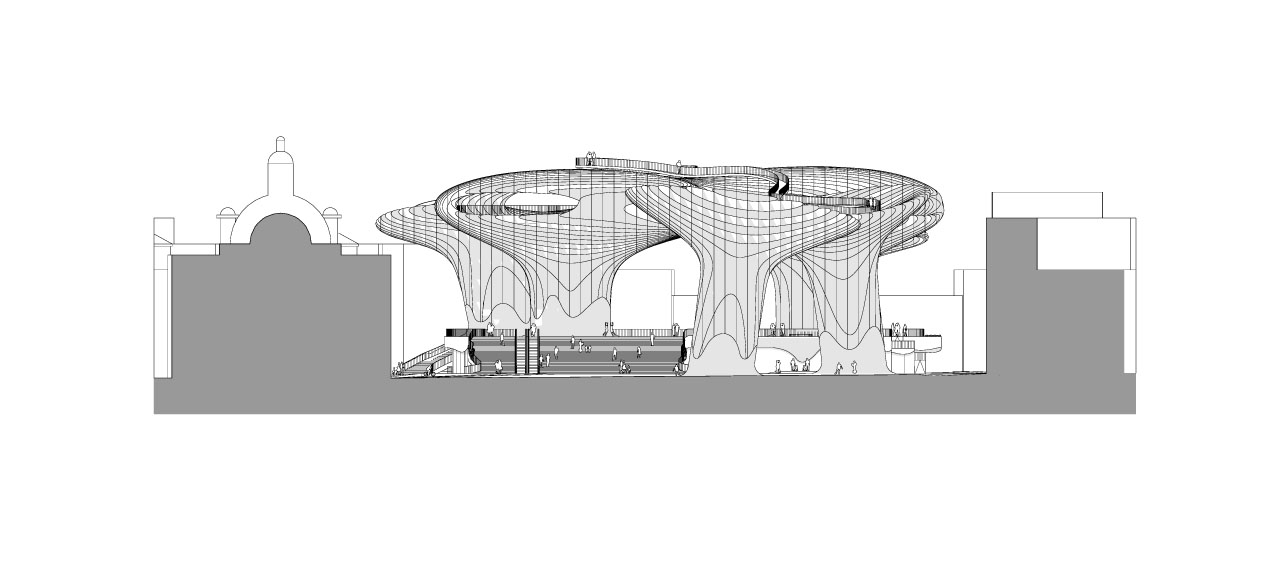
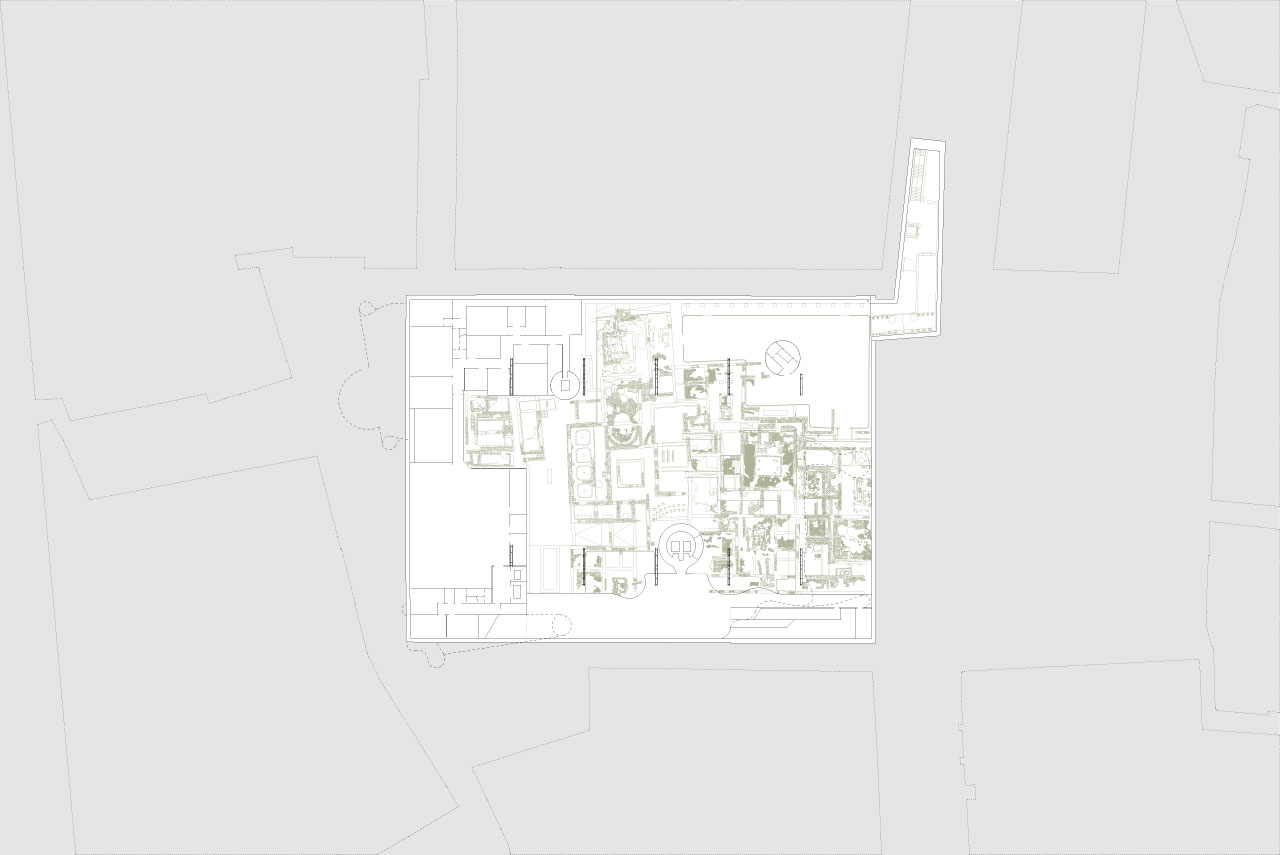
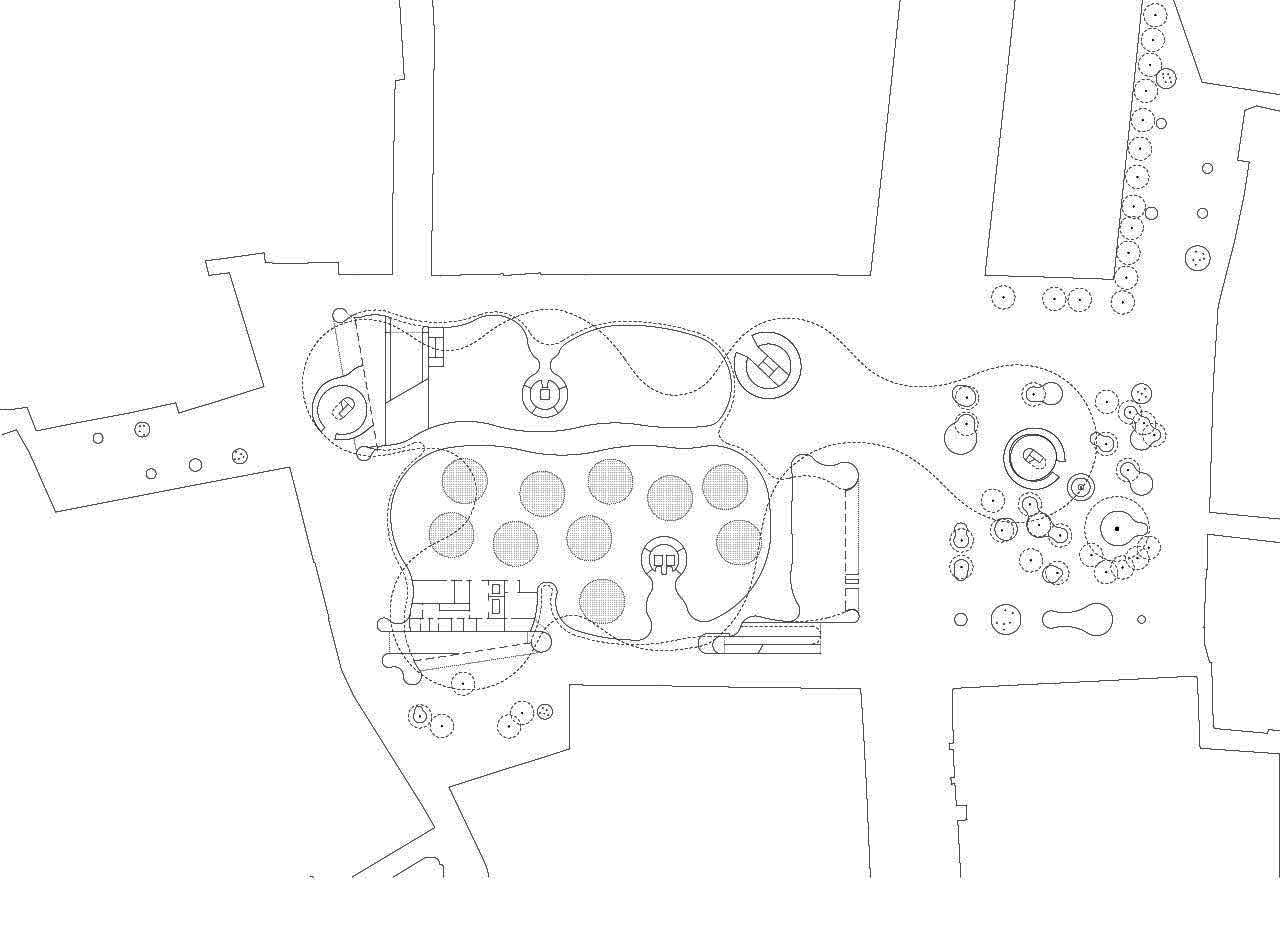
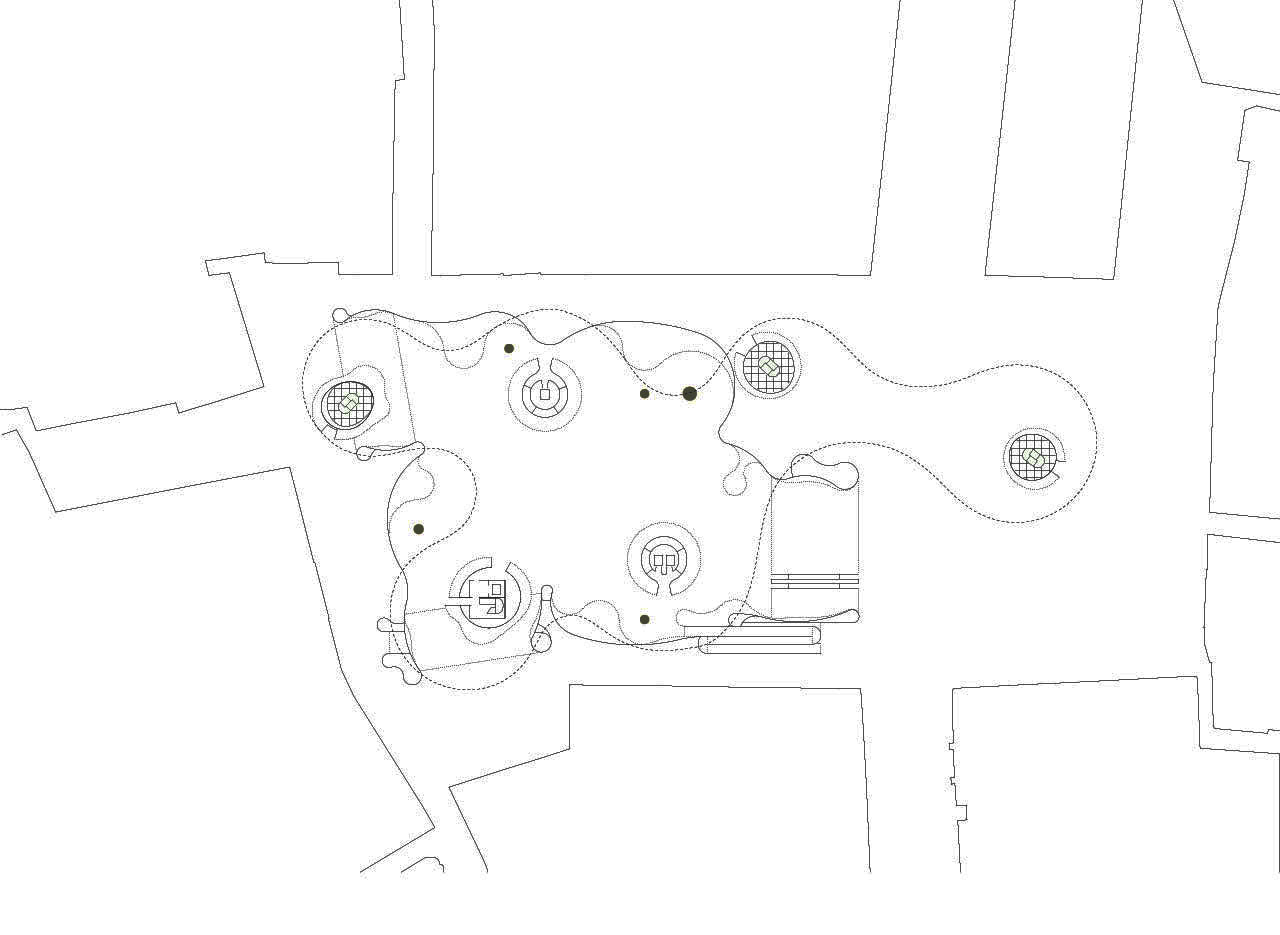
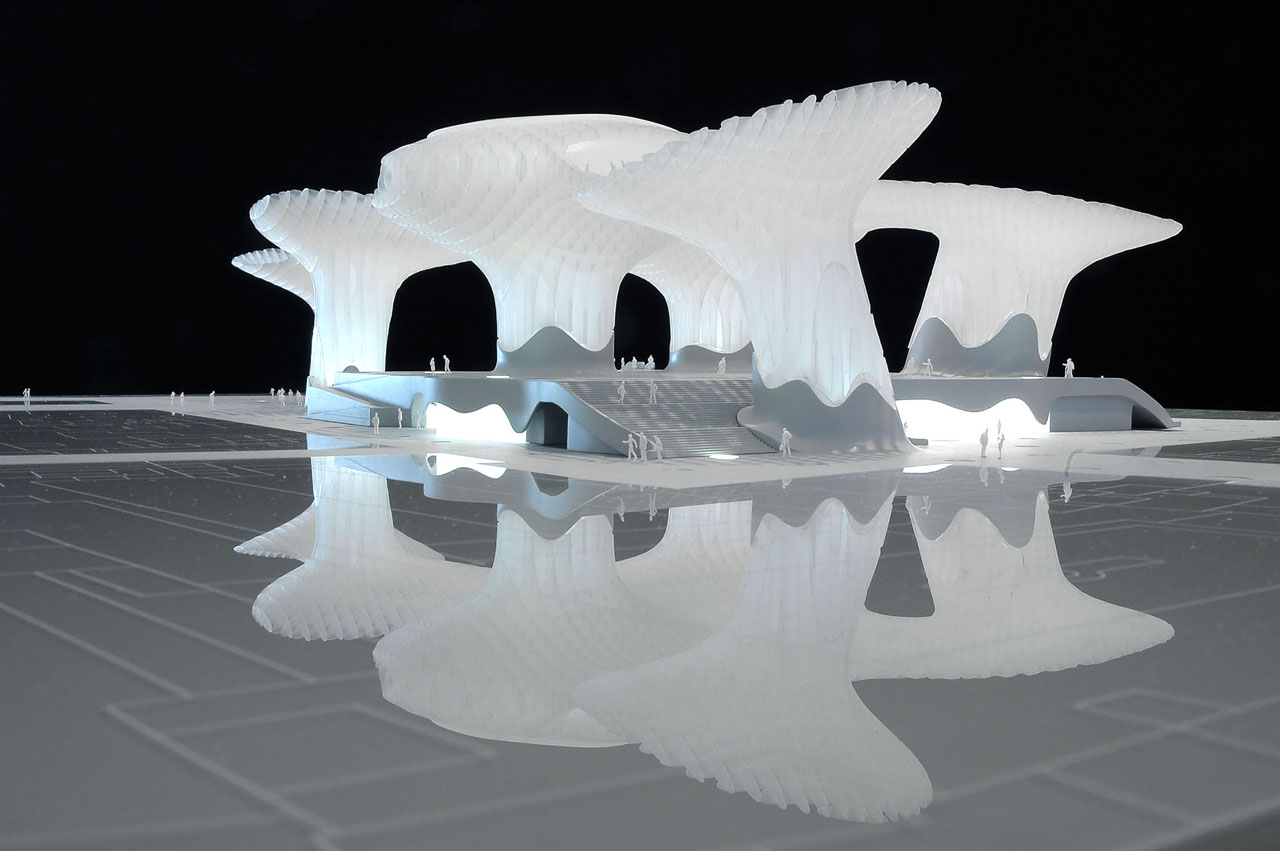
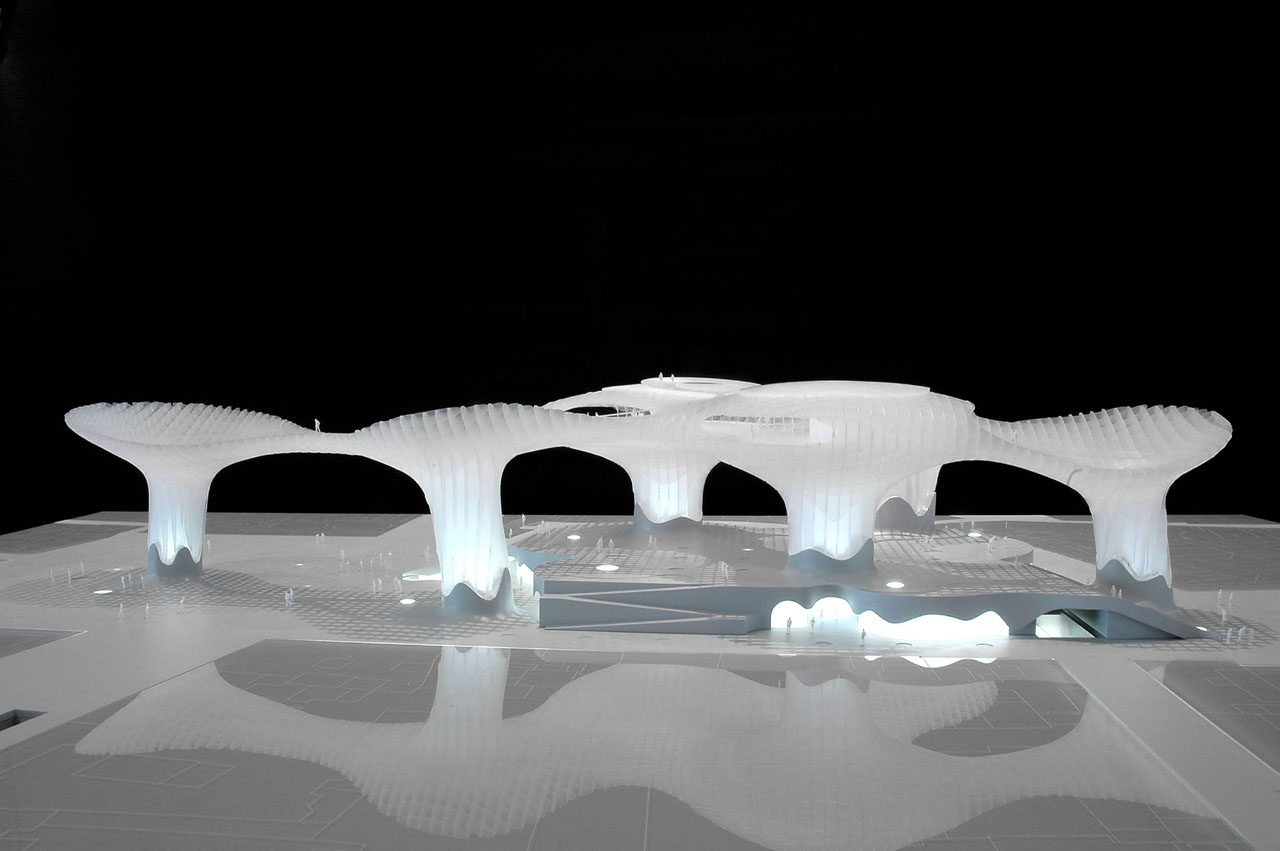
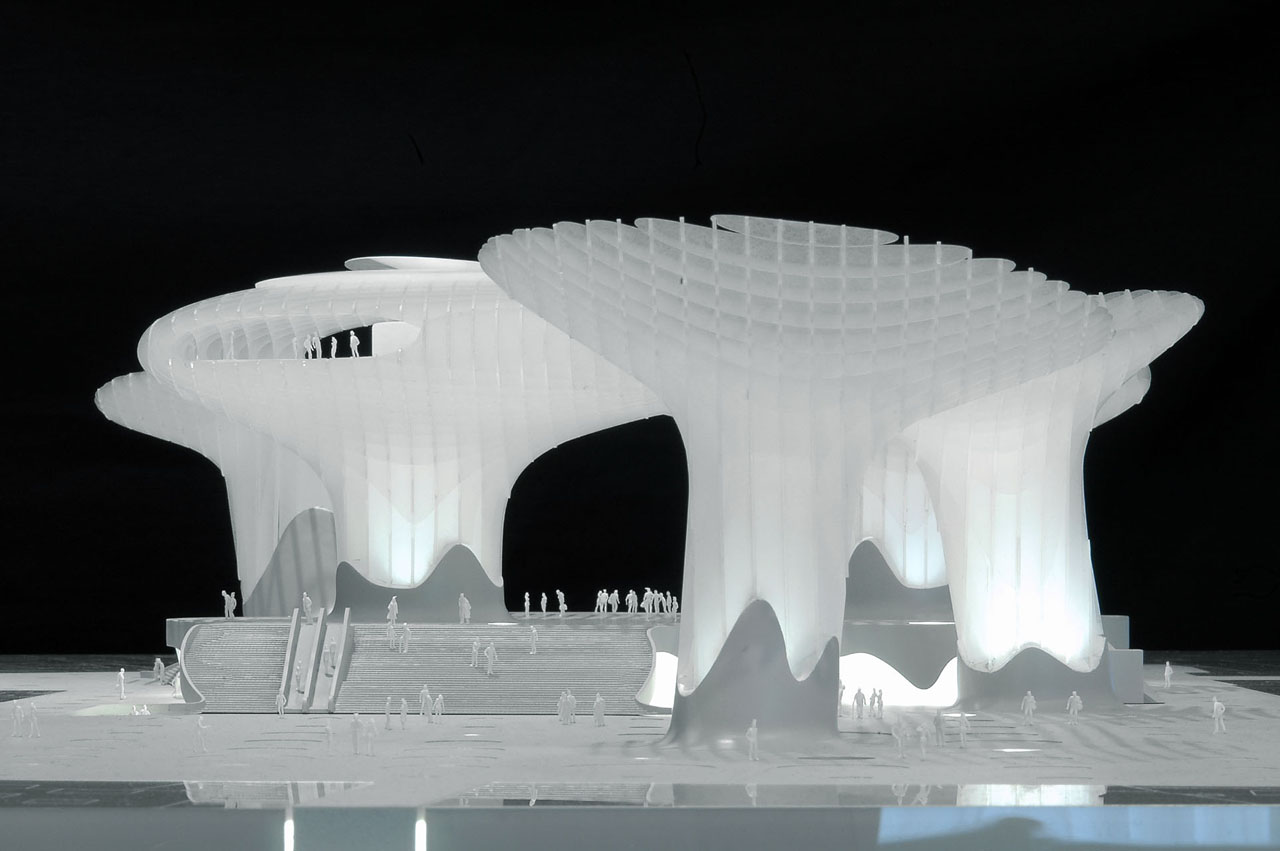
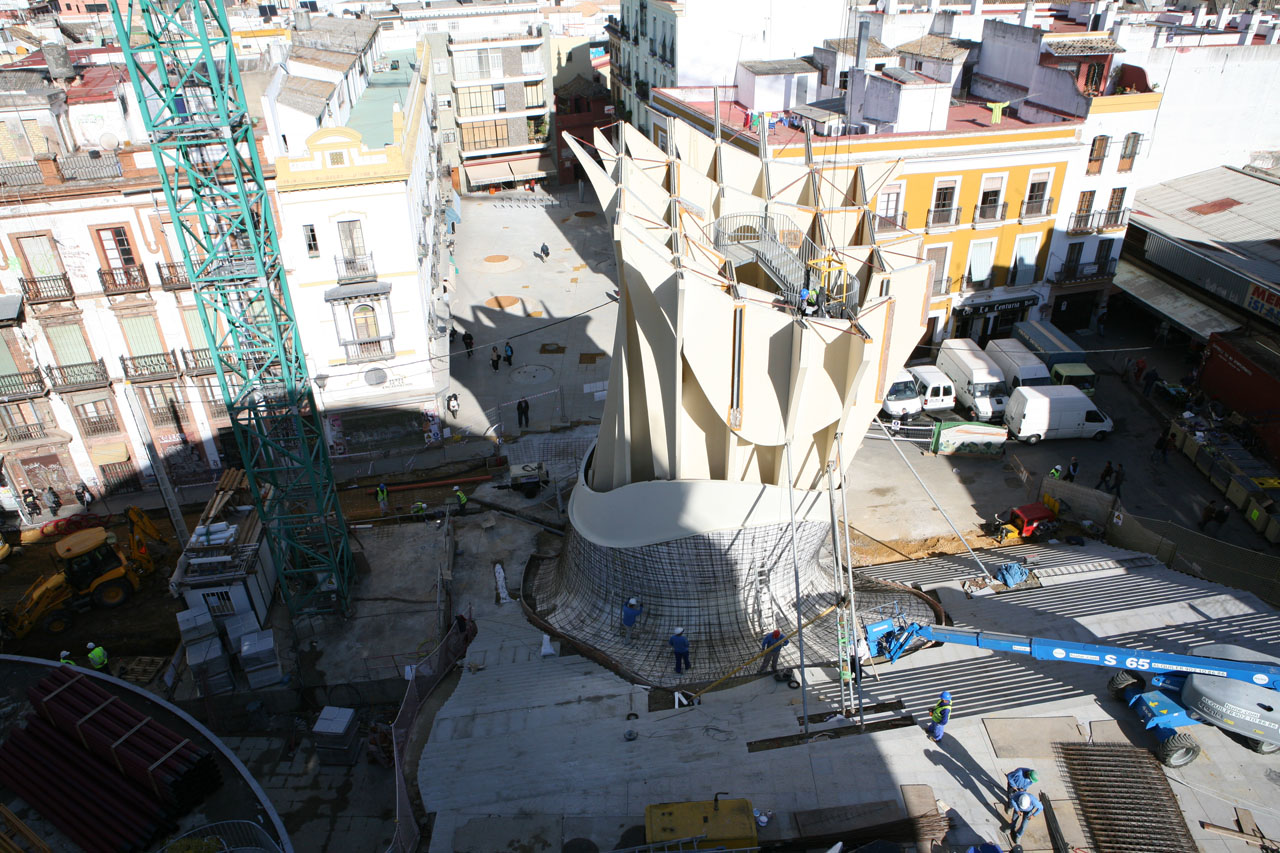
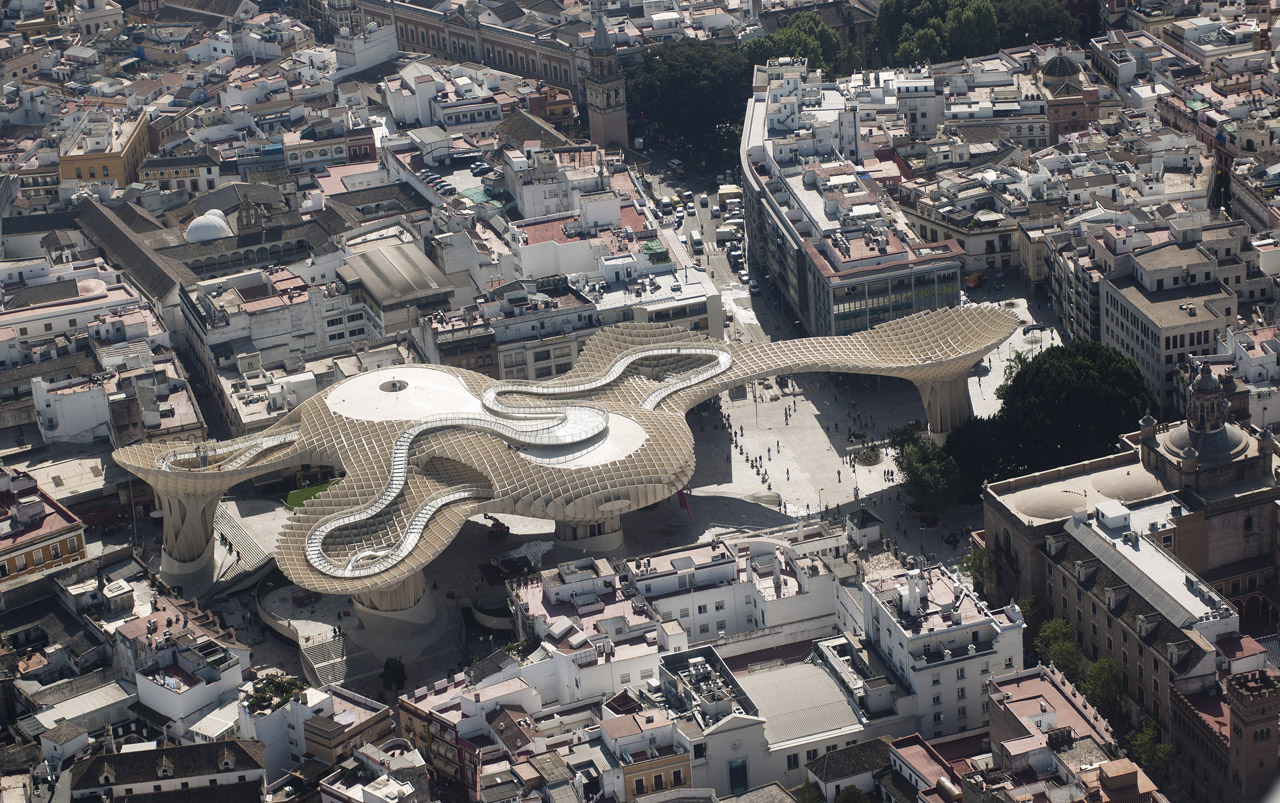
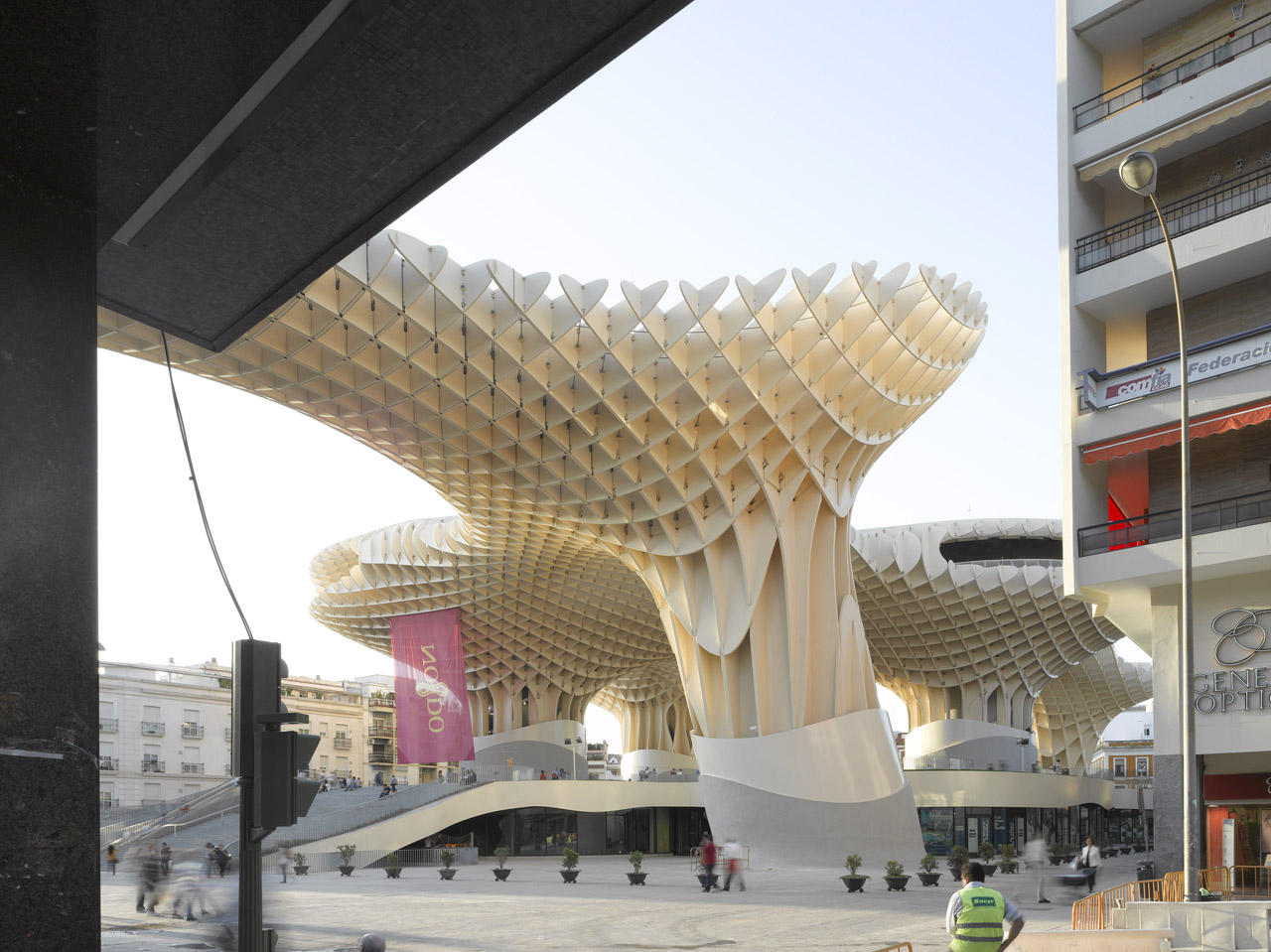
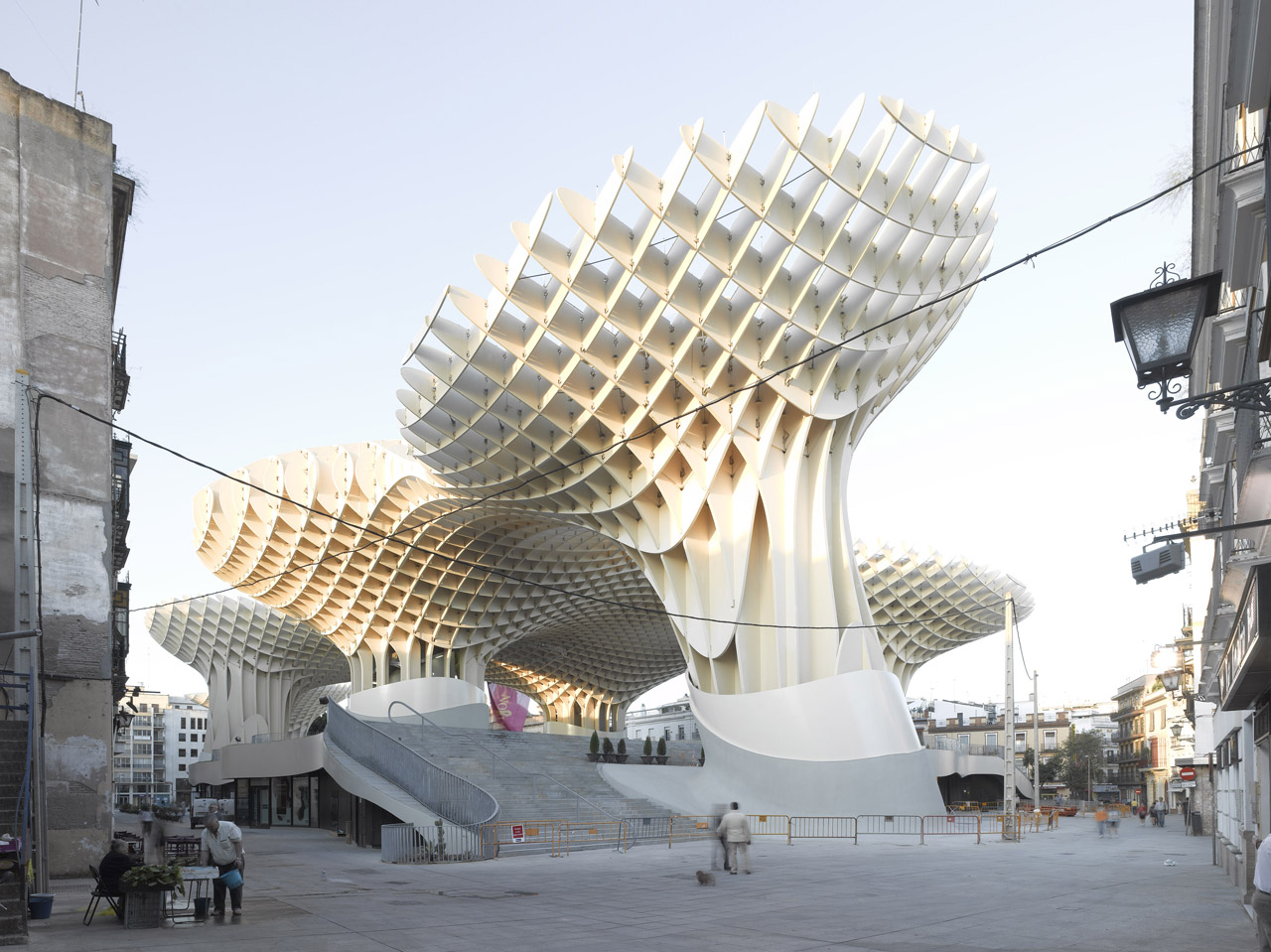
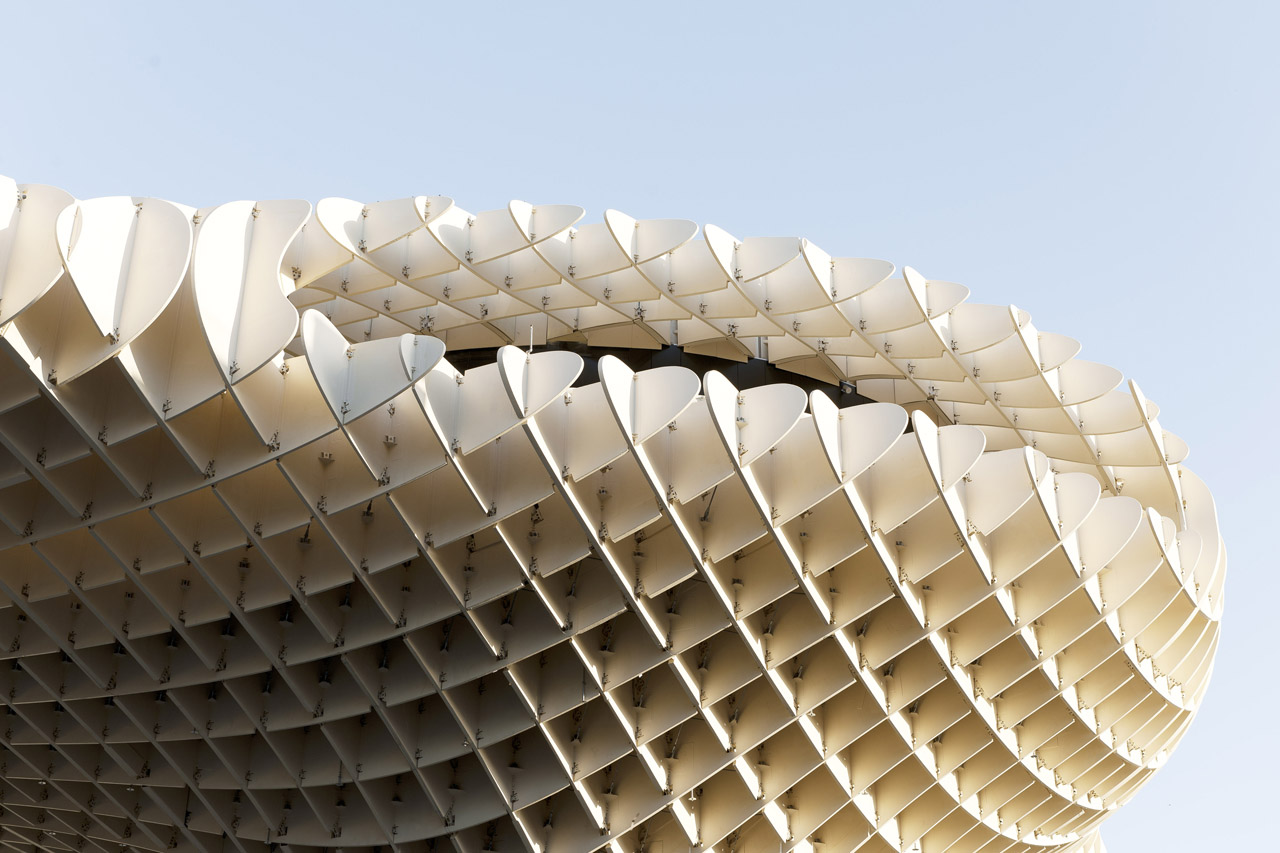
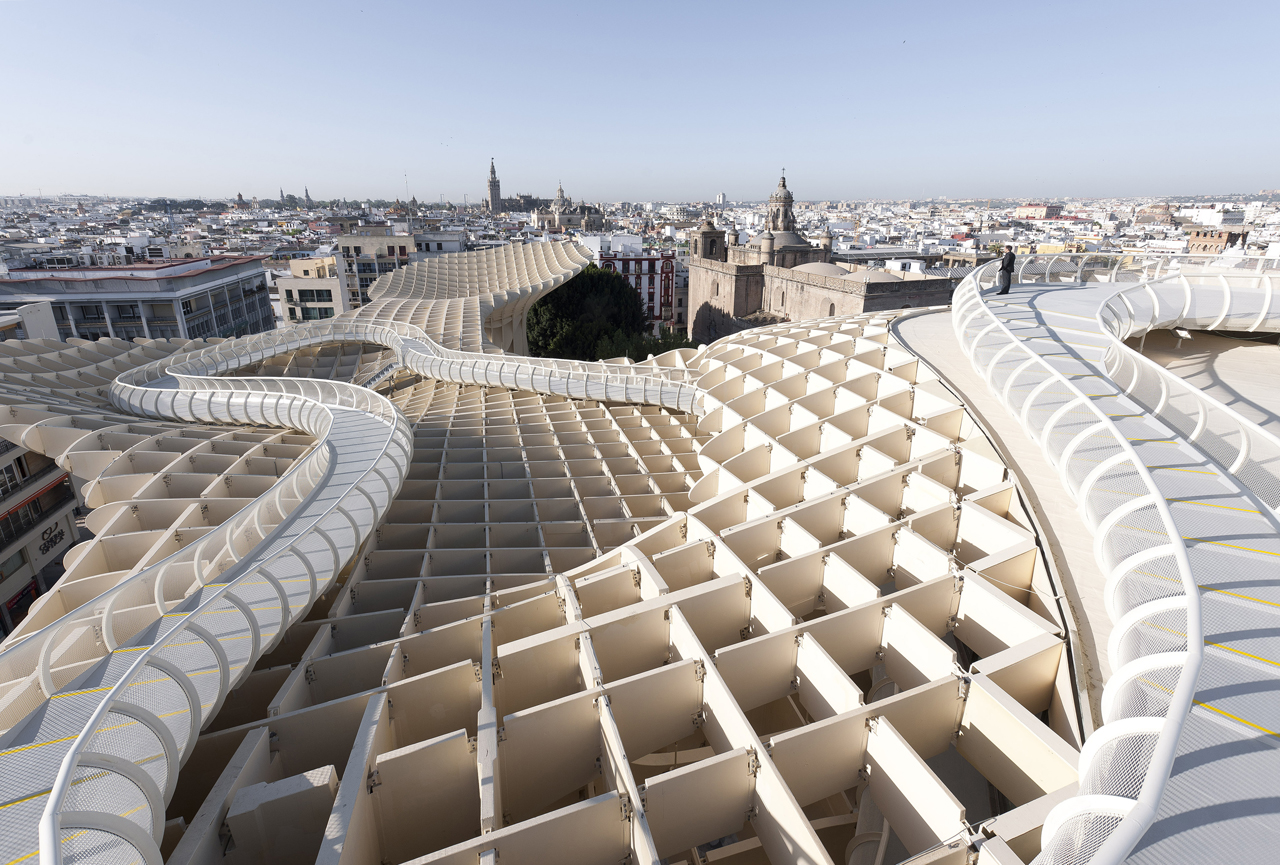
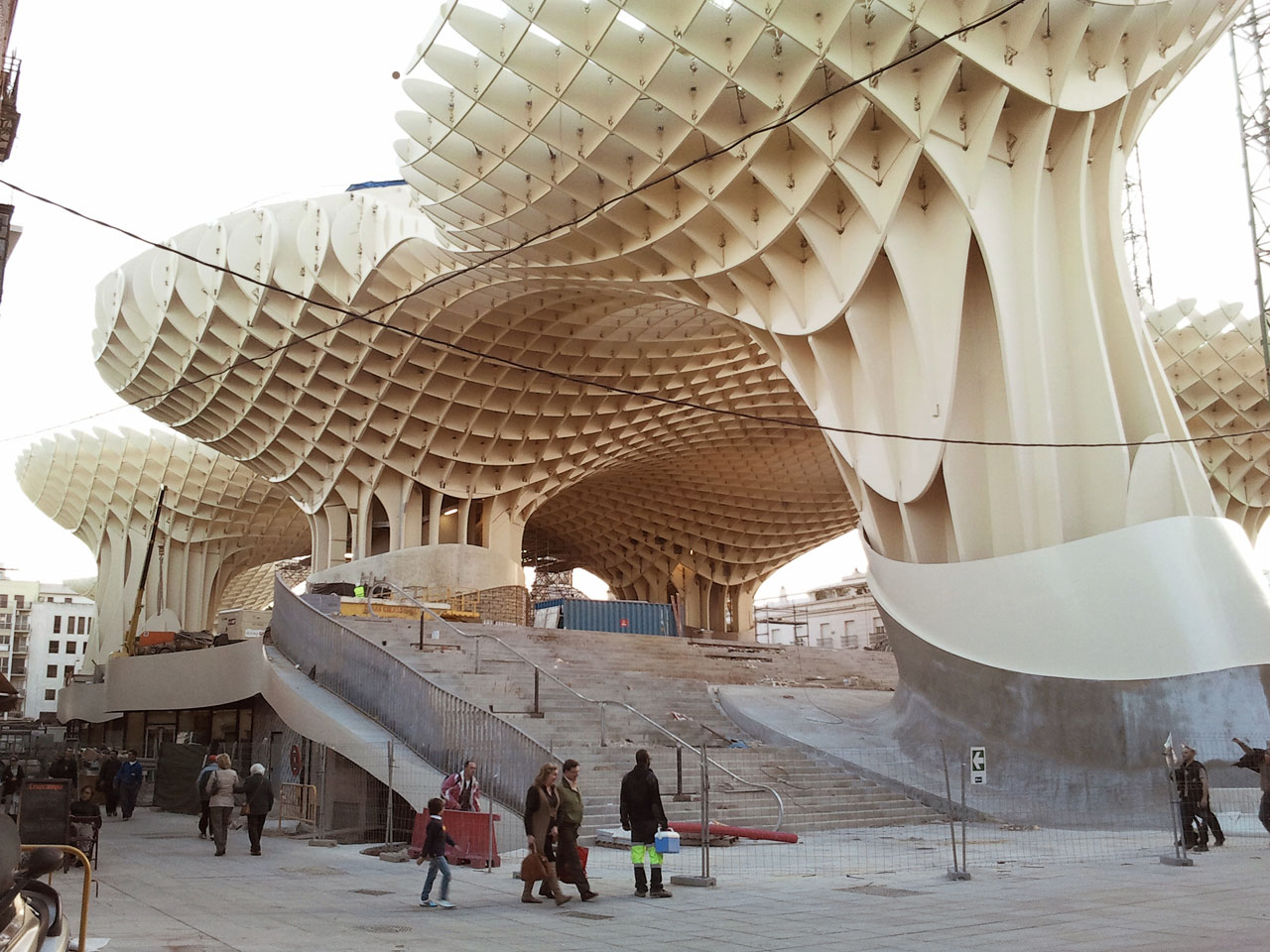
After seven years of planning, design, and construction, J. Mayer H. Architects' Metropol Parasol in Seville, Spain, is a cultural and civic celebration of exuberance and hope -- and a striking testimonial to the spirit and dedication of the people of Seville in creating it. This mixed-use, total redevelopment of the Plaza de la Encarnacion covers over 18,000 m2 (approximately 193,750 square feet) and cost 90 million euros (approximately 129,501,000 U.S. Dollars). Completed in March 2011, the Metropol Parasol project, which defines the Plaza de la Encarnacion, brings welcome life to an important urban space (once a blighted parking lot) in what is becoming the hub of Seville, including a farmers' market, observatory, archaeological museum, and city-view promenades.
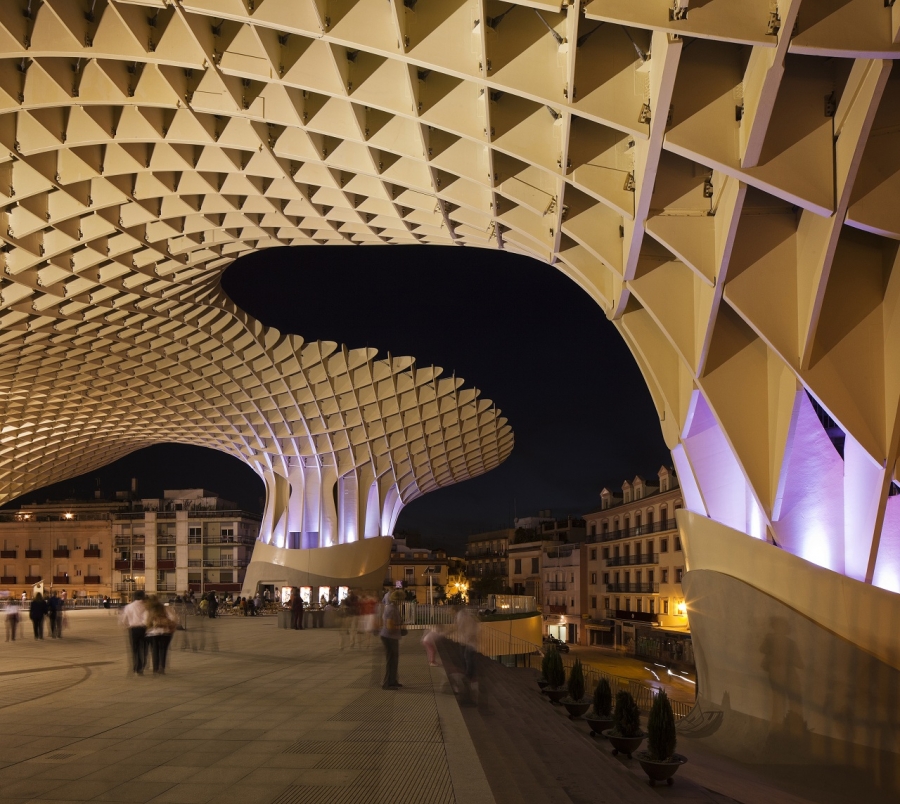
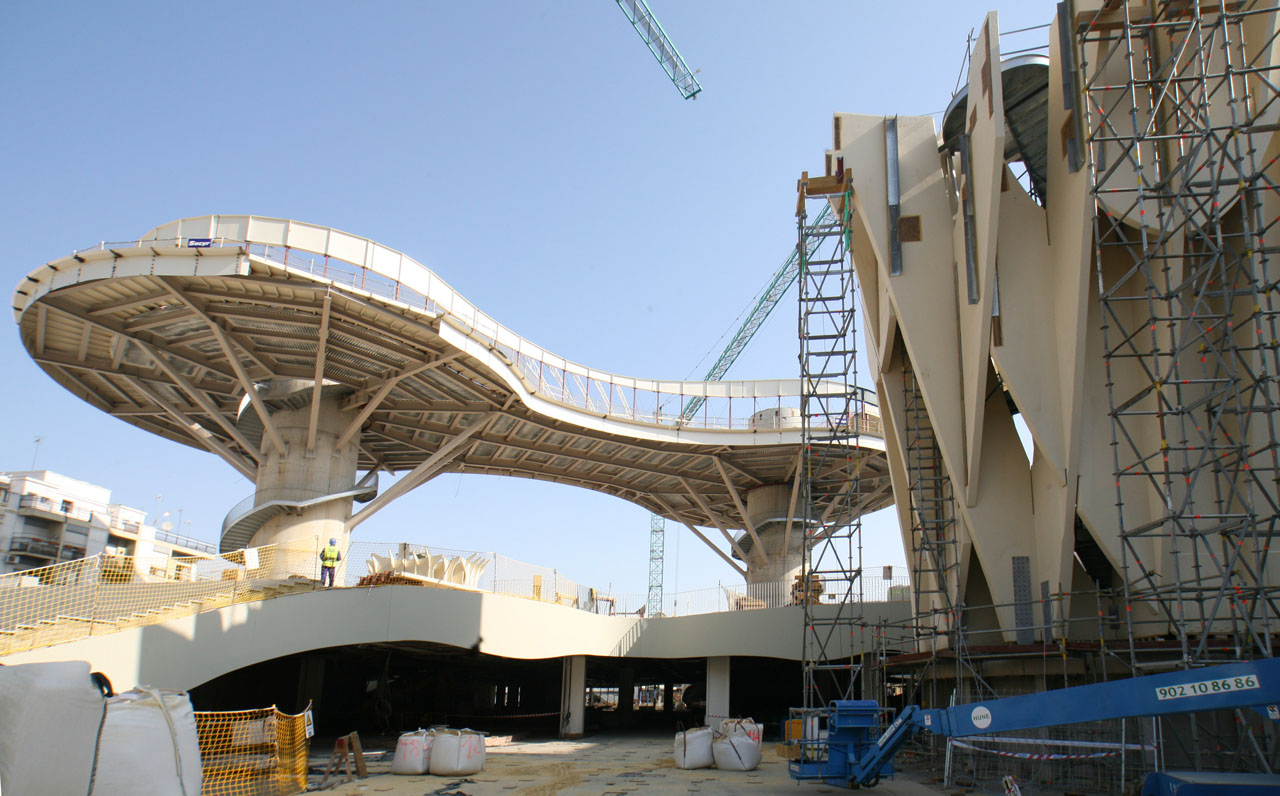
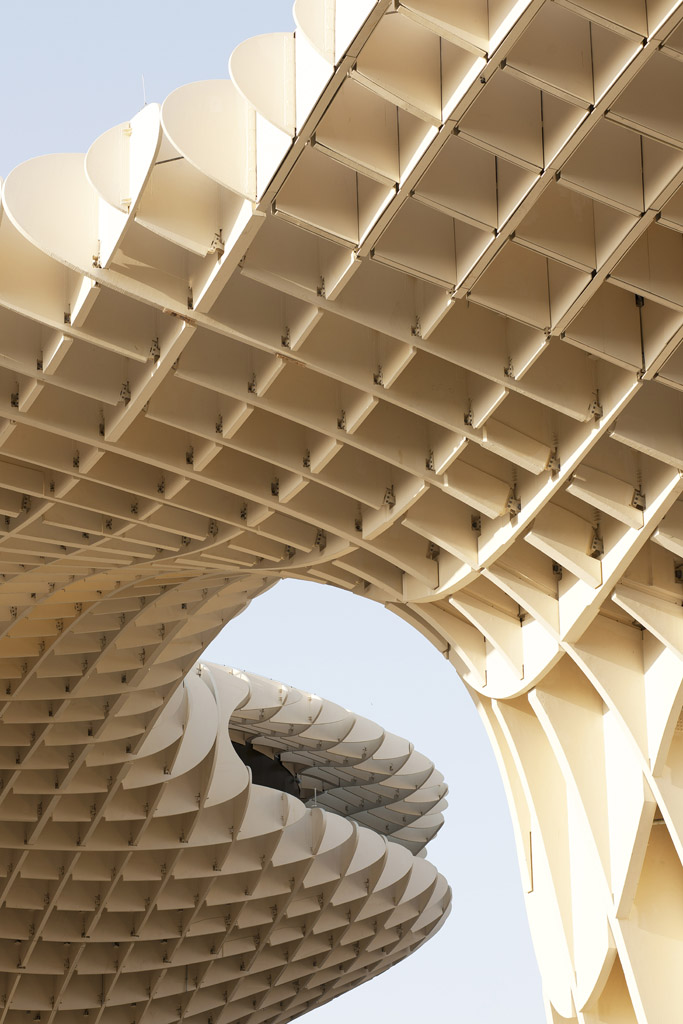
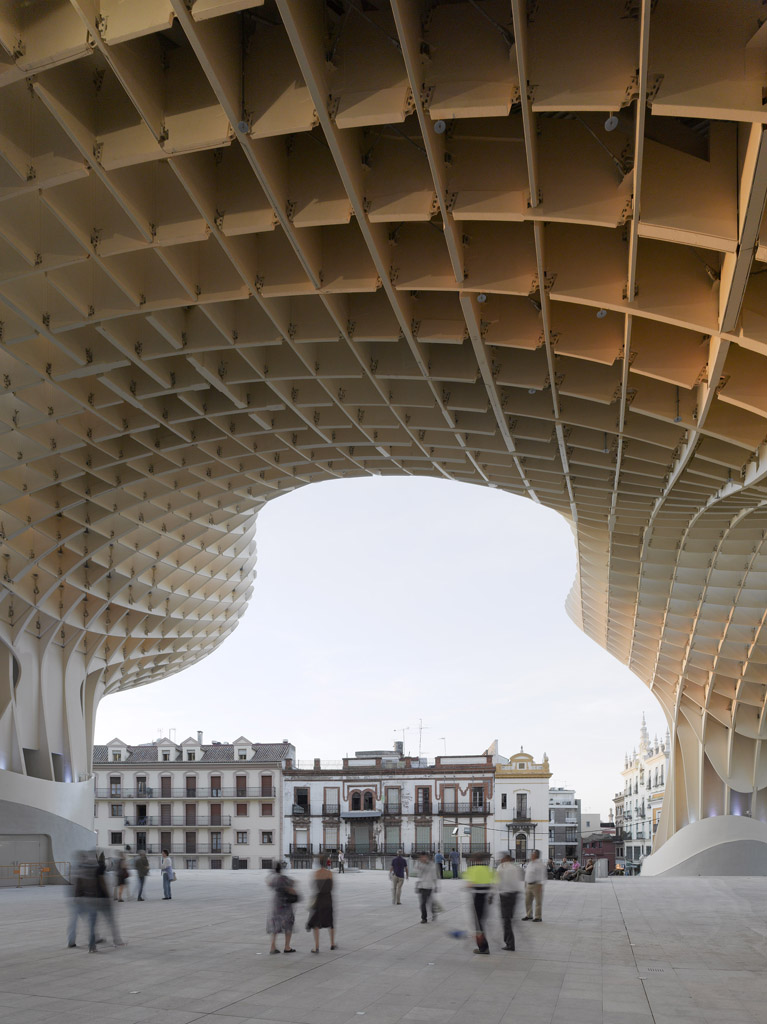
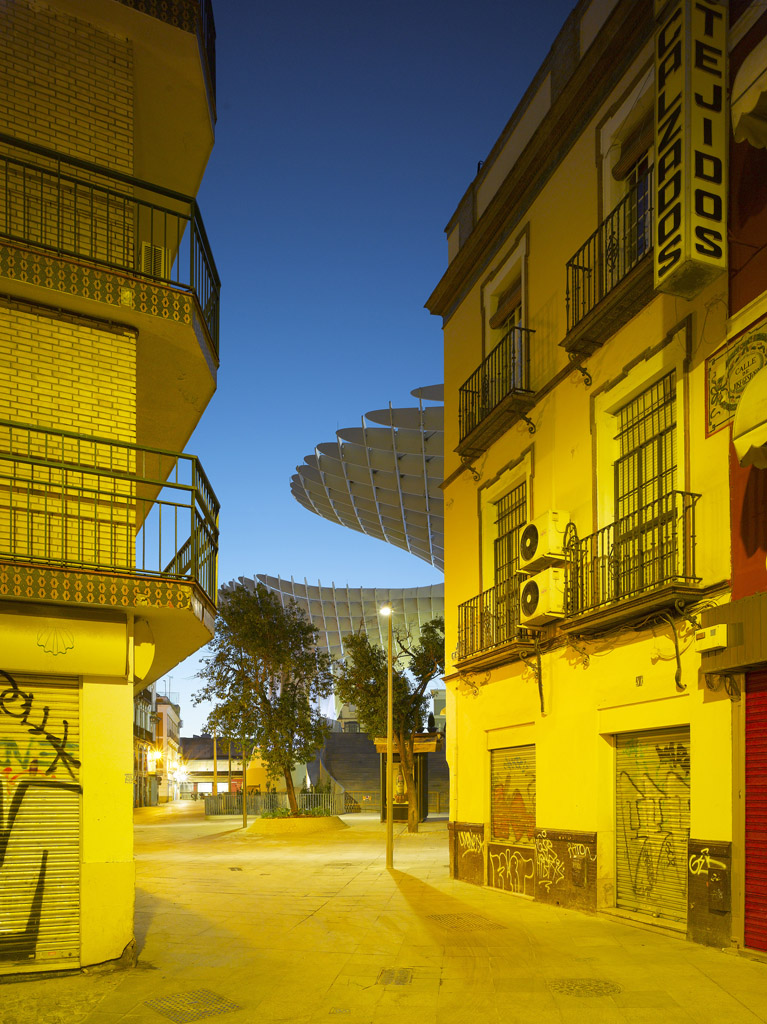
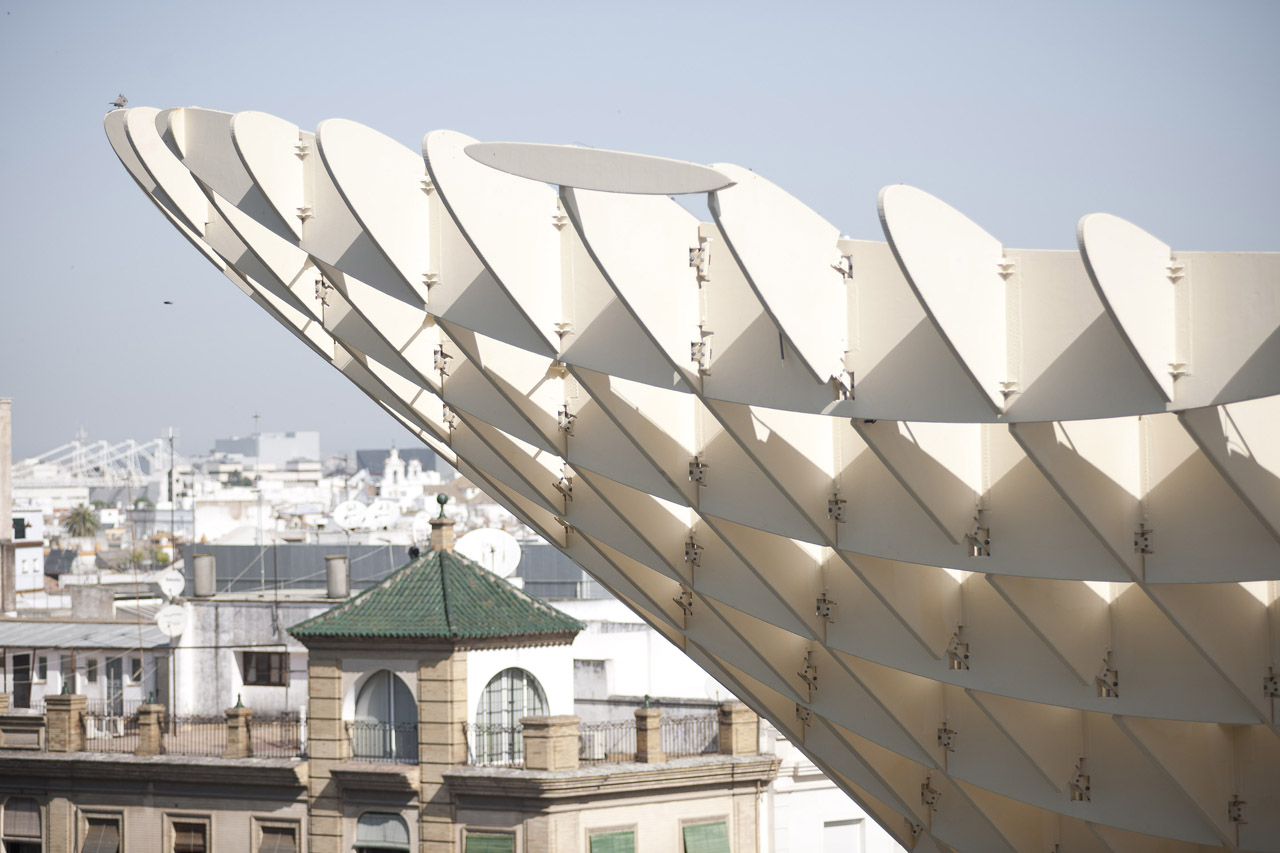
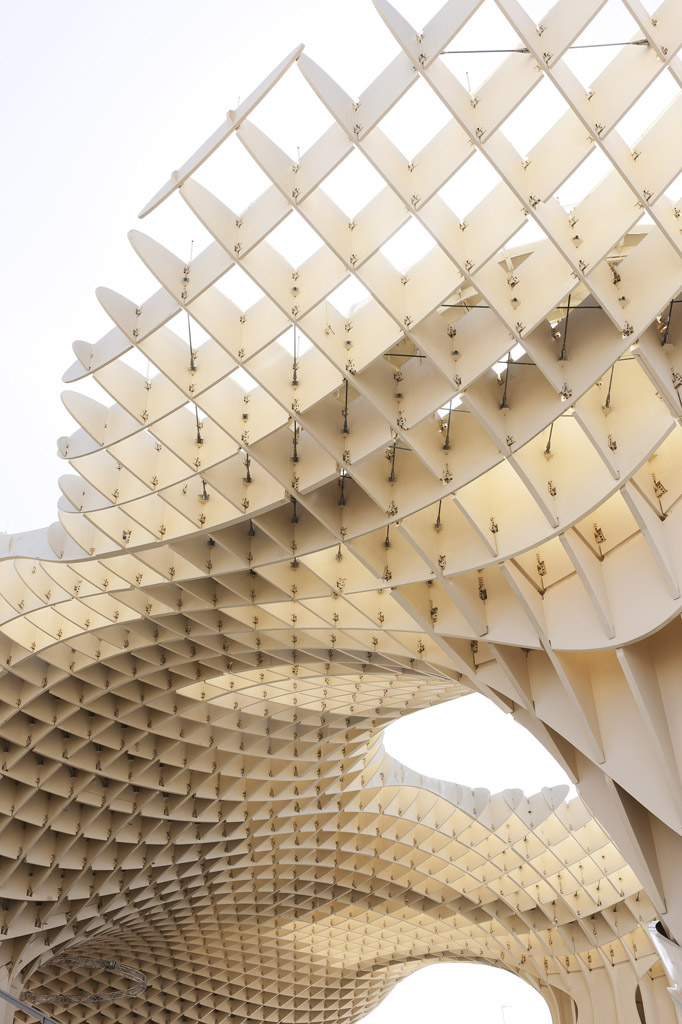
Located in the center of 2,000-year-old Seville, the Metropol Parasol's flowing, kinetic shapes; its bursting from the plaza to the sky; its span over streets and archaeological digs; and its poly-coated wooden lattice will surely come to be regarded by sevillanos as a favorite place for years to come.
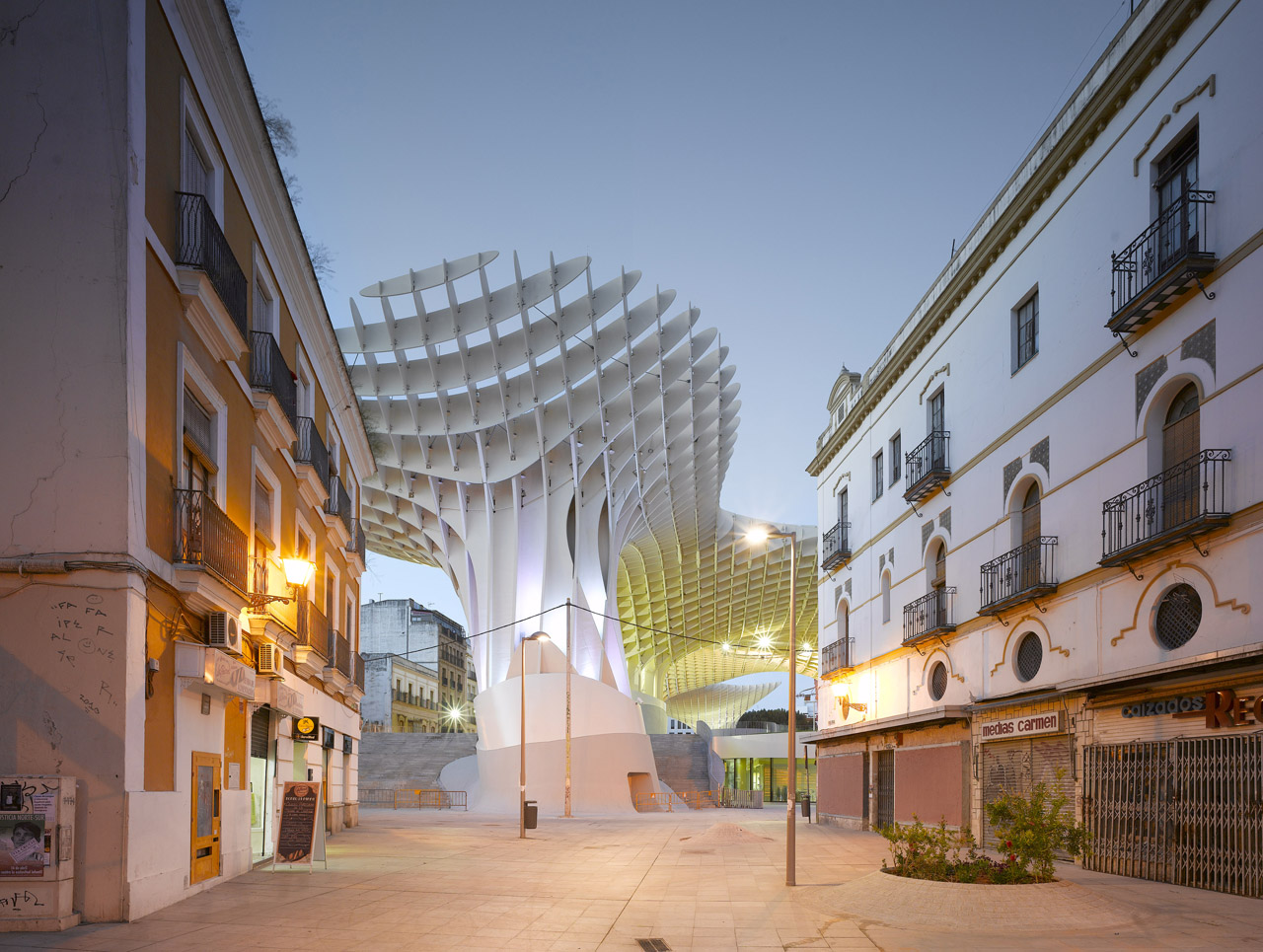
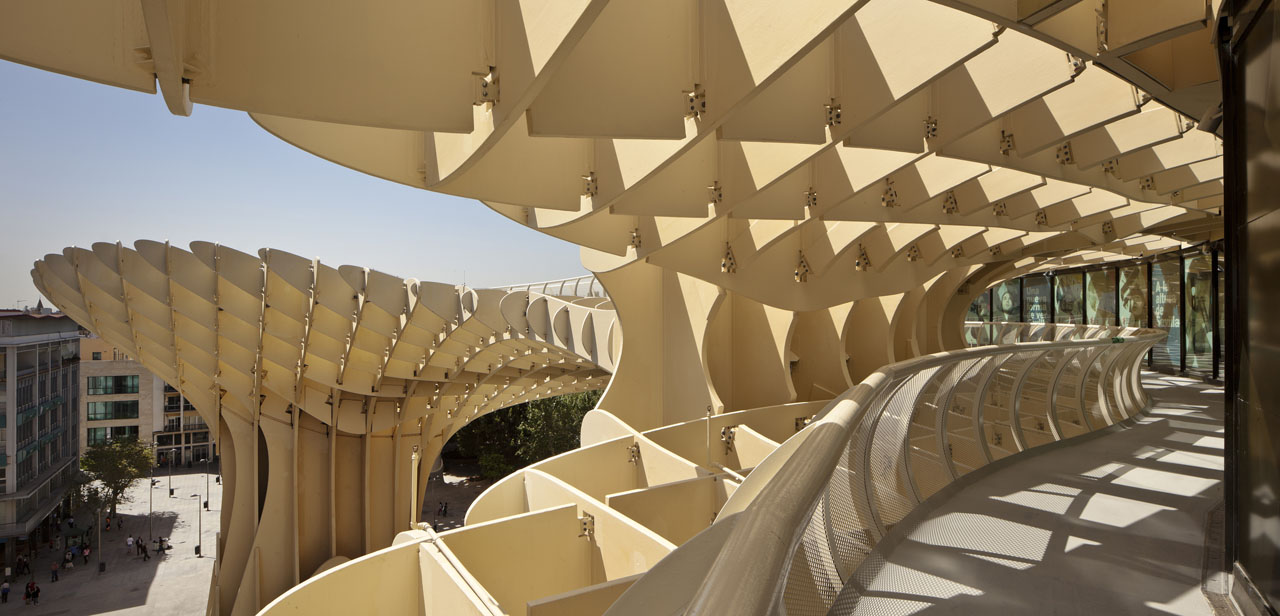
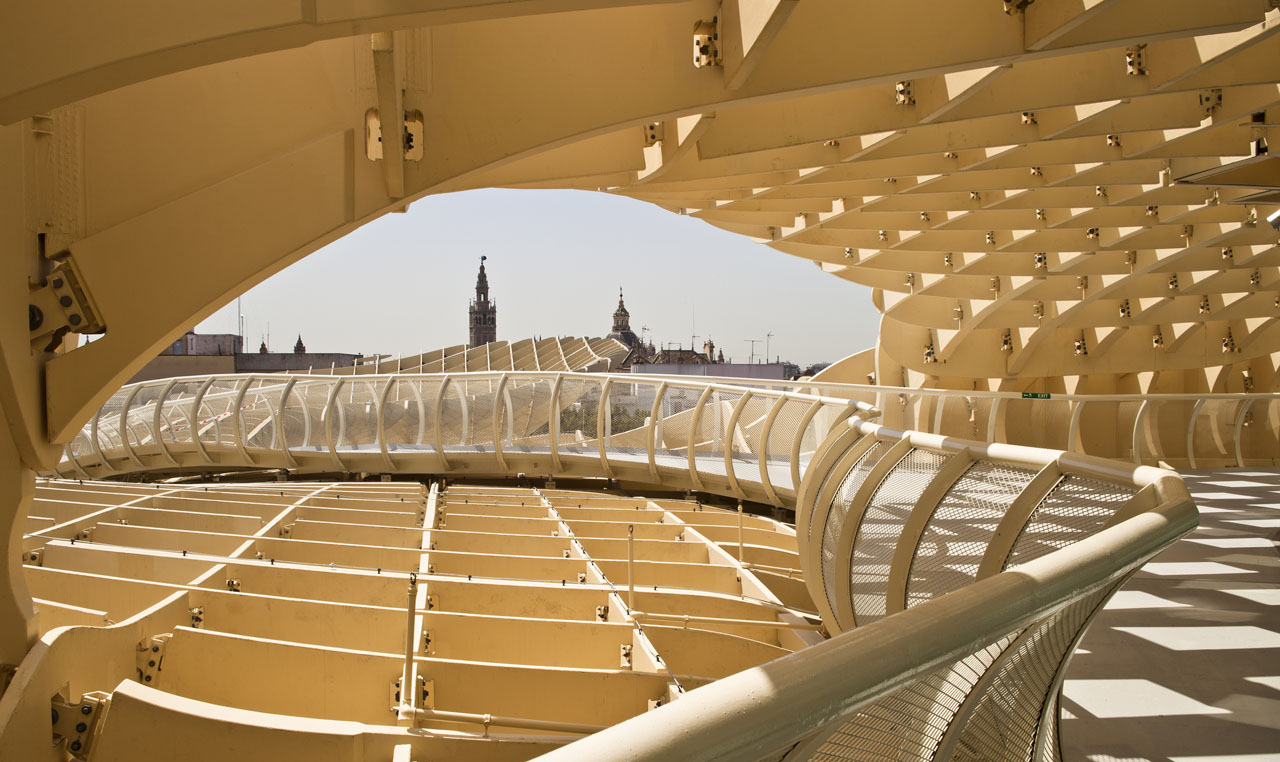
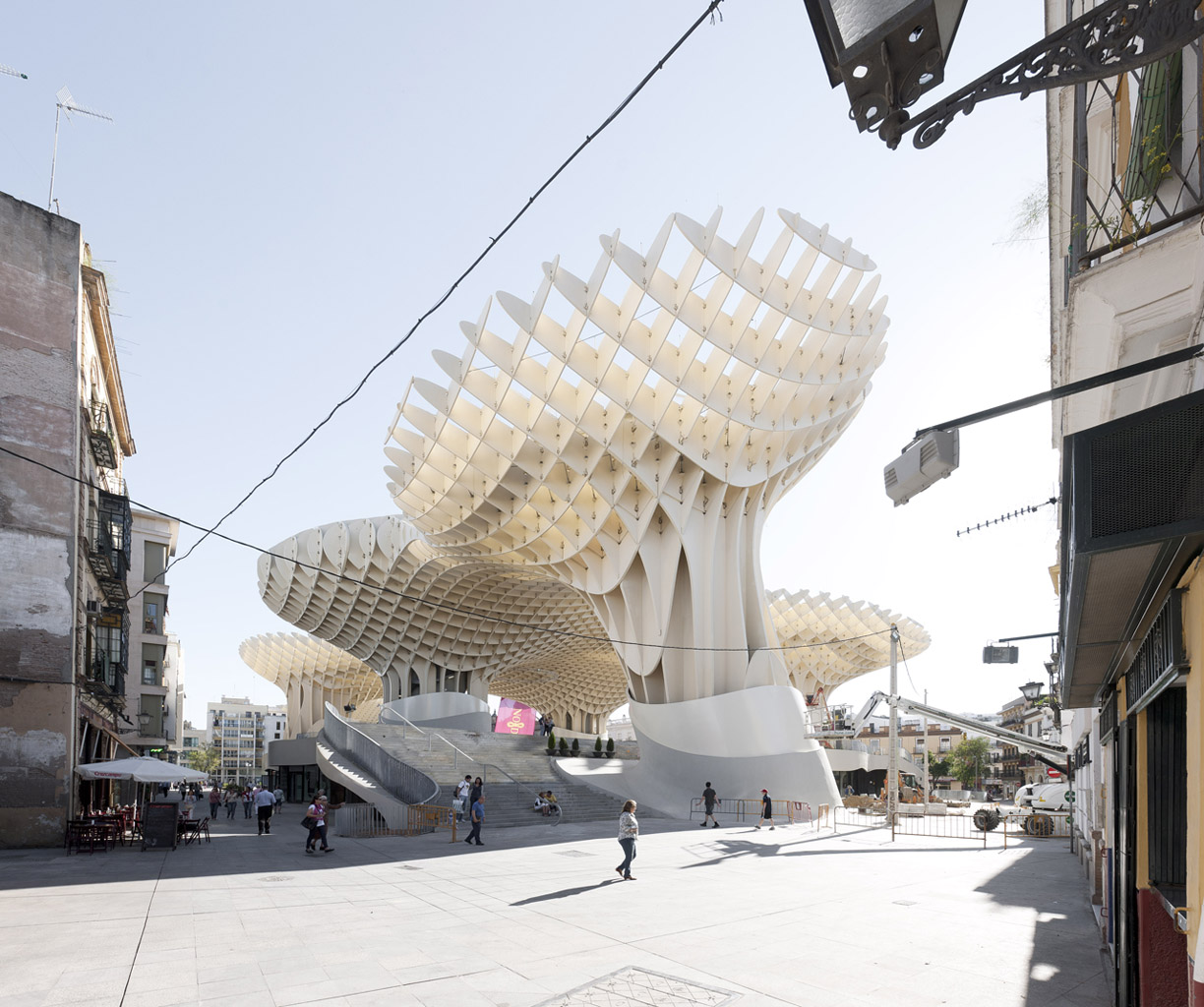
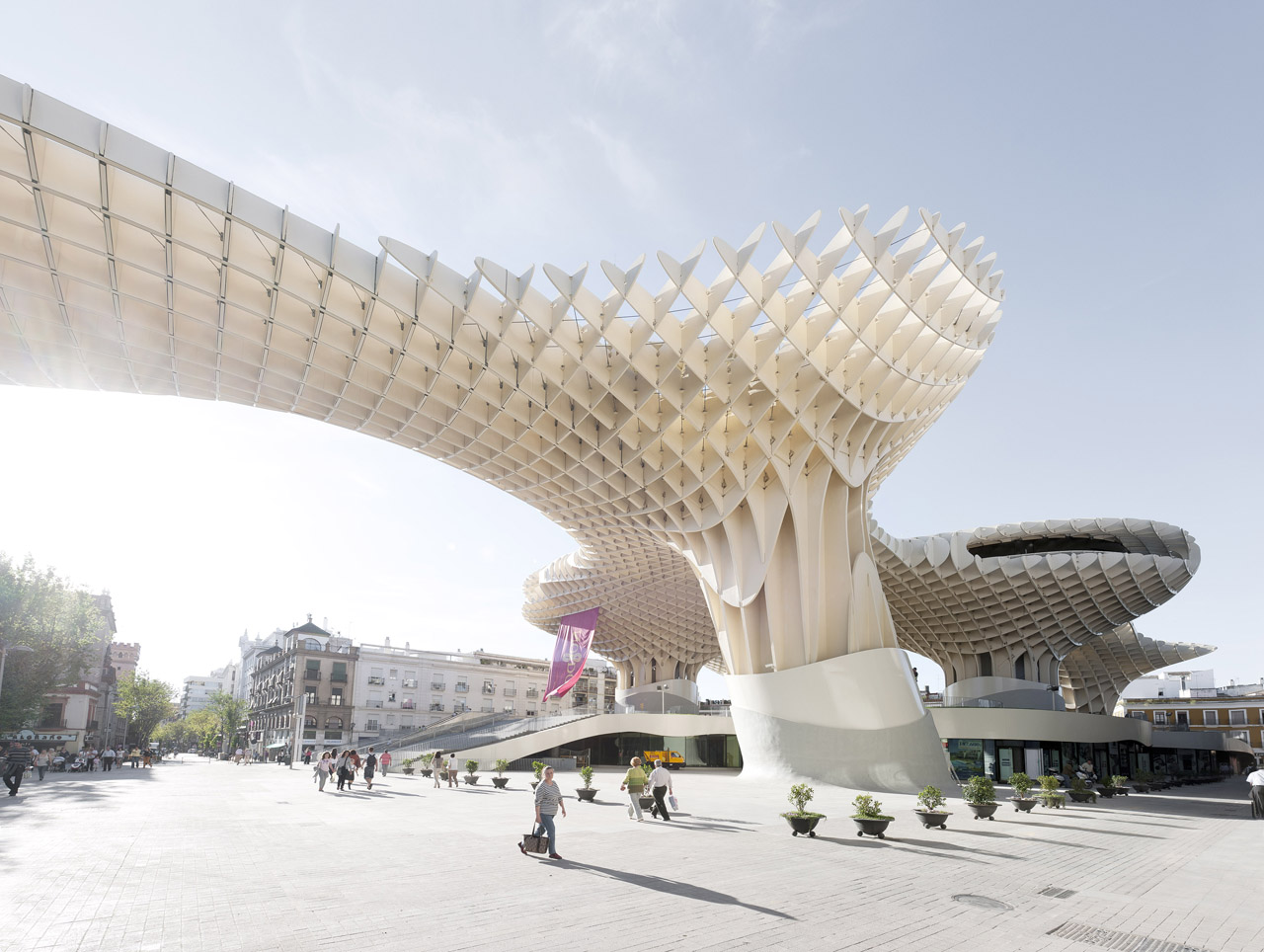
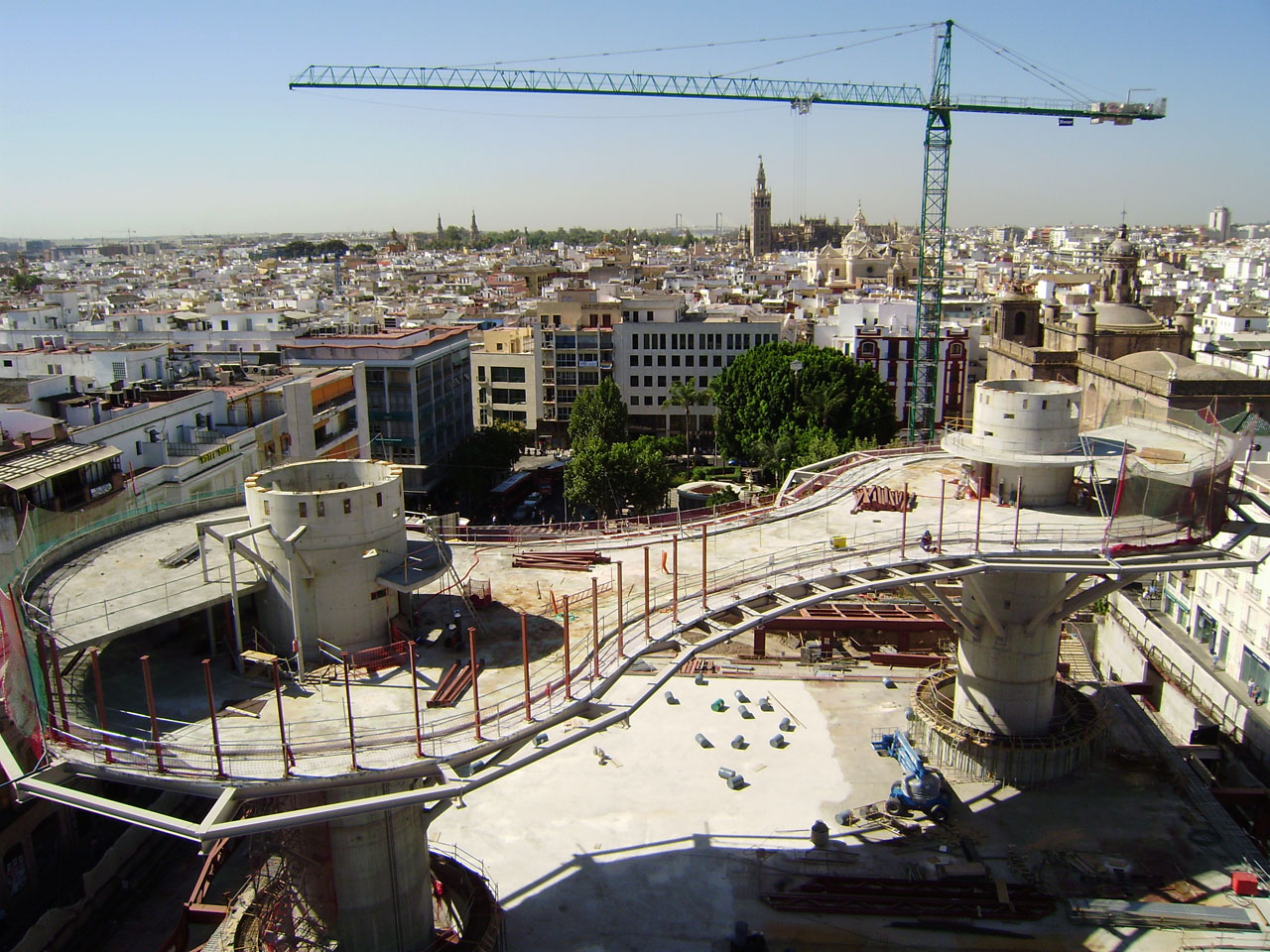
I thoroughly enjoyed a visit to Seville in 1998 to discover its classic ceramic arts industry and to make a pilgrimage to the Puente del Alamillo, the first of many of Spanish architect Santiago Calatrava’s beautifully sculptural bridges. Today J. Mayer H. Architects' Metropol Parasol provides a second, visually striking statement of Seville’s boldness in making dramatic declarations of civic energy and intent. It includes a wonderful variety of participation opportunities, including space for performances (both formal and informal), lots of choices for people-watching, and several aerial walkways 25 m (approximately 82 feet) above the floor of the Plaza de la Encarnacion that allow views of the city from above that have never before been available to residents of and visitors to Seville. The Metropol Parasol houses the usual commercial component as well: new and chic stores, restaurants, bistros, and clubs are scheduled to open soon. Apparently a resurgence of commerce adjacent to the project has already taken a strong foothold, providing evidence of the project's successful urban redevelopment.
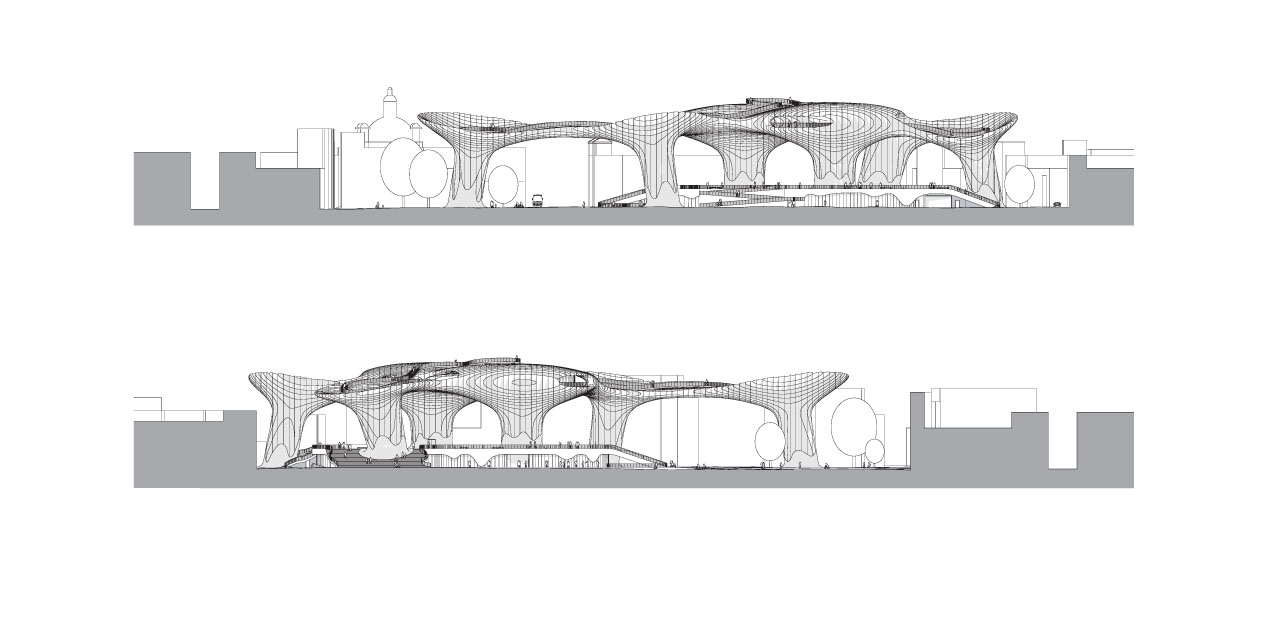
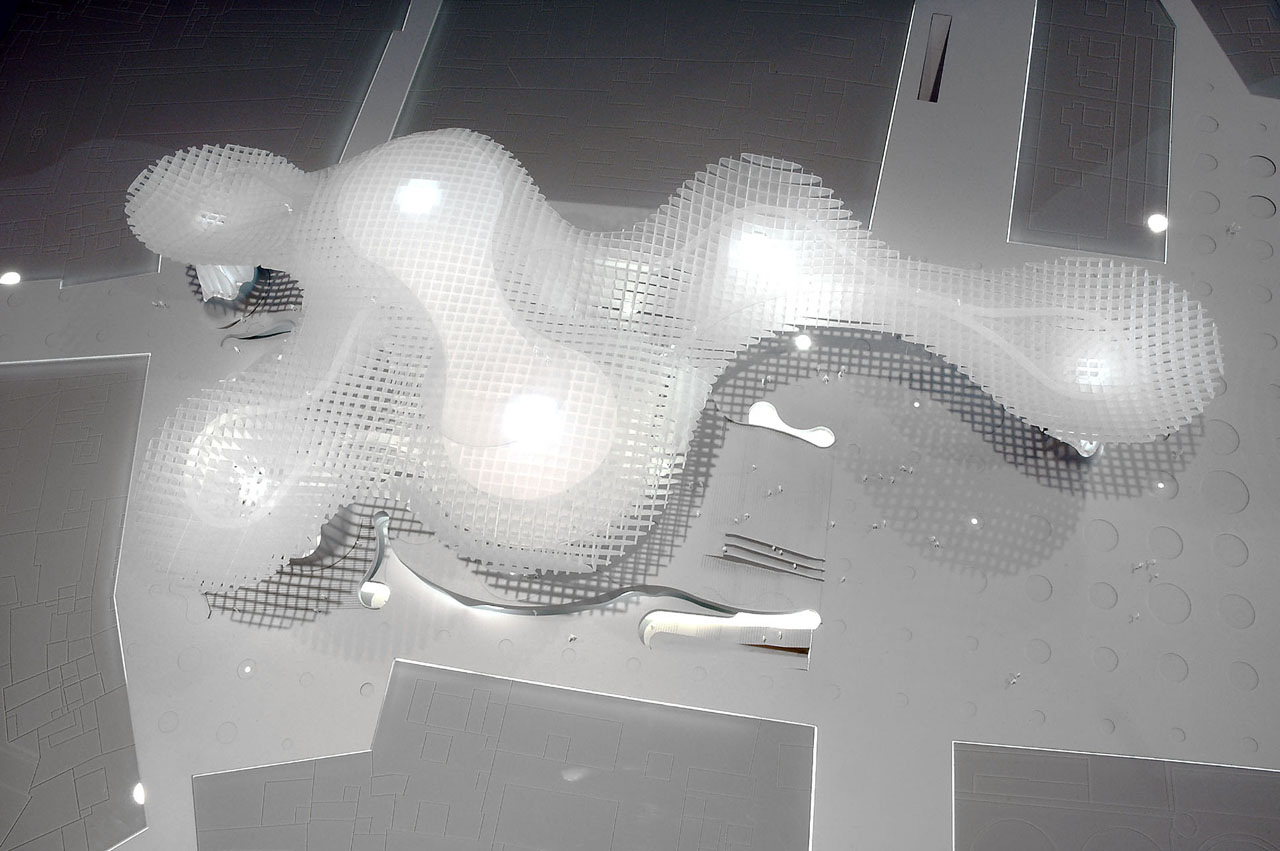
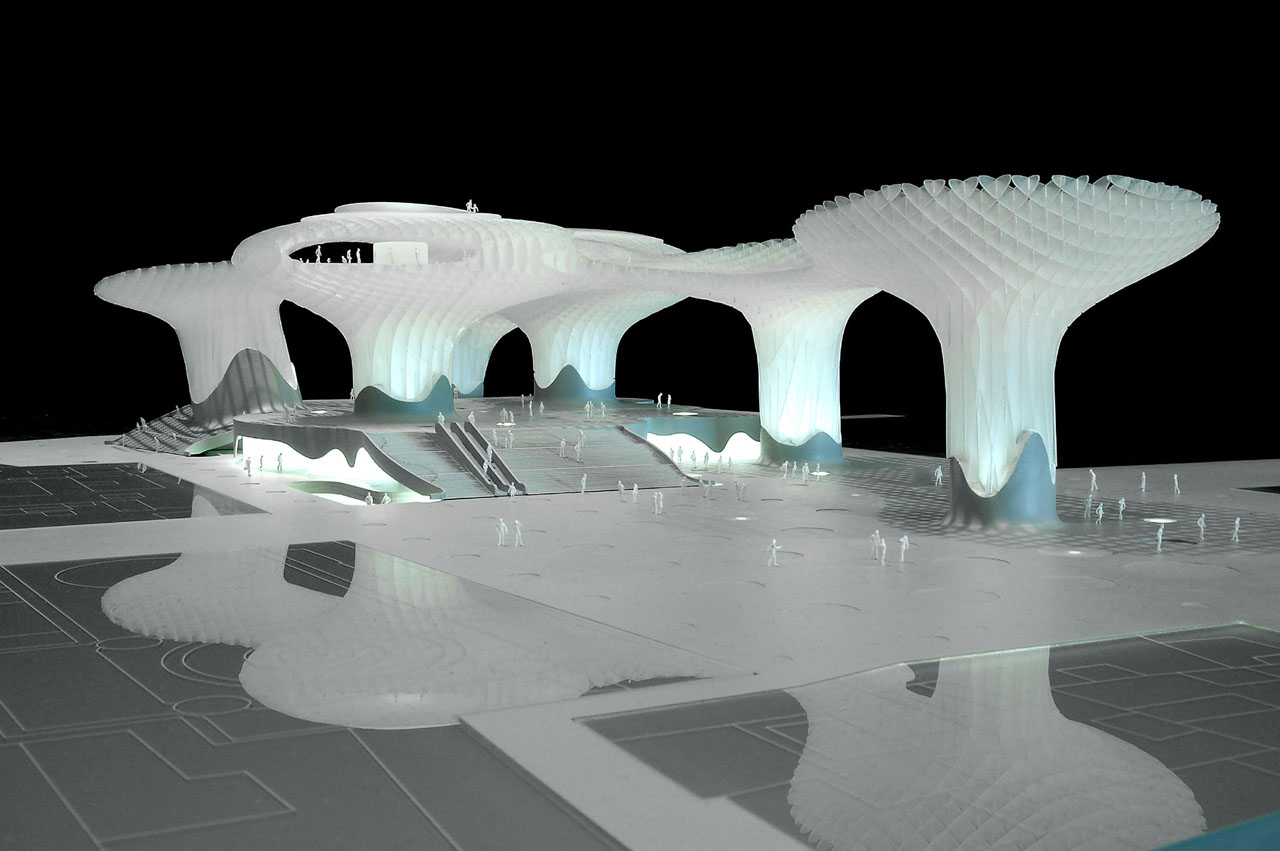
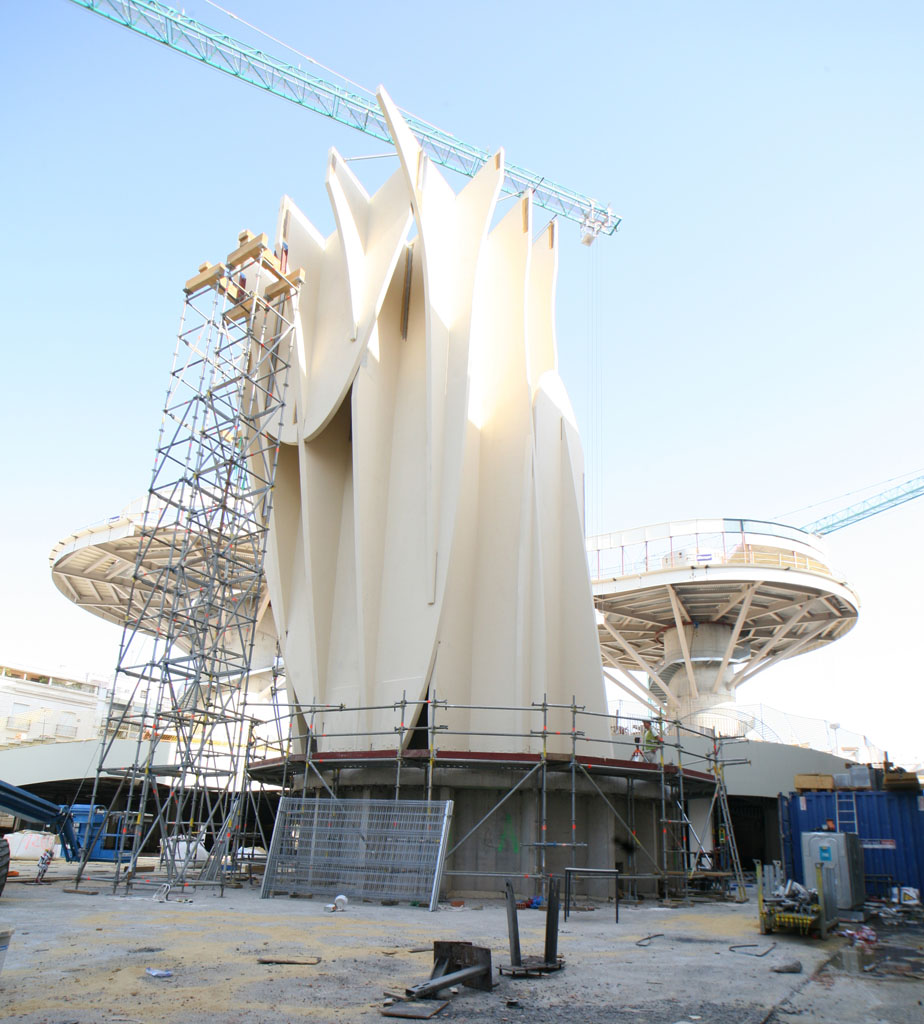
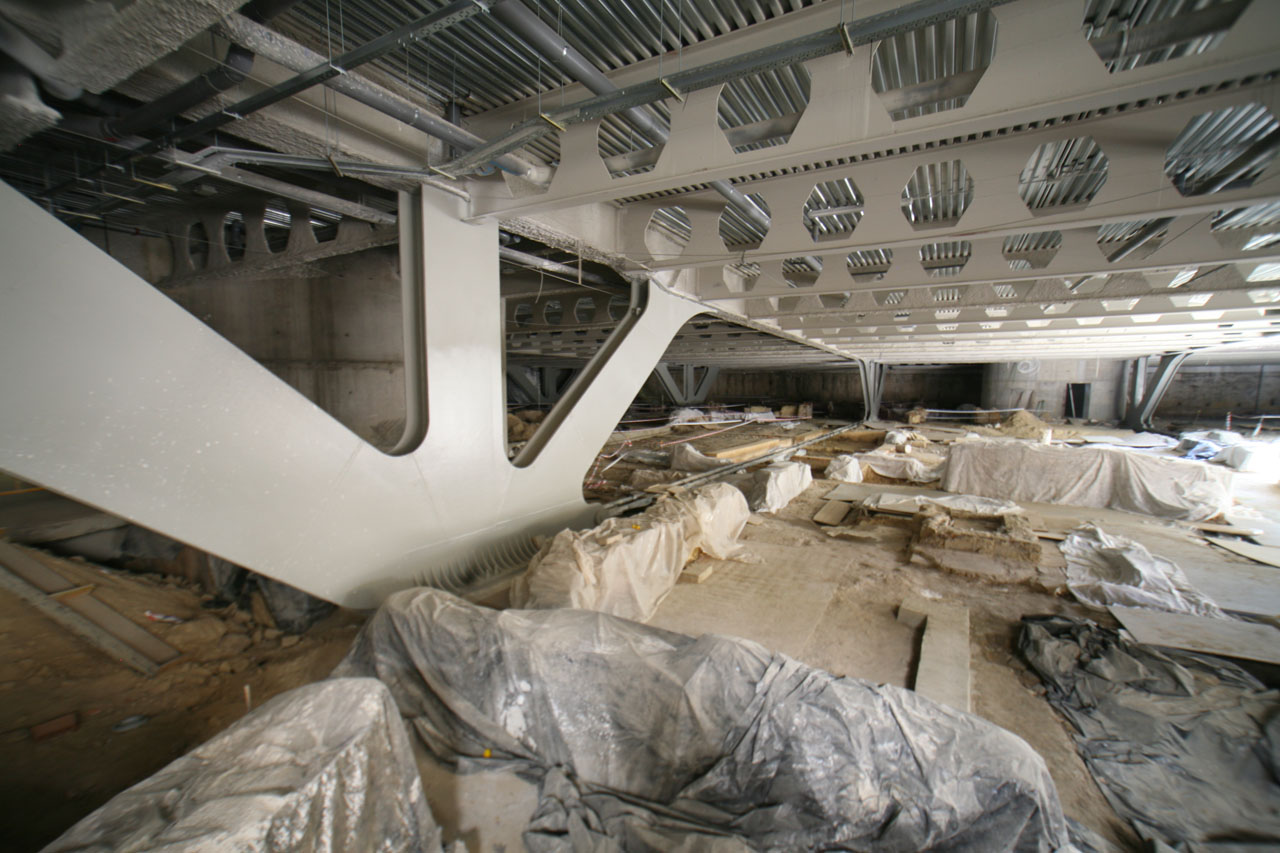
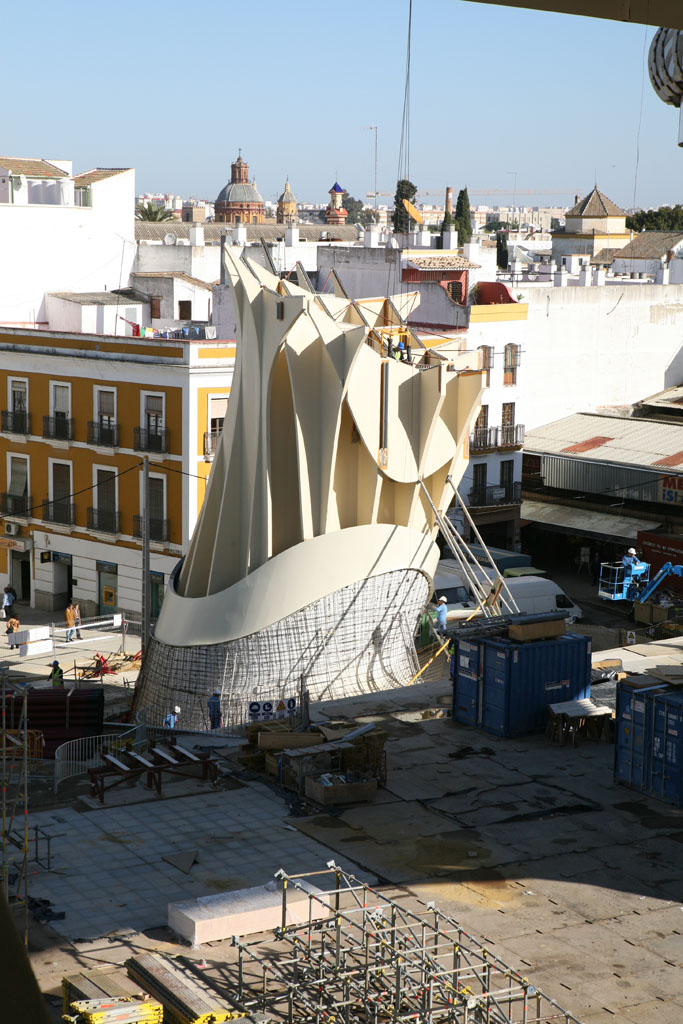
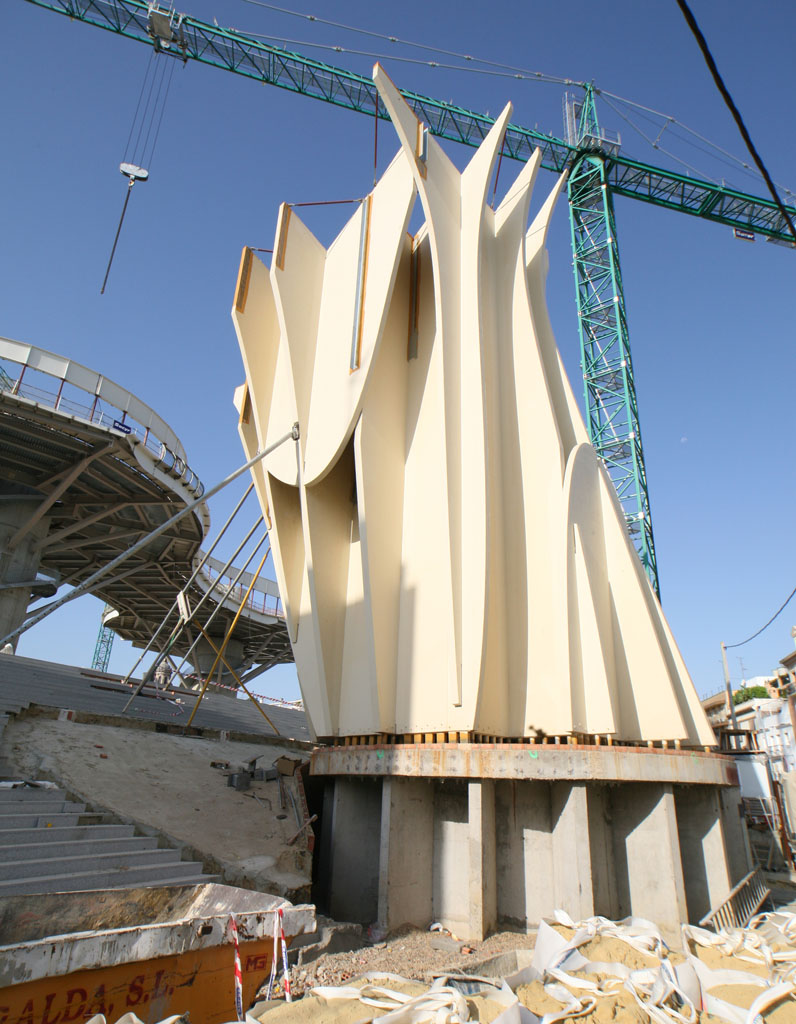
The Metropol Parasol certainly thrusts itself into and above the traditional and well established architectural character of this age-old city as something totally unique and almost totally foreign. Unlike Calatrava’s pure expression of compression and tension in La Puente del Alamillo, the concrete and steel design of which reveals an immutable honesty of material intent and timeless integrity, J. Mayer H. Architects' Metropol Parasol somewhat disguises its structural integrity with its biomimicry-influenced mushroom shape, which evokes the idea of the growth of something natural and organic. Although the Metropol Parasol manifests a sense of splendor as a force of nature, I am suspect of the project’s survivability through Seville’s next 2,000 years. The Metropol Parasol’s design drawings and construction photos show that its true (and uninspired) structure is hidden by the imposition of wooden truss work that isn’t quite a veneer and isn't quite structural. Although its sculptural impact makes it a success in the now, I worry that in 200-300 years the Metropol Parasol may see its demise: it may become an easily deconstructed symbol of some political or social upheaval or wear of or damage to its polyurethane protective coating may leave its compressed wood fibers vulnerable to real forces of nature and entropy.
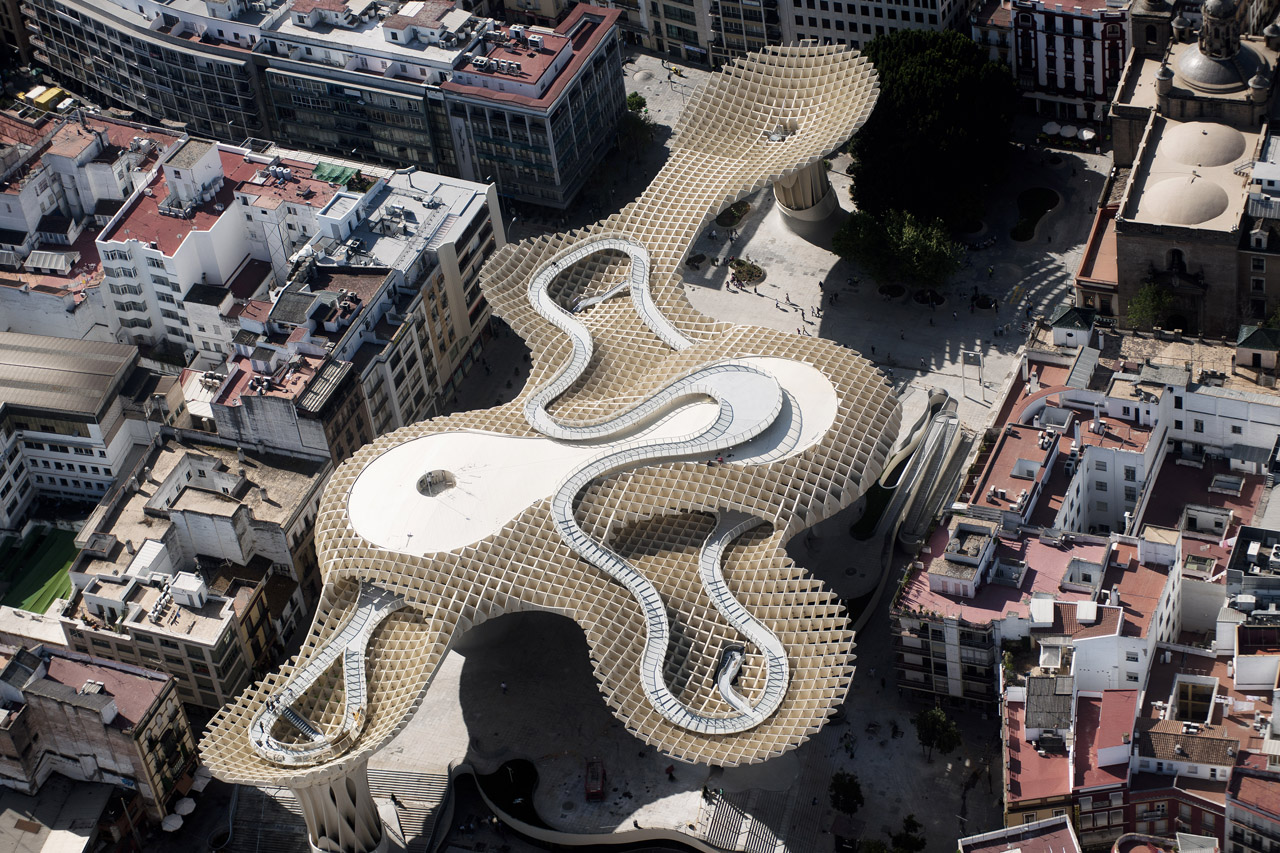
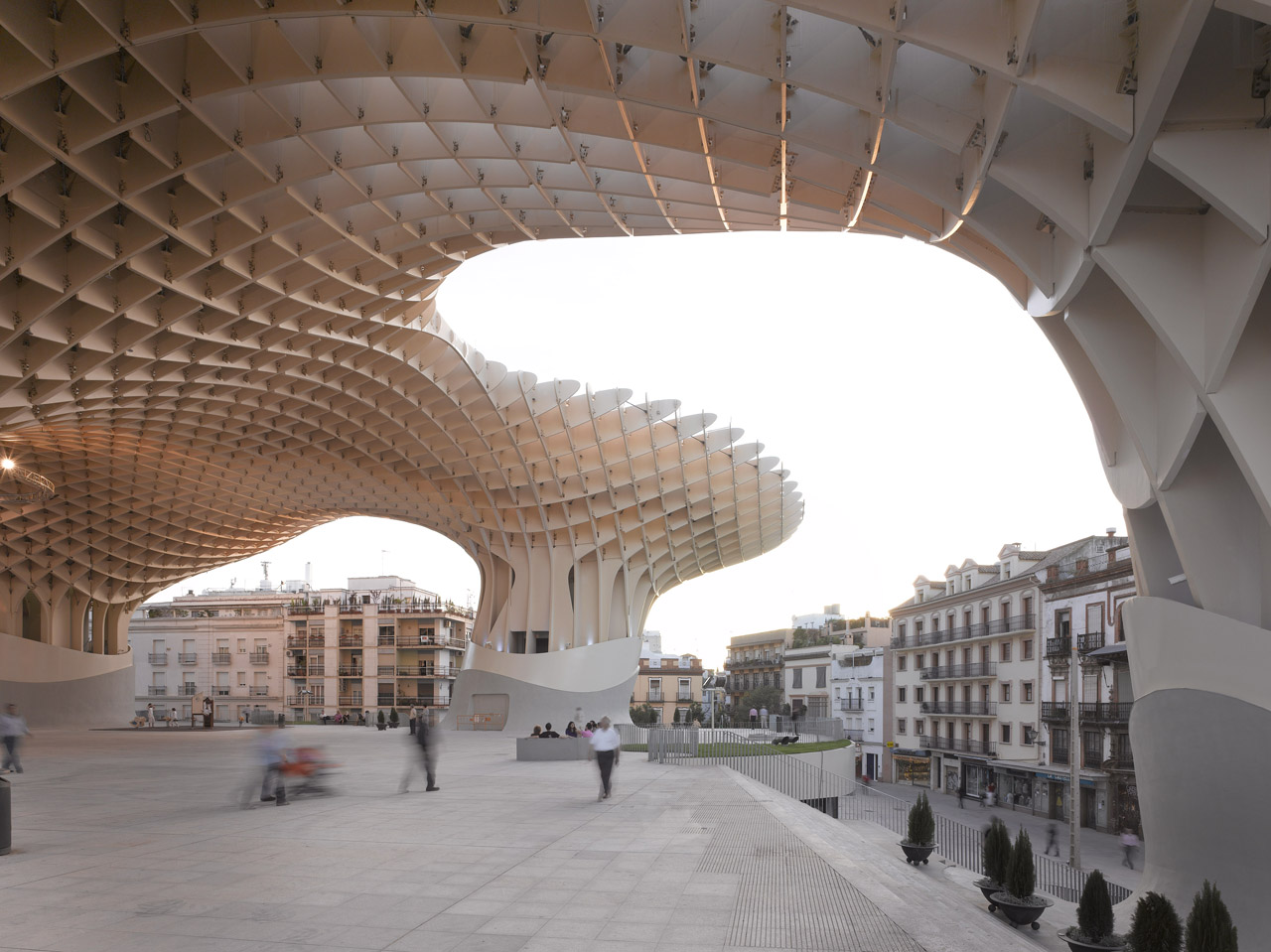
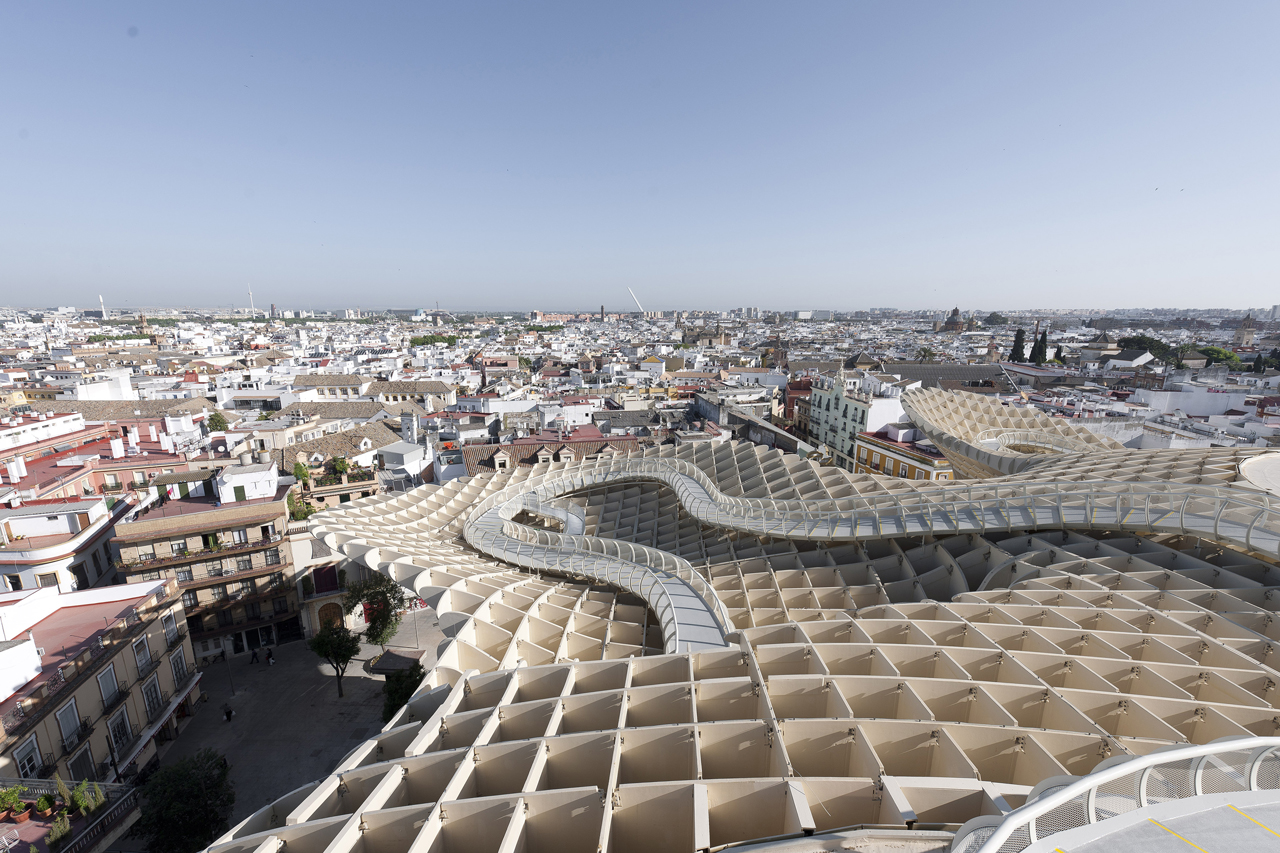
I propose that the success of the Metropol Parasol, unlike that of Calatrava’s Puente del Alamillo, may derive only from its artistic place in the world, surrendering its ultimate success to the impermanence of its materials. One of the indisputable laws of successful urban development over time relates to the evolution of human settlements from temporary to permanent. As towns planted their roots by virtue of their useful locations, historically (and currently) their habitats grow from cloth to canvas to wood to stucco to brick to stone, steel, and concrete. So when the culinarily-conscious sevillanos call the beautifully sculpted wooden Metropol Parasol "las setas" (“the mushrooms”), perhaps they’re not far from wrong. The Metropol Parasol is a wonderful product of the biomorphic design school that was popularized with the onset of sophisticated computer-driven algorithms that allow CAD/CAM software to render and fabricate the wildly voluptuous forms found in nature. Visually disparate from the Mudéjar, or Moorish, architecture found in Seville’s famous Alcazar, the Metropol Parasol’s sinuous, flowing character and its physical breadth provide prominence but, just like the fleeting life of a fragile mushroom, perhaps not permanence.
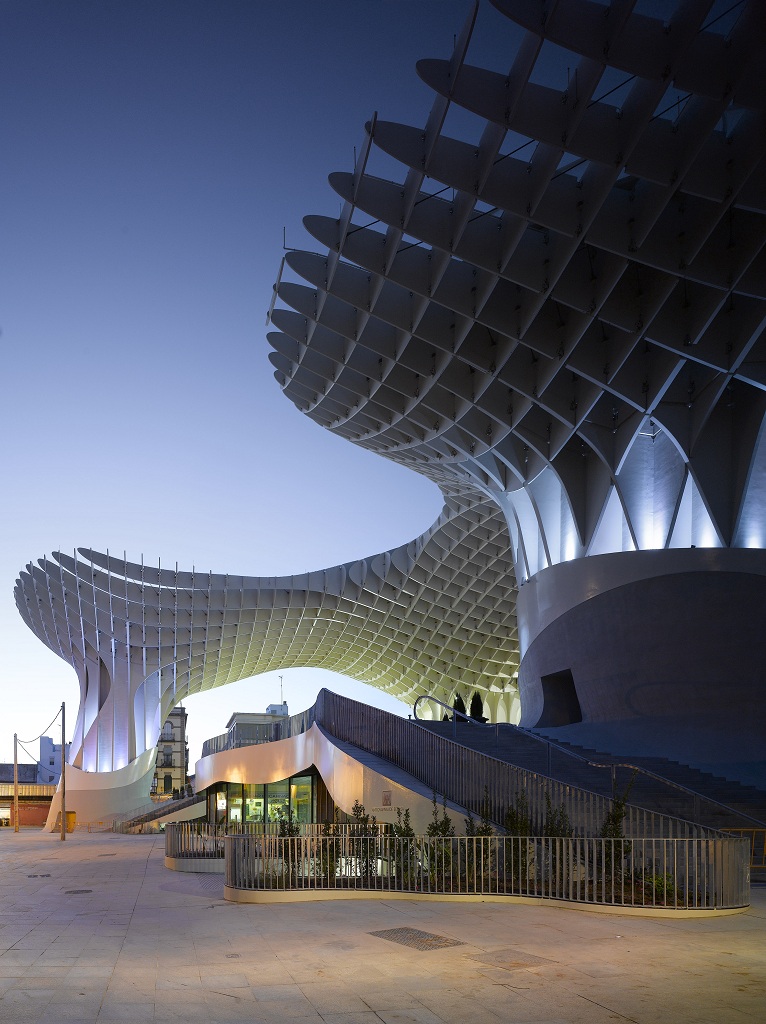
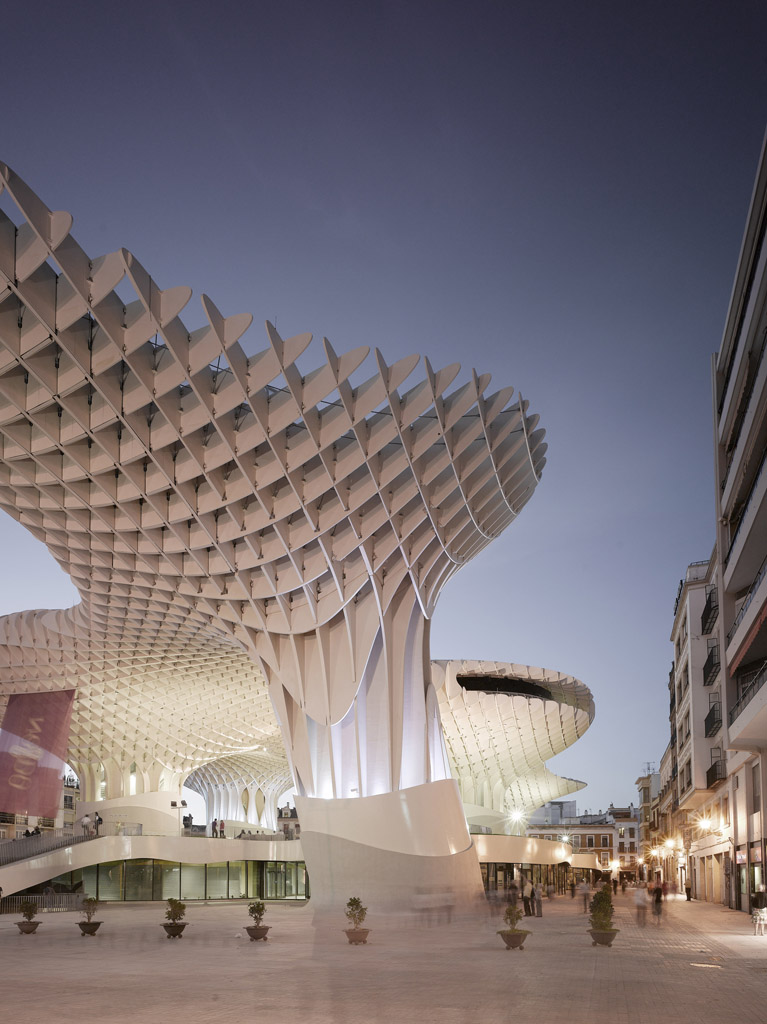
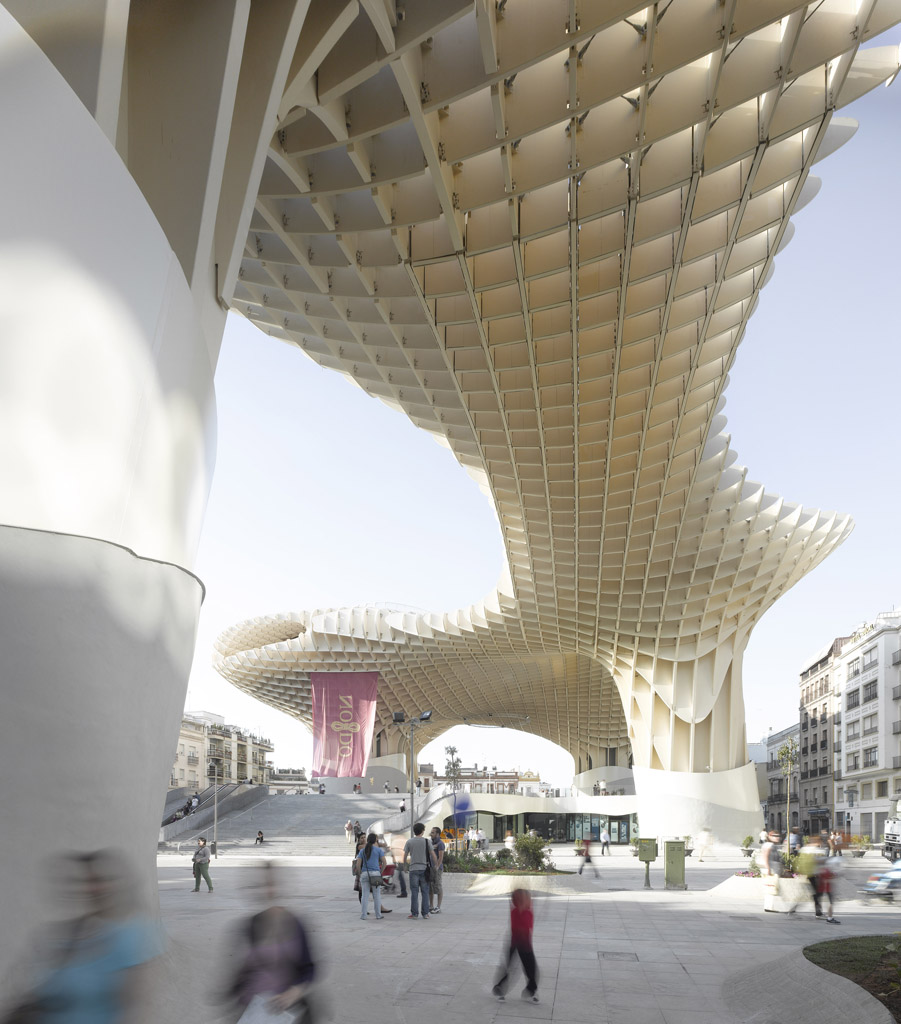
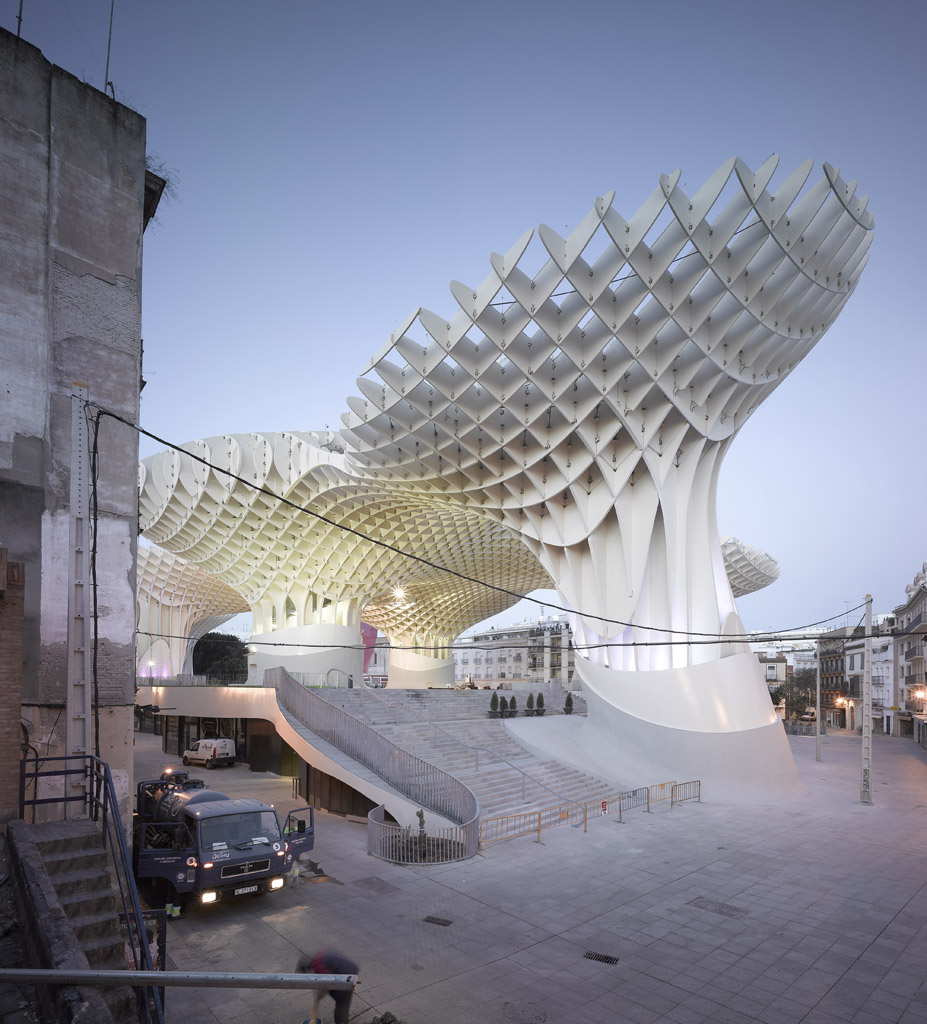
Perhaps sevillanos will need to enjoy the success as a civic folly, acknowledging that the Metropol Parasol should be enjoyed as a carpe-diem celebration of urban intention. Urban architecture can only be judged to be timeless and ultimately successful if its inherent ability to become an ancient ruin is apparent in its present. One can only imagine the suppositions of future archaeologists who unearth the remains of this playful testament to civic pride.

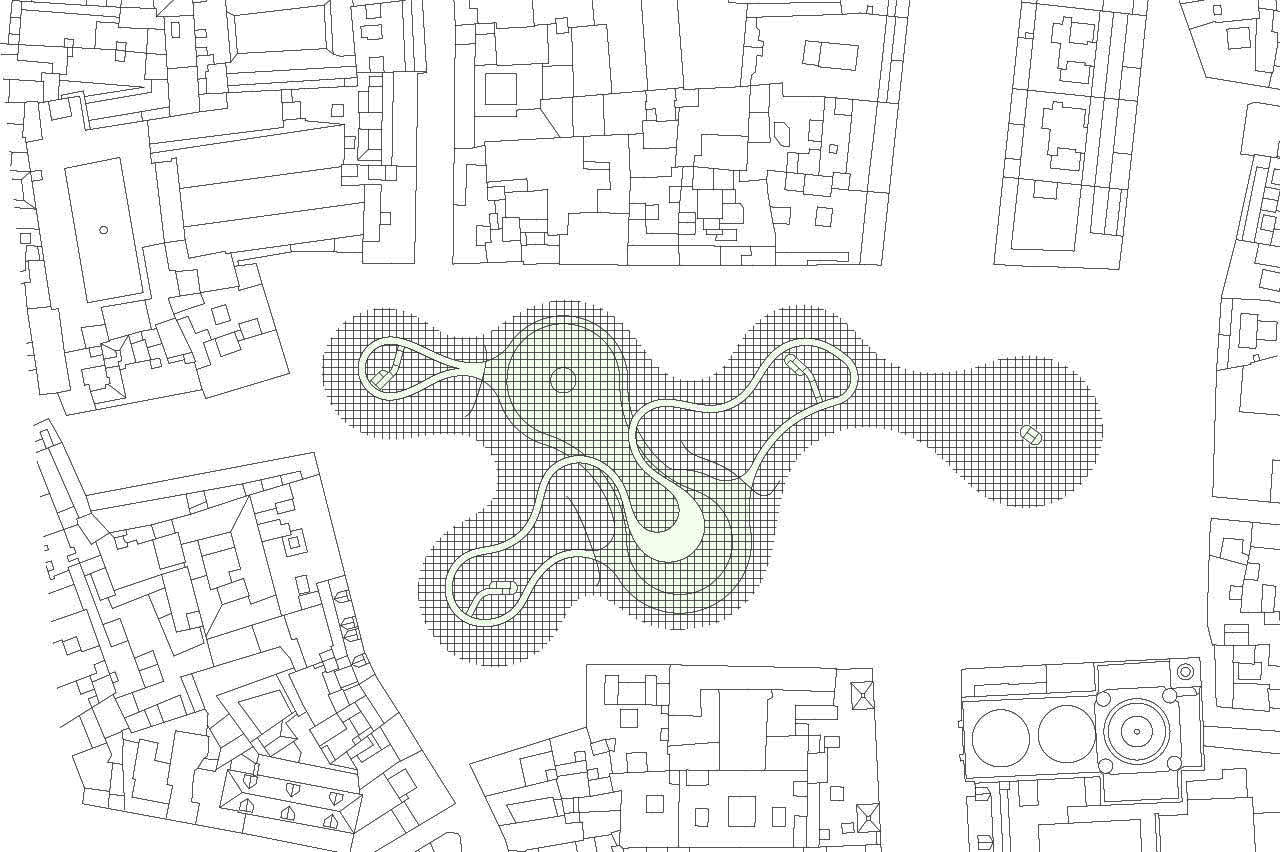
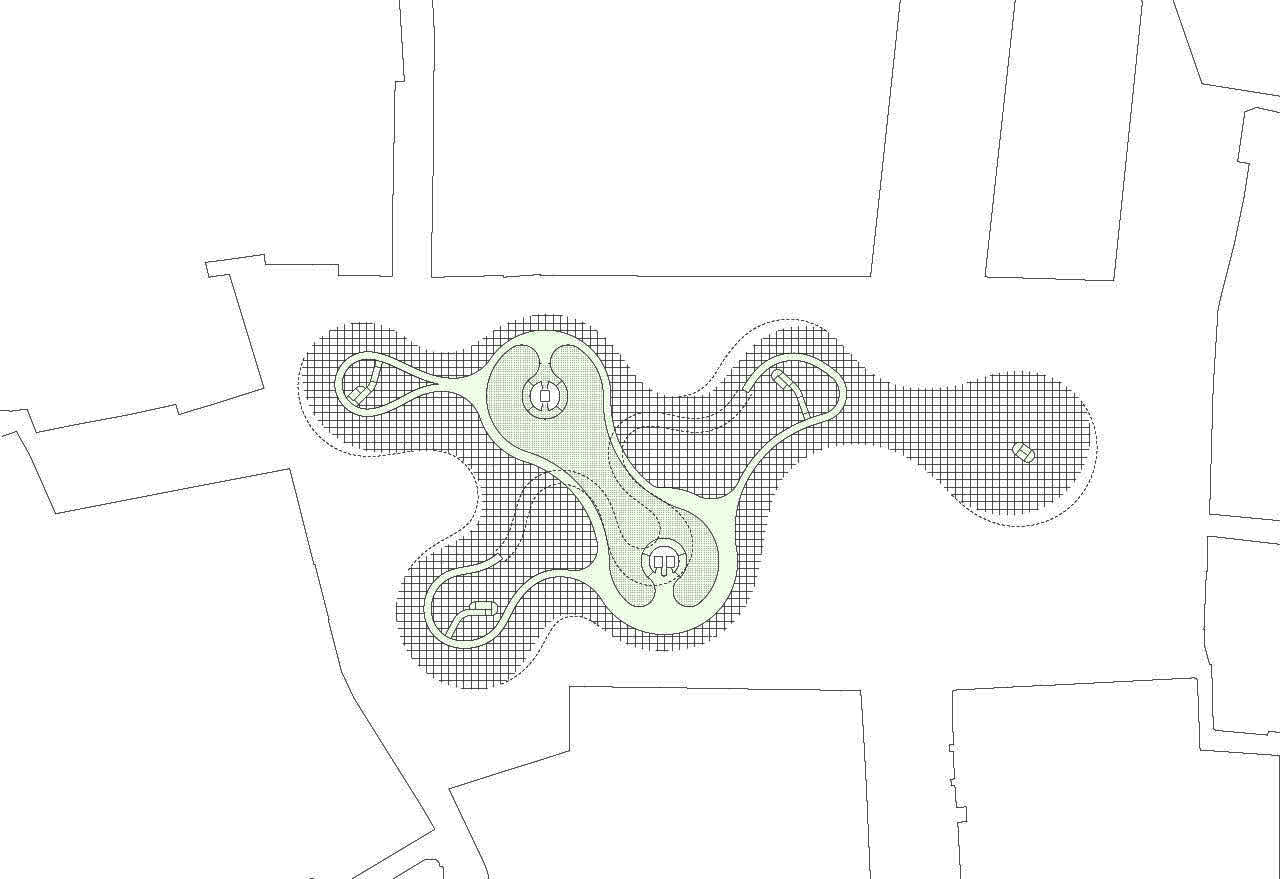
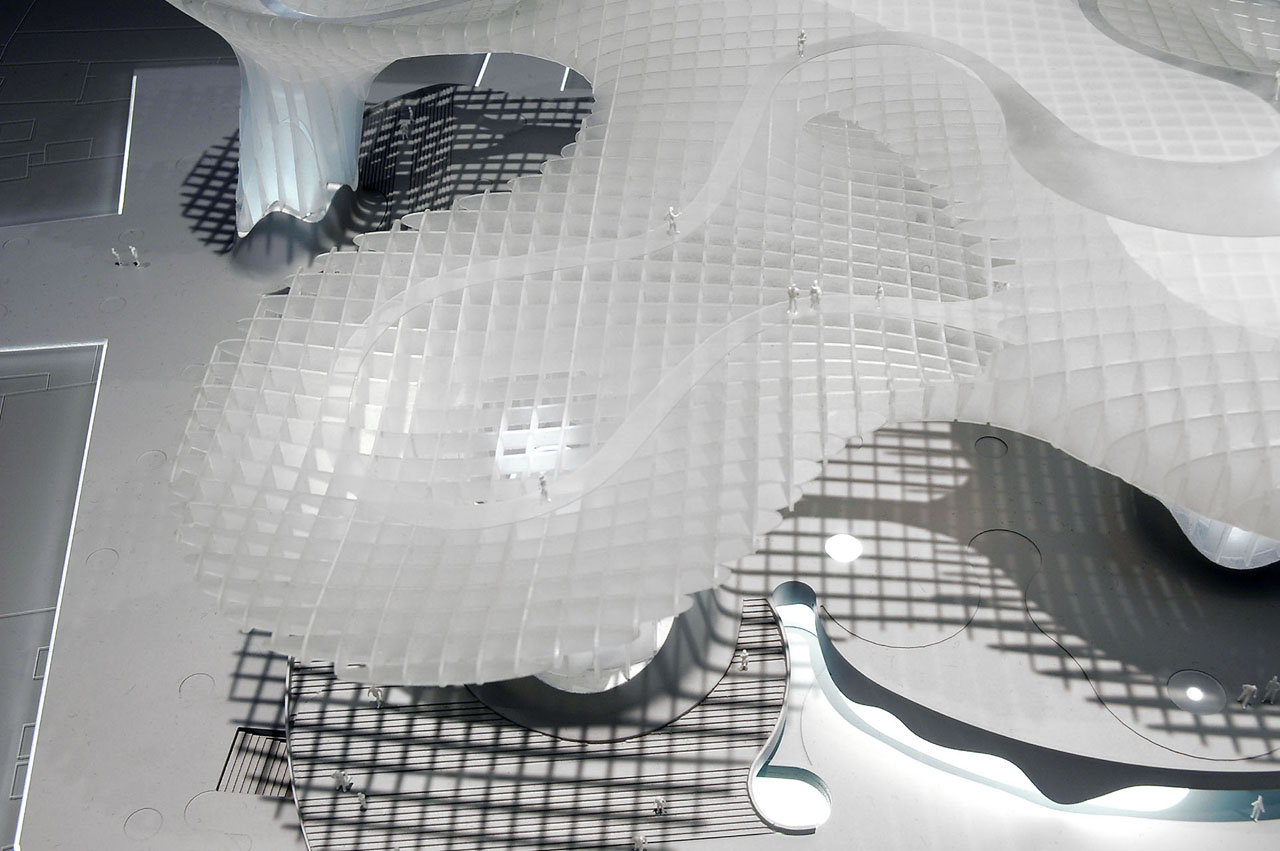
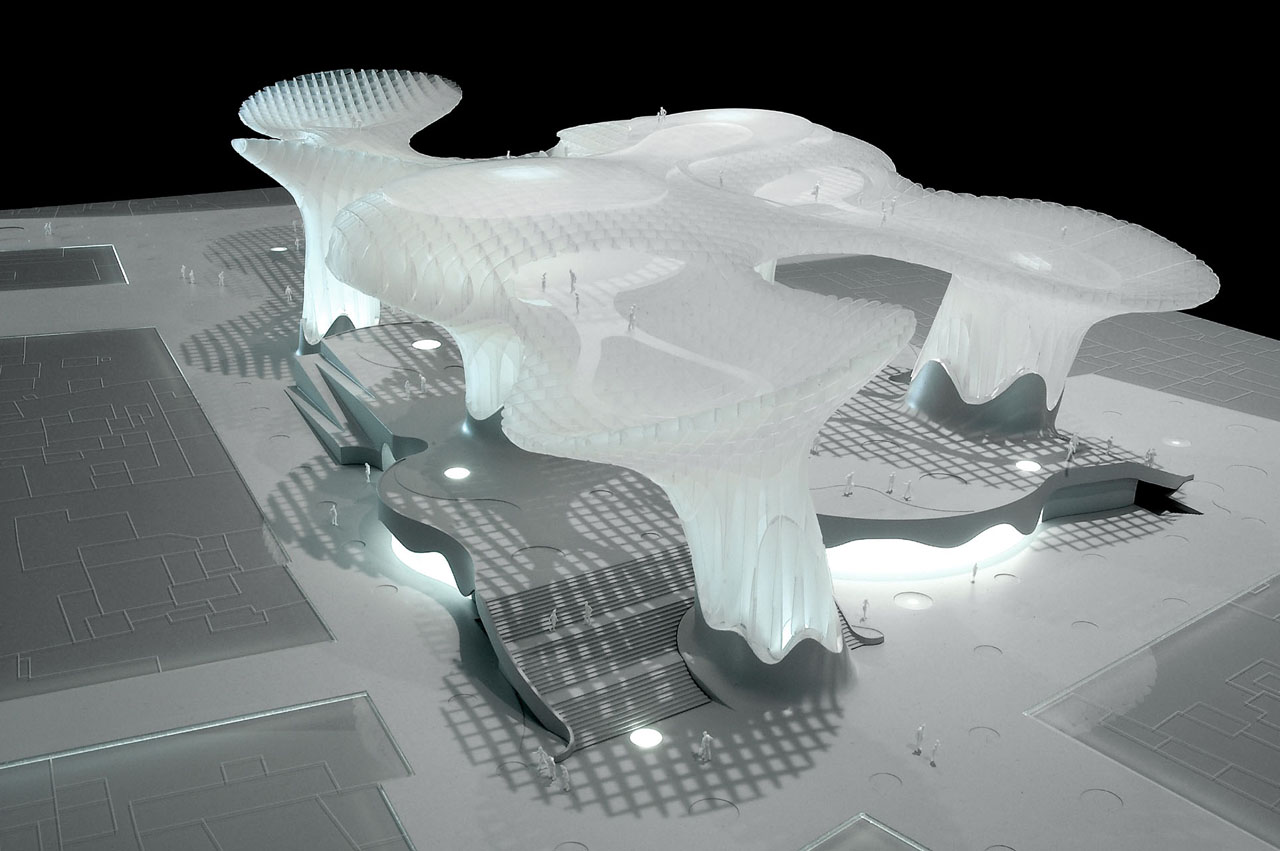
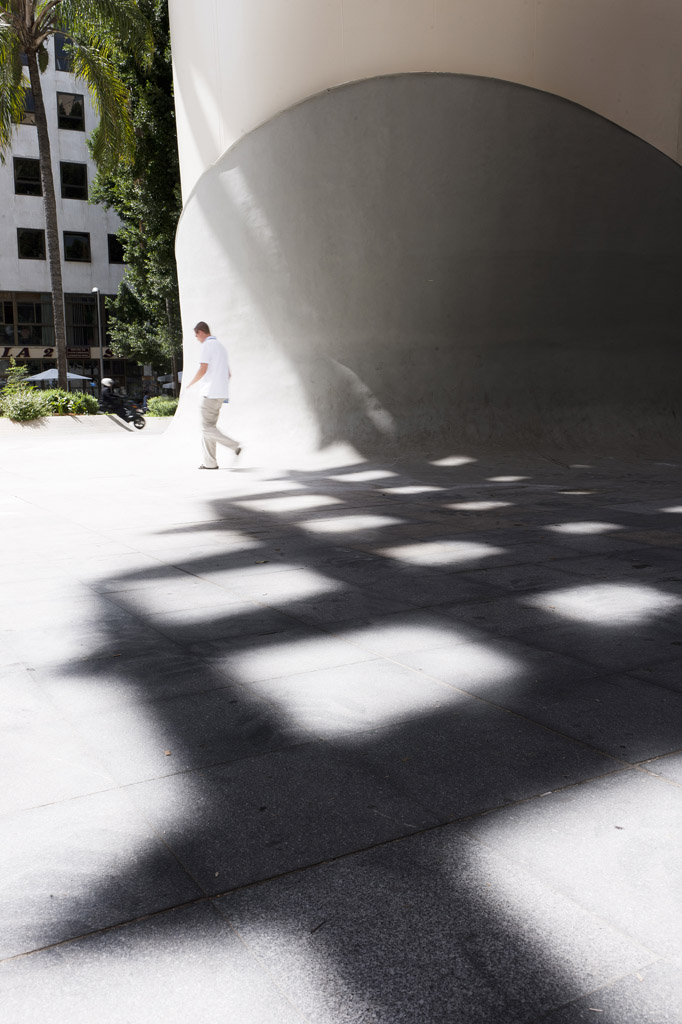
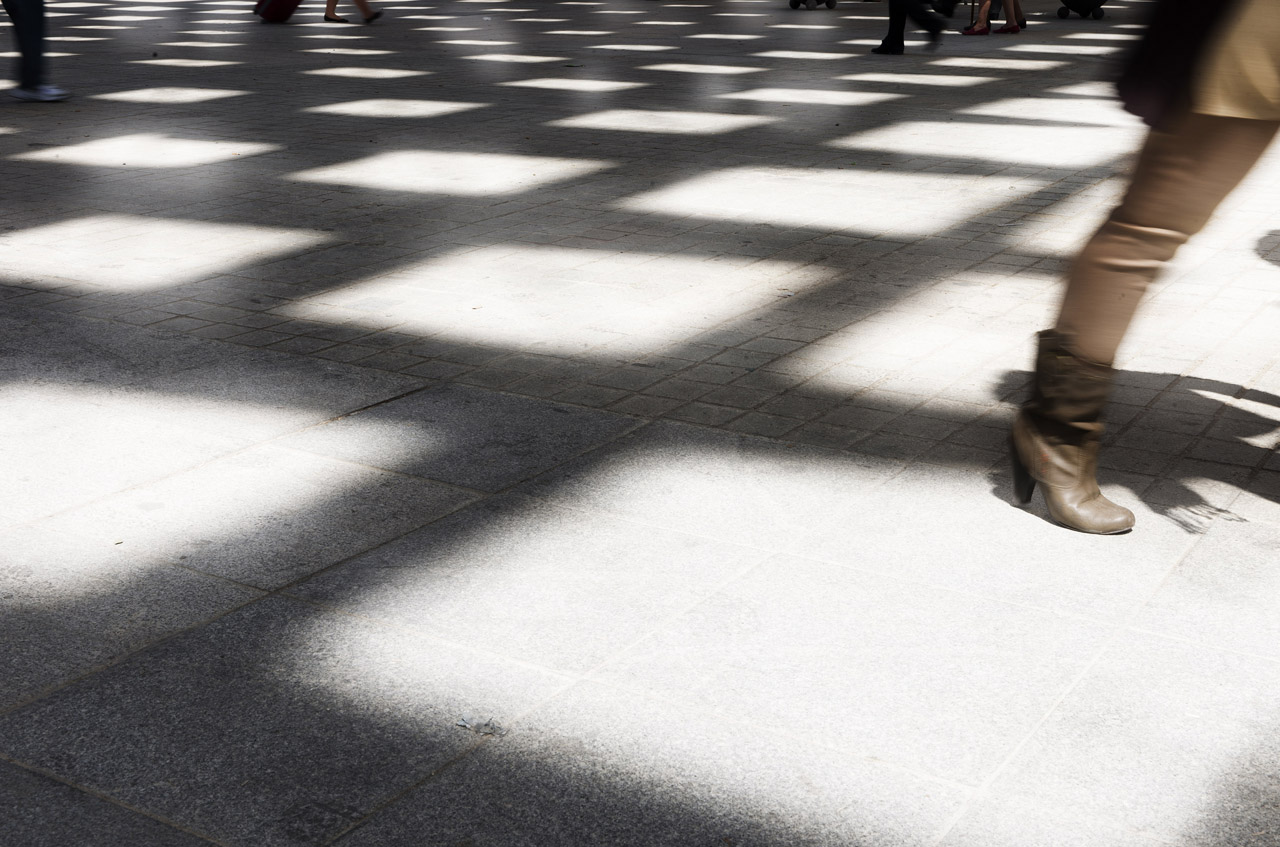
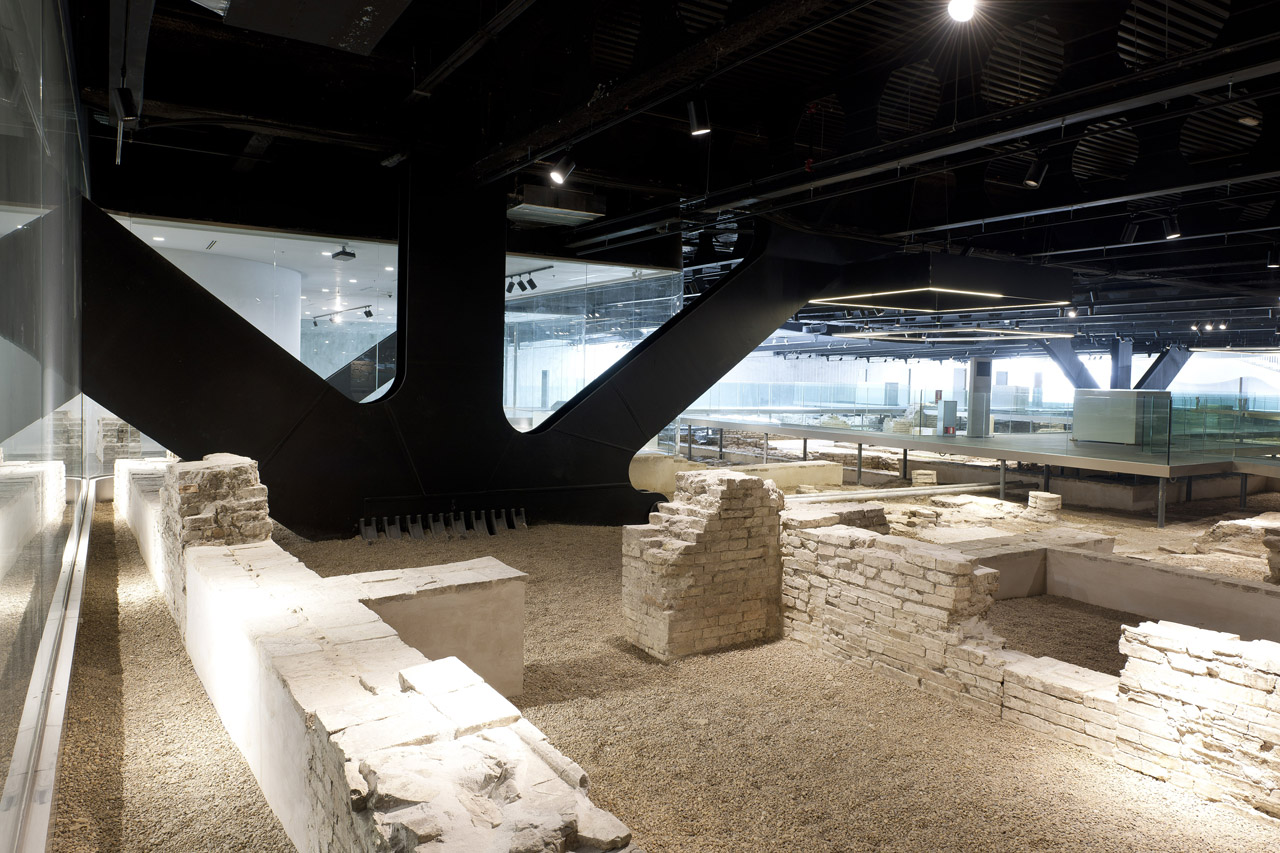
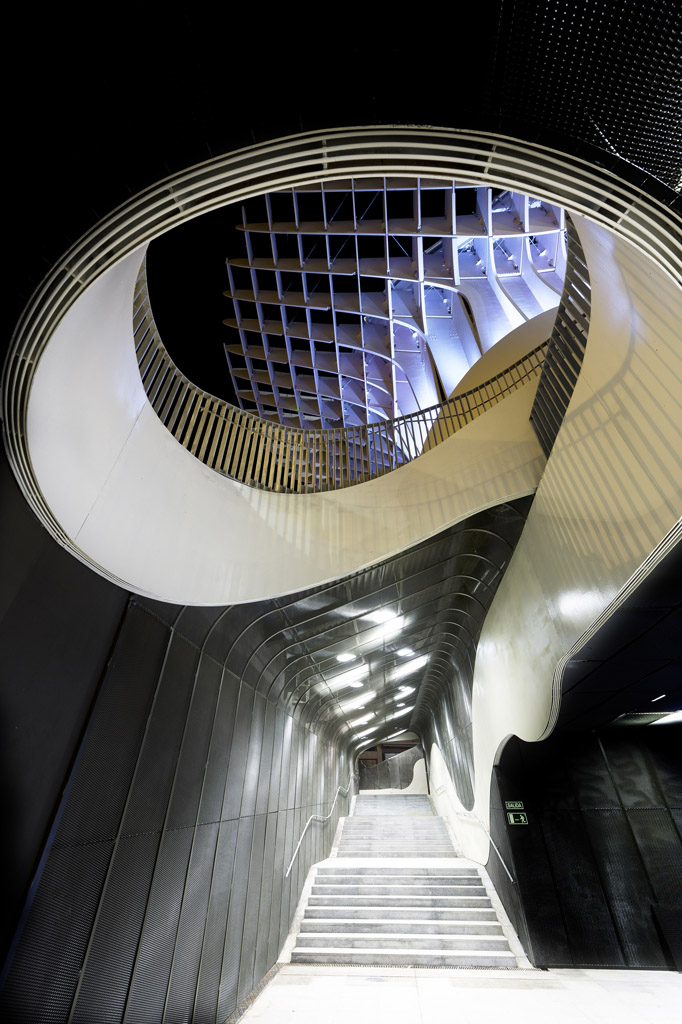
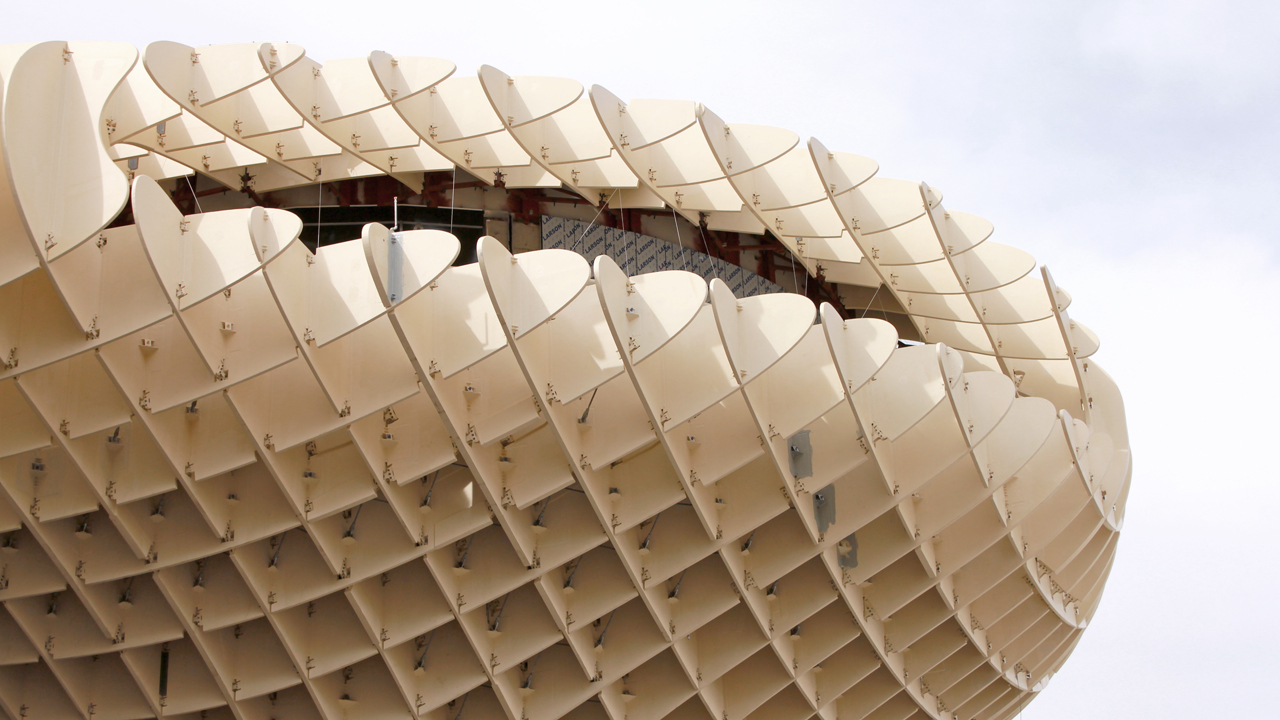
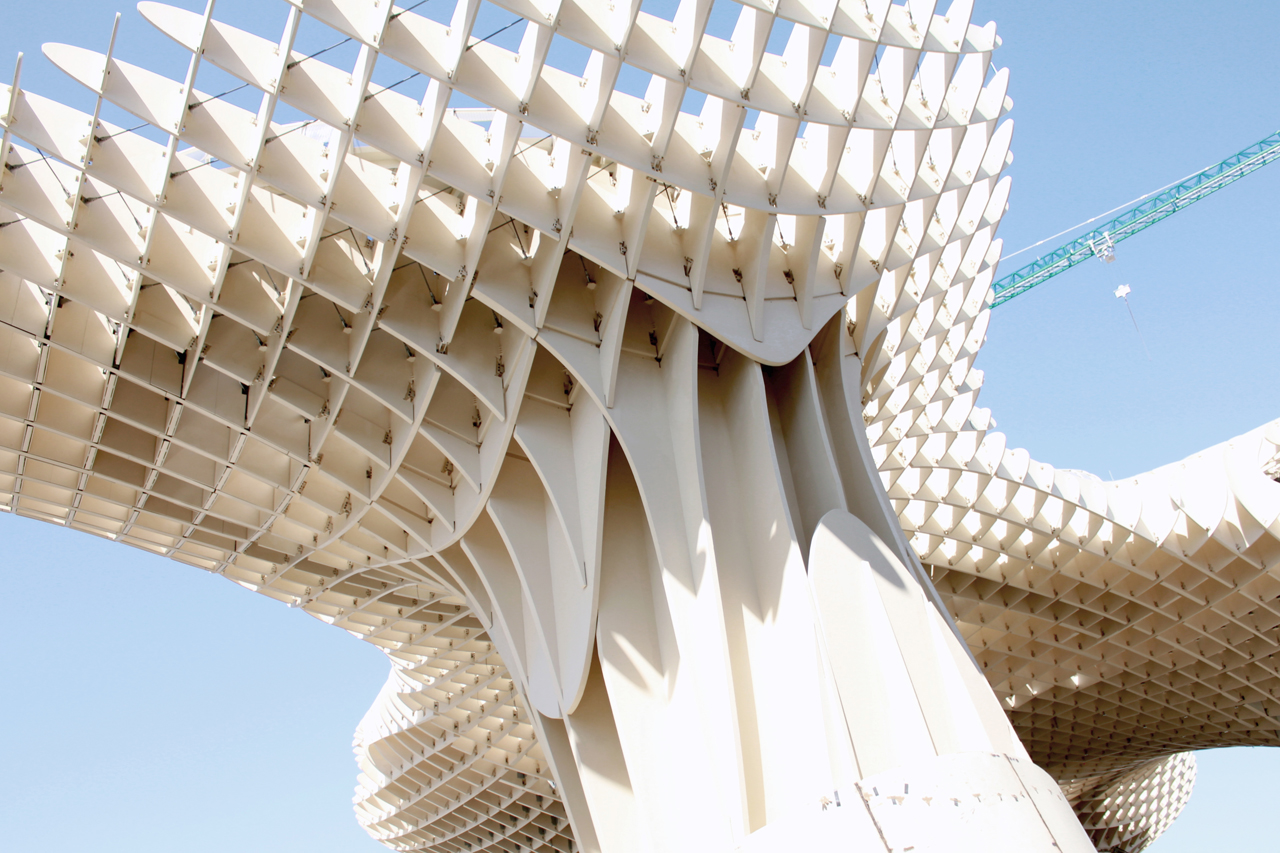
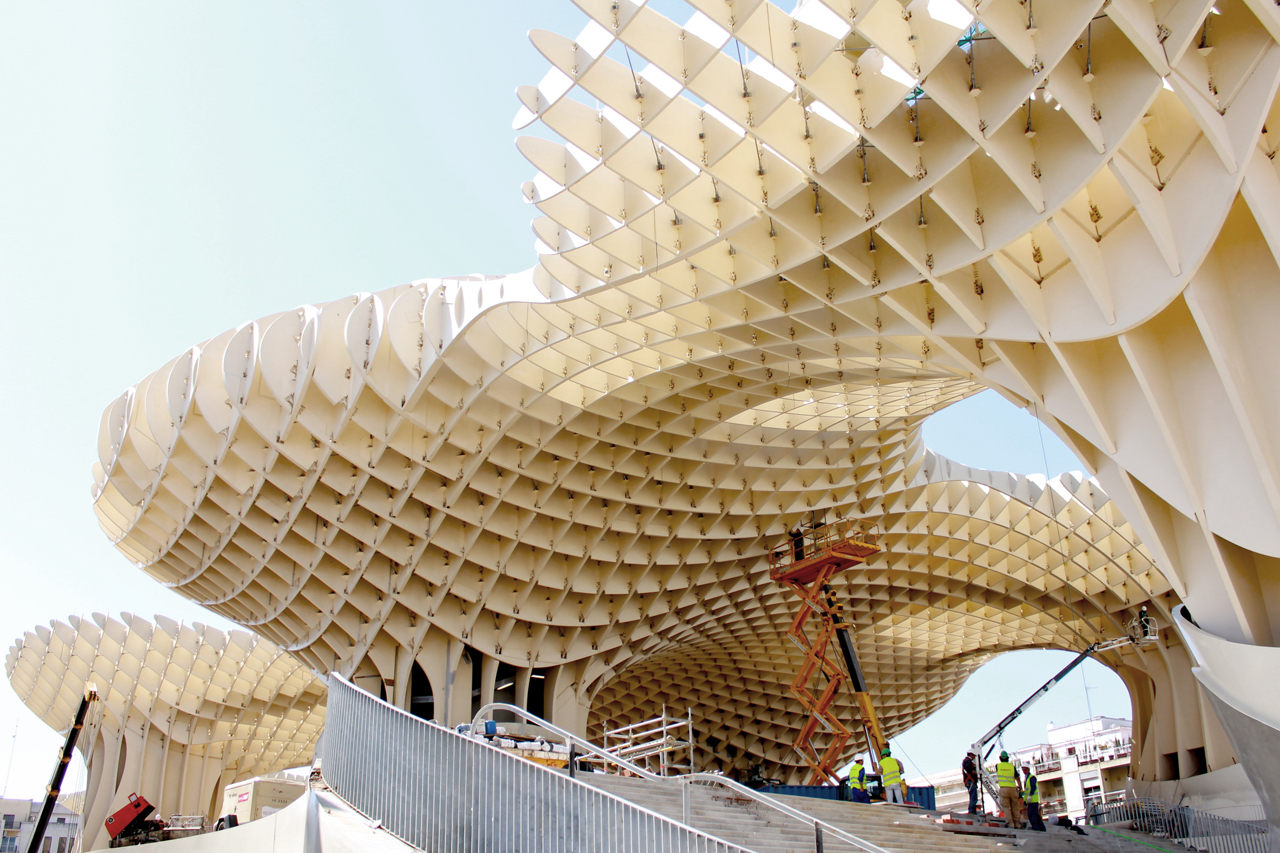
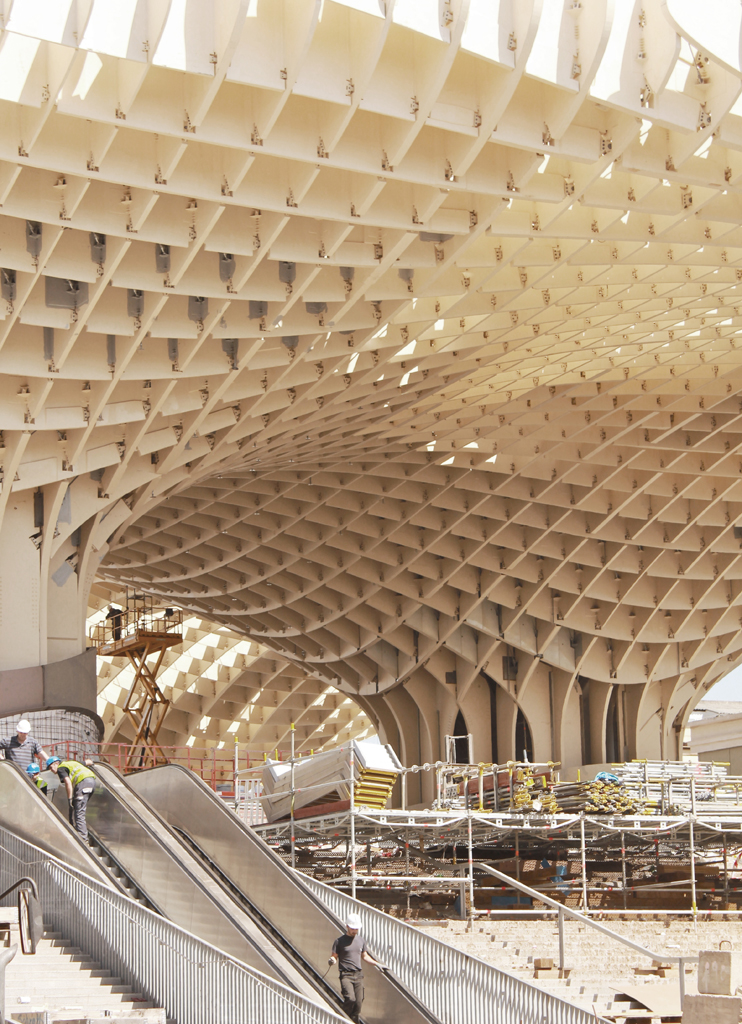
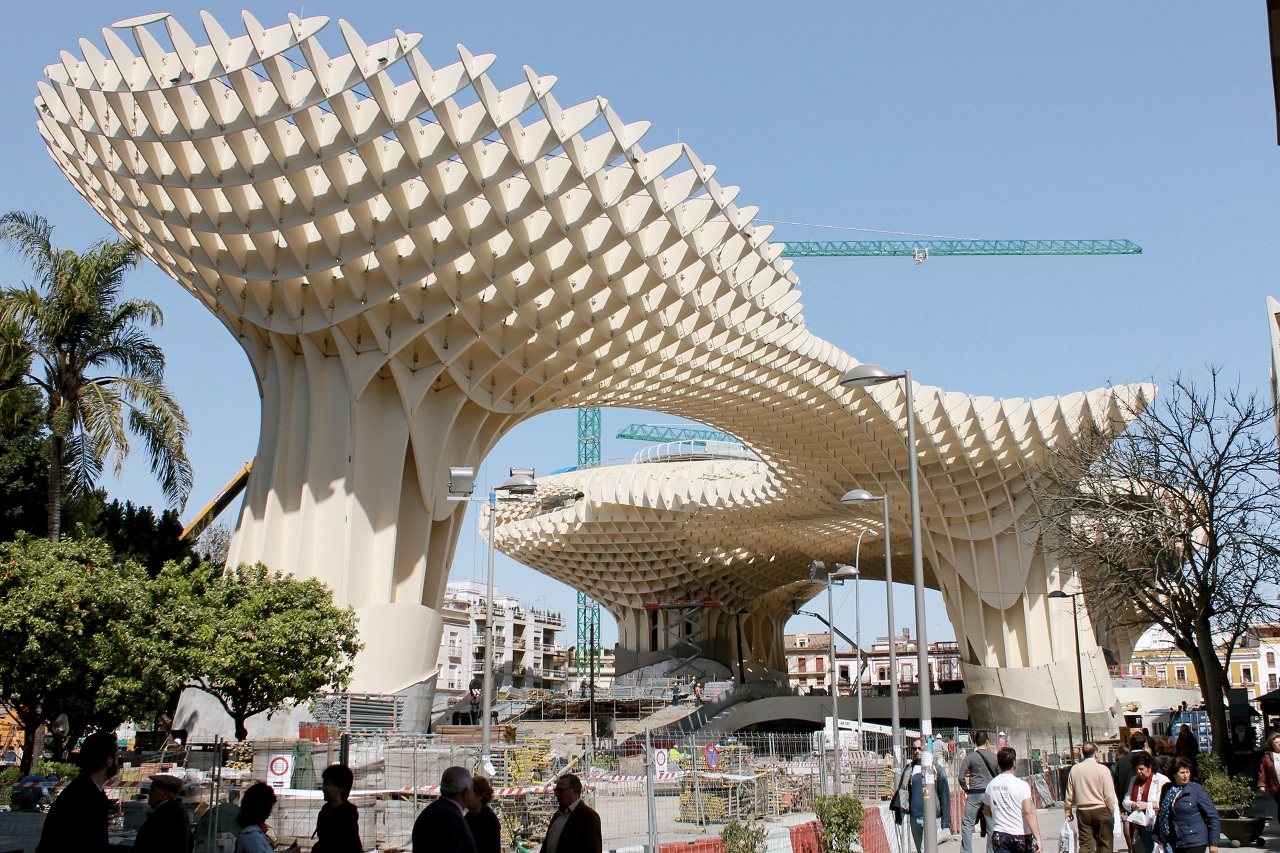
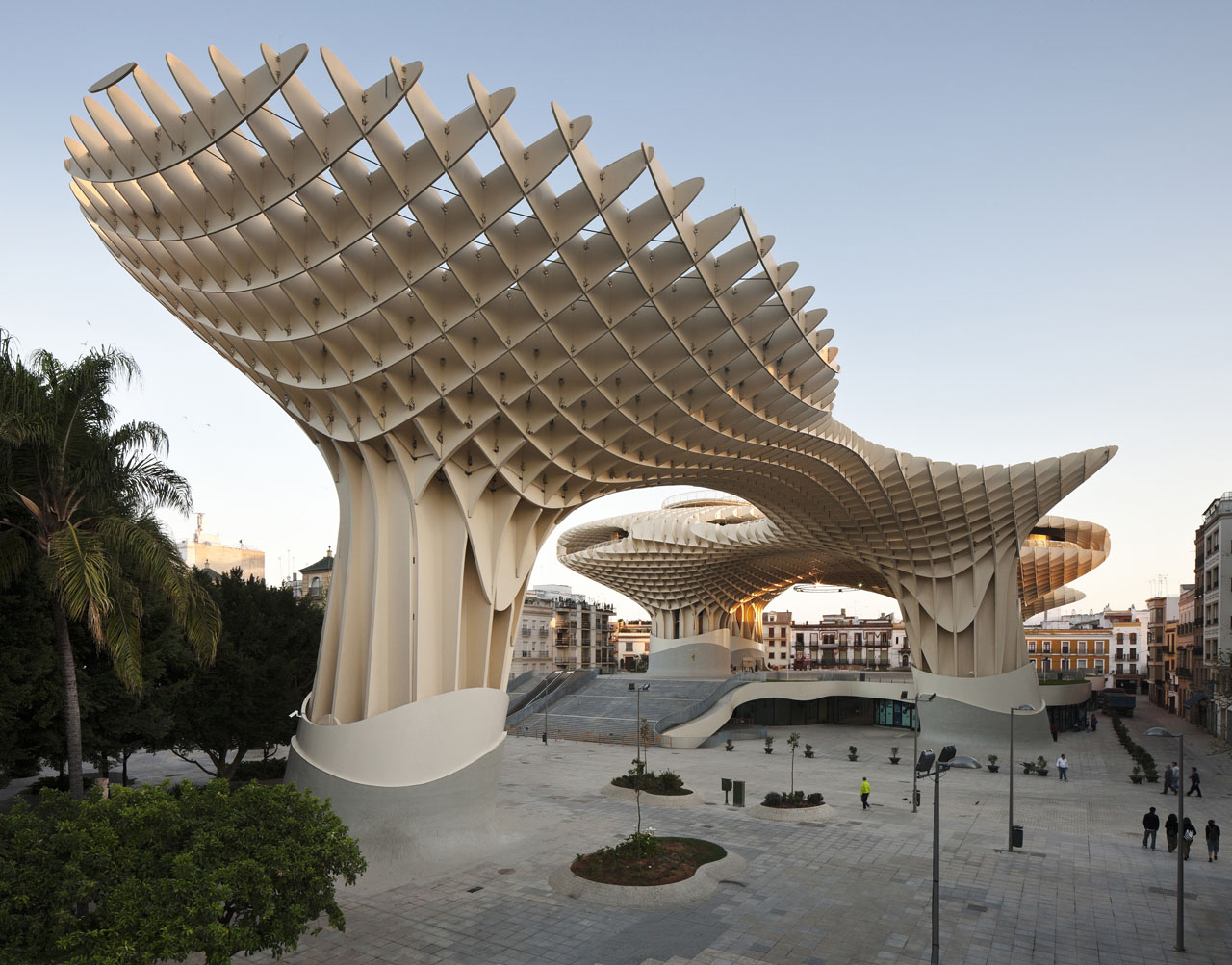
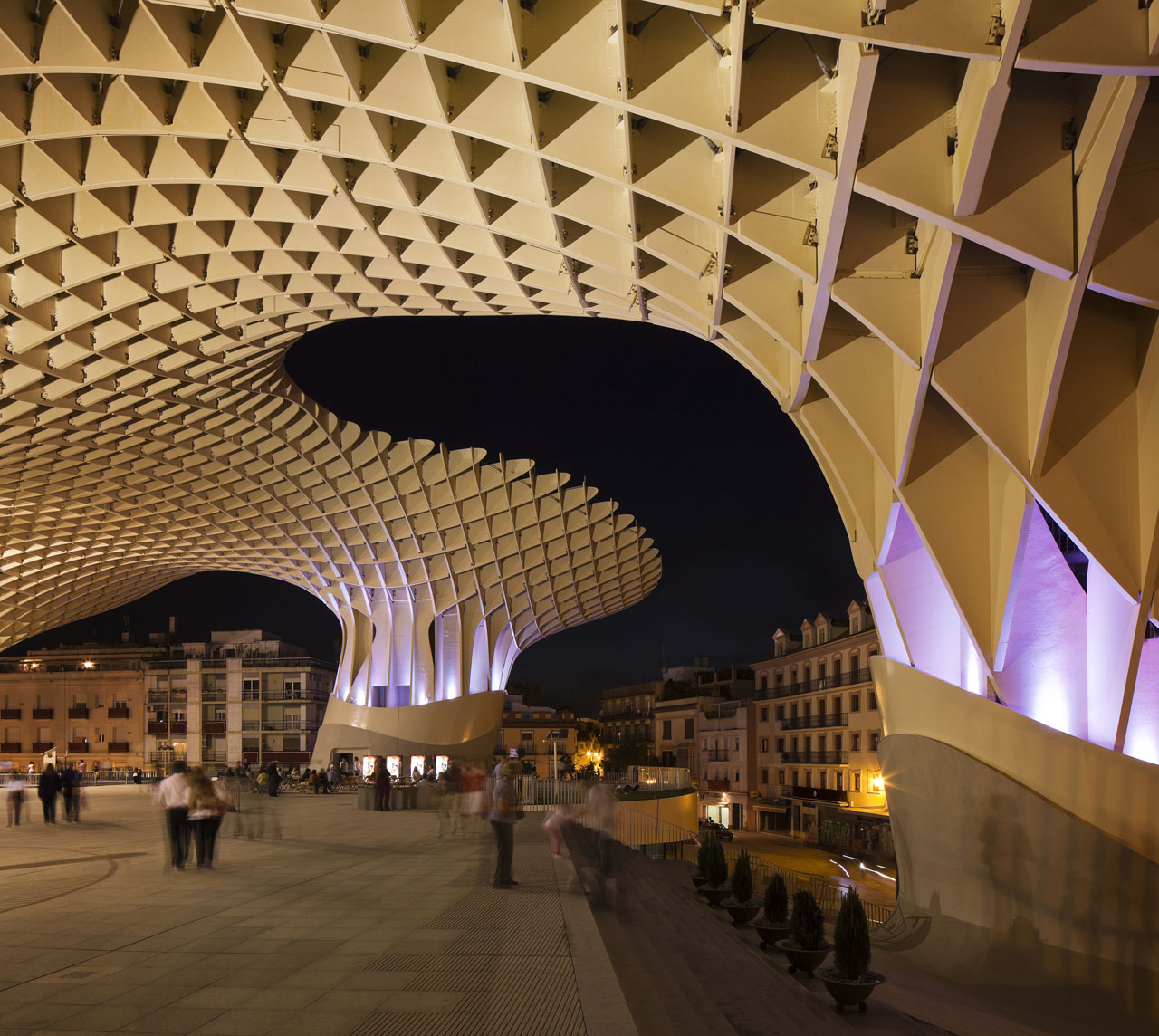
Select images above were provided by Fernando Aldo. You can find more of Fernando Aldo's work at fernandoalda.com and his featured gallery about the Metropol Parasol.
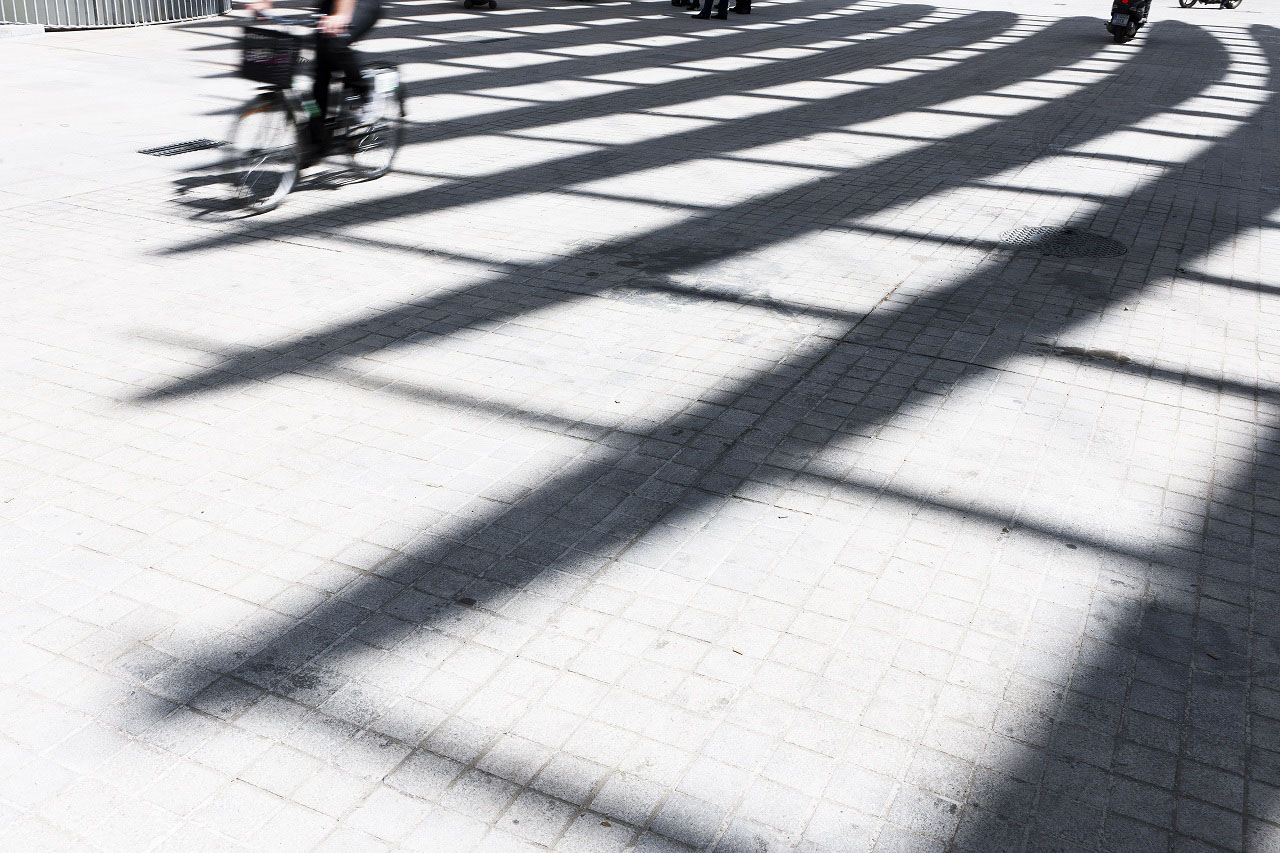
Select images above were provided by David Franck. You can find more of David Franck's work at davidfranck.de.


Morey Bean, AIA, LEED AP
Colorado's 1999 Architect of the Year and Vice Chair of the Boulder Chapter of the Urban Land Institute, Morey’s experience includes the successful development of the Colorado Architecture Partnership, an architecture firm dedicated to sustainability and green building. Morey was appointed by the Chief Architect of the GSA to the National Register of Peer Professionals. He serves as a ULI Service Advisory Panelist and was a charter member of the Colorado Chapter of the USGBC and past president of the Colorado South Chapter of the AIA. He is a construction litigation services expert witness, land development analyst and sustainability strategies consultant.
The author was honored by the Colorado Component of the American Institute of Architects as their Architect of the Year in 1999 and is on the Roster of Neutrals for the American Arbitration Association (AAA), providing dispute settlement for the design and construction industry.
Website: www.cyberarchitects.com