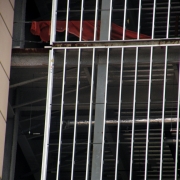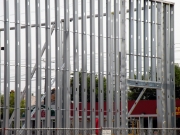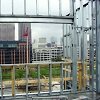
Cold formed metal framing consists of structural and non-structural elements that are shaped using press braking or roll forming. No heat is used in either formation method. Cold formed metal framing includes structural metal stud framing, slotted channel framing, and cold formed metal roof and floor joist framing, as well as all metal support assemblies. Over the past several decades, the use of cold formed metal framing has increased in the residential and multi-family market. Cold formed metal framing provides designers with as much, if not more, flexibility as wood framing.
Structural metal stud framing refers to the construction of walls and planes using cold-formed steel components. There are two main components of metal stud framing, a stud and a track. Heavier gauge metal studs are used in load bearing walls and structural applications such as exterior walls. Lighter gauge metal studs are used in non-load bearing applications such as some interior walls, half-walls, and partitions.
Cold formed metal joists can be used for residential and commercial floor and roof construction. Metal joists are relatively lightweight, relatively easy to maneuver, and have a high strength-to-weight ratio, allowing the joists to span long distances.
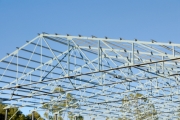
Cold formed metal trusses, or lightweight metal trusses, are used in commercial and residential construction and have similar profiles, pitches and applications as wood trusses. Cold formed metal trusses are commonly fabricated from heavier gauge cold formed c-channels and are mechanically fastened to a structure using clips.