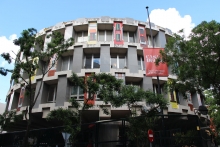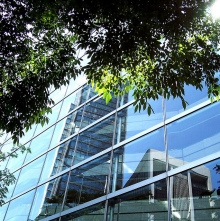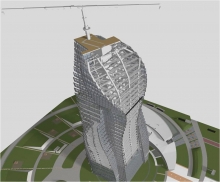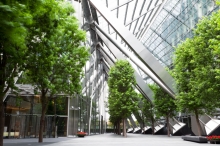
Pythagoras Solar undertakes a pilot project to install solar windows on the Willis Tower (formerly the Sears Tower) in Chicago. The project should provide data on the potential use of glass facades to collect solar energy.
Pythagoras Solar is conducting an experiment on one of the most iconic structures in the world – the Sears Tower, now Willis Tower. Established in 2007, Pythagoras specializes in solar panels for windows, focusing particularly on skyscrapers and other tall buildings. Skyscrapers have little rooftop area to accommodate solar collectors but use an extensive amount of glass use in their facades. These expanses of glass result in astronomical heating and cooling costs. Skyscrapers also contribute to a localized retention of heat known as urban heat island (UHI) effect, and large cities such as Chicago are looking for ways to mitigate that heat retention.
Perhaps the only thing that traditional, fossil fuel-based electricity generation still has going for it is the ease of “turning on” a new account. Calling the local utility company… easy. Researching, installing, and financing renewable energies and alternative solutions… difficult. More and more, however, government entities and private companies are finding ways to help people to adopt newer technologies.
Solar Renewable Energy Certificates (SRECs)
Written by Michael Tolson MBA, LEED AP Tue Jan 04 2011 12:00amSolar projects have taken off around the United States and the rest of the world in the past few years, partly because of higher energy costs and increases in financing options. The U.S. federal government has created many such options, including tax credits and grants. Lately, solar renewable energy certificate (SREC) programs at the state level have caught the industry’s attention. SRECs have begun to take shape as creative financing tools for all types of solar projects. In both residential and commercial projects, SRECs have proven to be the difference in financial feasibility.
The economic case for installing solar electric panels on your house or place of business is a heavily discussed topic these days. With the green building movement in full force, photovoltaic (PV) systems are becoming more and more popular. In many cases, though, homeowners and small business owners lack the necessary information to make an educated decision on whether to go ahead with a photovoltaic (PV) system installation. In order to make an educated decision on a PV system, the owner must approach the purchase with the return on investment (ROI) in mind.
NREL’s Research Support Facilities Strive for Net Zero-Energy
Written by Morey Bean, AIA, LEED AP Mon Aug 16 2010 12:00amOne of the most important climate change reduction advances in architecture and building in America is unfolding in the foothills of the Front Range outside Denver where the National Renewable Energy Laboratory (NREL) is completing a flagship for renewability and energy efficiency. The Research Support Facilities (RSF) in Golden, Colorado, were built and furnished for $67 million, comprise 222,000 square feet of zero-energy building (ZEB), were designed by RNL Design with Stantec, and were built by Colorado’s Haselden Construction. Seeking the U.S. Green Building Council’s (USGBC) LEED Platinum status, NREL is certainly practicing what it preaches: its scientists and technologists are occupying daylit spaces this summer to deliver energy strategies as they work to battle climate change and strive for national energy independence.
The things that help a building use the least possible amount of electricity and natural gas are central to what makes it green. Making an existing structure more energy-efficient can be done in broad strokes or with baby steps.
Passive solar is a green concept after my own heart because its principles reduce energy consumption without adding additional cost to a project. Of course, if a building is not originally designed to capture the sun's heat by day, store it, and release it at night, then active technologies must be used to help offset our consumption of natural resources. Thankfully, photovoltaic solar panels are much more effective and, frankly, more useable than they were even 10 years ago.
The History and the Problem with Solar Energy
Written by Stephanie Aurora Lewis Mon Dec 28 2009 8:55pmSolar energy technologies were discovered by the ancient Greek society, yet we are still uncovering today how to store the sun's energy for use on those days when cloudy cover prevails and there is no sunshine to capture. Many alternative energy sources, such as solar energy, have been overshadowed, as well, by fuel sources such as coal and natural gas, once seen by early industrialists as abundant and seemingly limitless.
MIT's Chemistry Professor Dan Nocera and his research team offer society new hope for taking solar energy technologies one step closer to an in-home reality.
In the first episode of this series, the Go Green channel tours one of the nation's newest research facilities for green energy education and development. Dean Jerry Hutton introduces some of the Hocking College Energy Institute's many alternative energy programs and sustainable design features. DesignGroup architect Jack Hedge explains how the building functions as an open and modular laboratory.