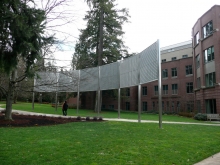
University Facility Management
Written by
J. Mariah Brown
Facility management ensures full functionality of the built environment. What are the best practices for universities?
Facility management ensures full functionality of the built environment. What are the best practices for universities?
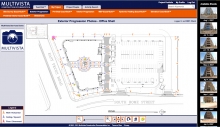
Construction documents technology uses in-progress photos and video footage to offer a significant improvement over the traditional method of producing "as-built" drawings.
Construction documentation technology has multiplied the advantages of the traditional “as-built” process, in which a red pen and the memory of the construction superintendent were the primary tools. Along with (or instead of) a set of marked-up drawings as a final contract deliverable, a more comprehensive construction journal is possible with the new construction documentation technology, which electronically captures the “as-built” process and cross-references electronic drawings to digital photographs.
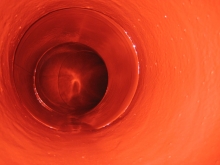
The use of epoxy coatings and epoxy-coated structural liners can save both time and money over traditional pipe repair methods.
Damaged or deteriorating pipe systems can be expensive to replace, particularly those that are located in hard-to-reach locations or inaccessible without selective demolition. Fortunately, common pipe systems can be rehabilitated from within, using cured-in-place epoxy coatings or epoxy-coated structural liners. These in situ pipe repair techniques can offer cost savings of up to 60% and time savings of up to 30% when compared to traditional pipe repair methods. We’ve partnered with Nu Flow to highlight several different in situ pipe repair techniques available to facility managers and building owners.
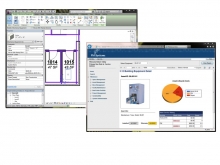
AEC professionals have the opportunity to pass along valuable information to their clients, and to a building’s future maintenance manager. The information sharing and storage capacity of BIM can be leveraged to help architects, system designers, and installers deliver a more complete product than was ever before possible.

Initial costs represent only 15% of a building’s total cost. If you ignore this when developing a building, you are wasting the other 85% of your costs. Keeping the initial capital cost as low as possible seems right, but it’s costing you a lot more over the life of the building. Visibility into the total cost of ownership is one way to address this. Justification and decisions should be based on the total cost of ownership, not just initial costs.

FM Systems are the most important tools a facility and property manager has to manage his or her responsibilities. They provide critical visibility into the operations, information for decision making and analysis and improved processes and efficient services. All of this results in lower costs and better services.

Real estate costs money and money is the bottom line for any company. Facilities managers who recognize this can raise their profile and contribute to the success of the company by accurately establishing facility costs and positioning the information for better corporate decisions.
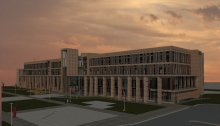
Western Michigan University (WMU), located just west of downtown Kalamazoo, is one of Michigan’s premier universities. With an enrollment of nearly 25,000 students at the undergraduate and graduate levels, Western Michigan University has made a name for itself in both education and research.

The performance of green buildings is a very hot topic in both the construction and real estate industries. As owners demand lower operating expenses, more and more new construction and existing building retrofits are being designed to a very high standard. However, as owners are finding out, those high design standards create only the opportunity for a green building. It’s what is done with that opportunity that defines both a building’s operations and the occupants inside it.

Michel Theriault understands the working environment that facility managers face daily – the technical challenges and opportunities within their facility management organizations and additionally the relationships and business dynamic beyond the facilities management staff. Many facility management resources offer the latest technical insights and maintenance strategies, but Theriault’s book takes on facilities management business aspects not often addressed in this field. Managing Facilities & Real Estate clearly stands out in this regard. It offers rare and valuable business advice for facility managers using practical and easy-to-read terminology and graphics.

As many architects, engineers, developers, and facility managers know, a LEED project comes with many lofty goals. Often those goals include ambitious reductions in energy and water usage. However, once the project is finished, those goals are typically overlooked, indicating a glaring need for an ongoing process that ensures that expected performance is met or exceeded. It is with this in mind that the United States Green Building Council (USGBC) has created the Building Performance Partnership.
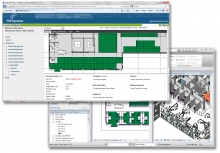
It may seem hard to believe, but simply documenting how your clients will use space in their buildings is a critical input into space management. Proper management of space and occupancy can equate to dramatic, bottom-line savings for your clients.
